
Viu: A hidden gem behind Palma’s old walls
Viu: A hidden gem behind Palma’s old walls
Step inside Summum Boutique Hotel…
Dinner with an eclectic Palma crowd
Cocktails on the terrace
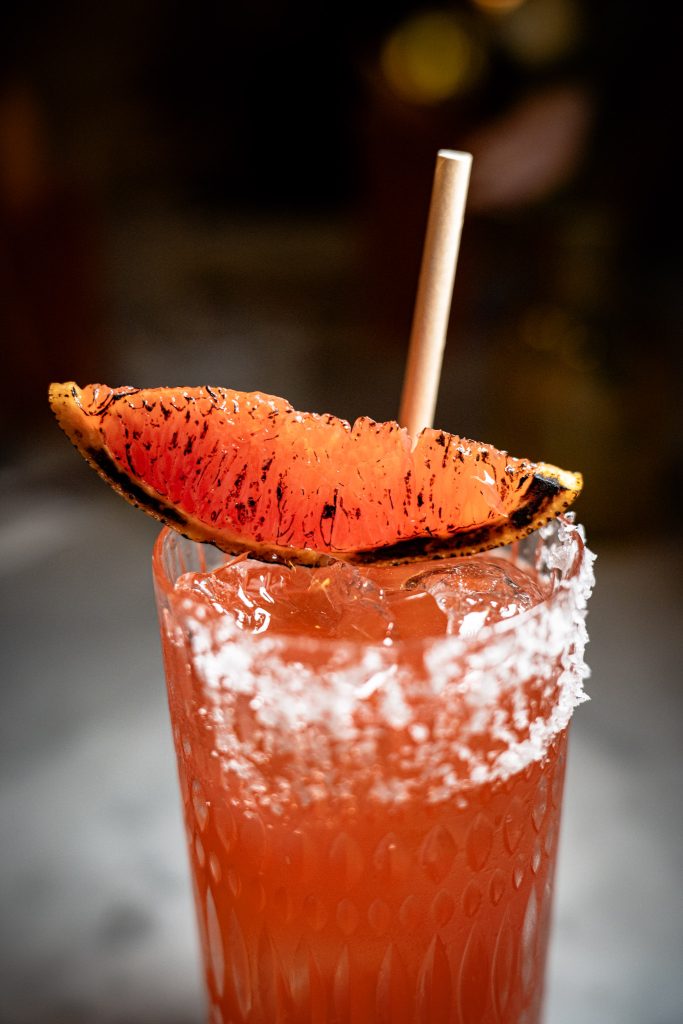
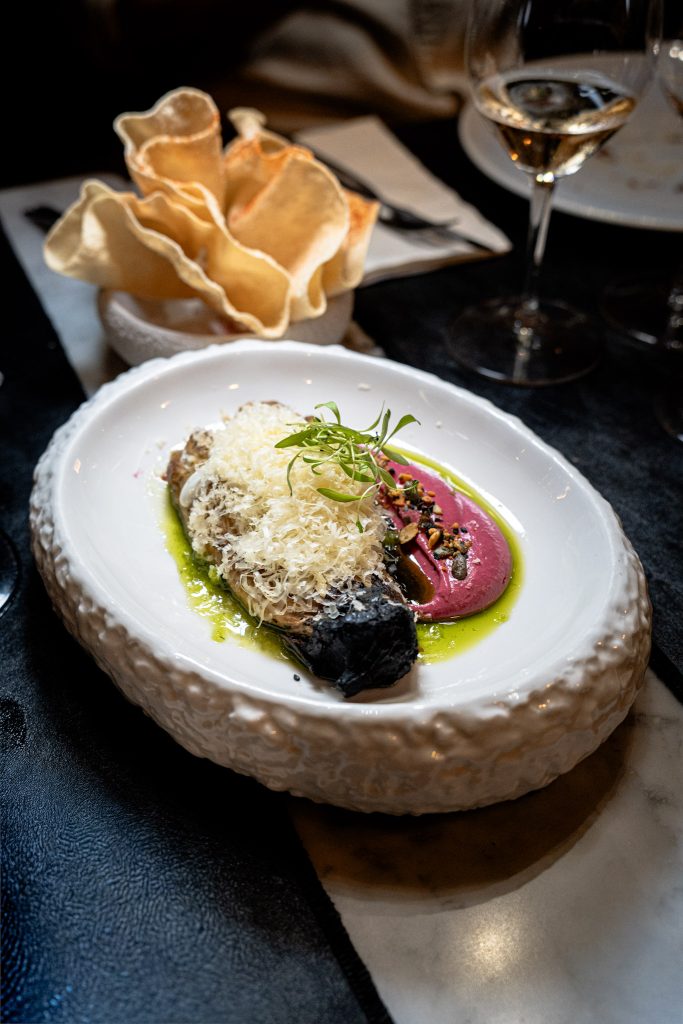
We started upstairs on the terrace with a Mediterranean Paloma, made with tequila, Aperol, lime, hibiscus syrup and grapefruit soda. Fresh, citrusy and exactly what I wanted on a warm evening. Then a light rain arrived and our little party migrated indoors to the second location. Chef Daniel Ros Sánchez had prepared a degustation menu for us, beginning with excellent artisan bread and moving through a succession of dishes designed for sharing.
Chef Daniel Ros Sánchez’s degustation menu
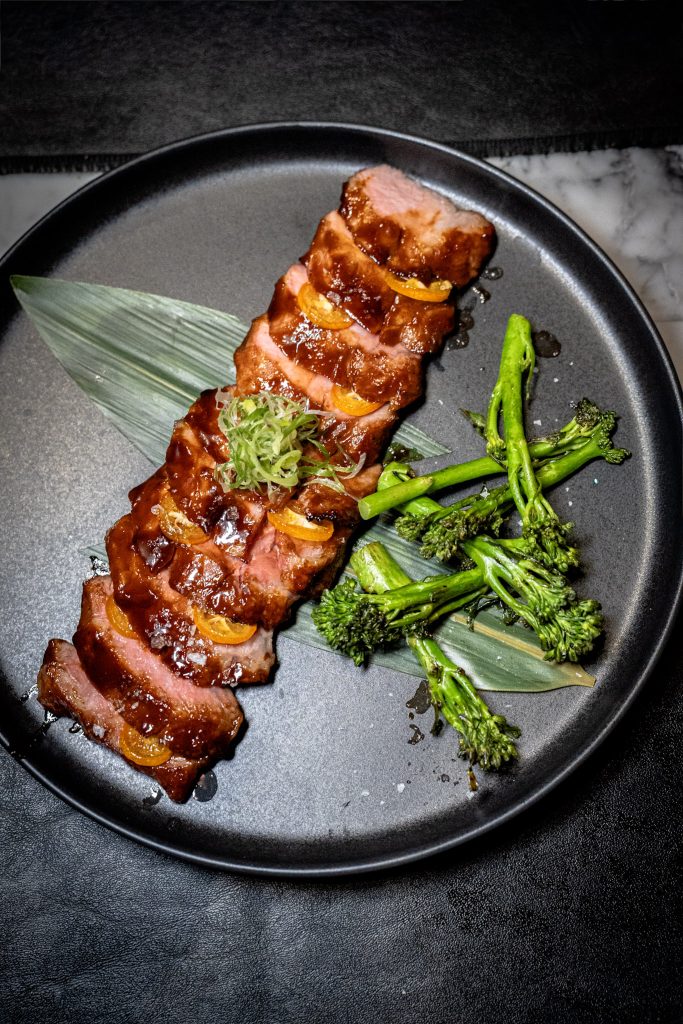
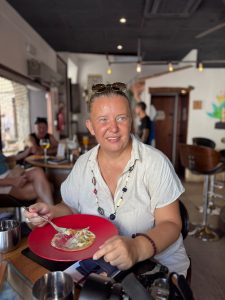
Mia’s standout dishes at Viu Restaurant
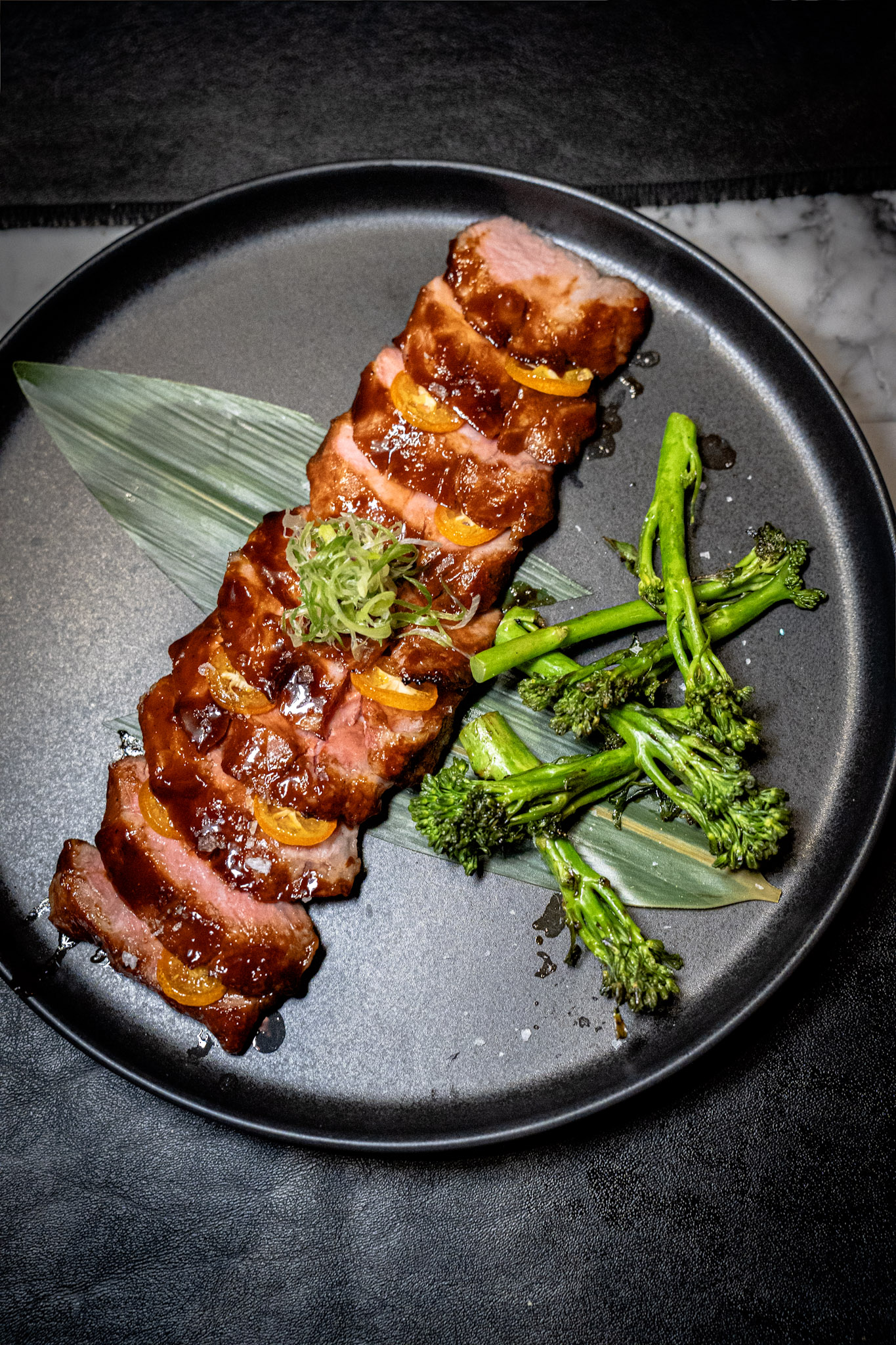
The dish I kept returning to, however, was the Iberian pork pluma, lacquered with Peking sauce and served with kumquat and bimi. Rich and beautifully tender, with sweetness and citrus cutting through the meat, this was probably my favourite of the evening. We finished with a delicate fig dessert, a suitably light ending after a very generous meal. I had expected dinner to last a couple of hours. Instead, conversation kept flowing, glasses kept being topped up and somehow we found ourselves the last ones in the restaurant. Good food helps, of course. So do lovely hosts and interesting company. Viu gave us all three. It is one of those Palma places that remains surprisingly easy to miss… and one I can absolutely recommend!

"Juliet’s Romeo" A Contemporary Romeo and Juliet Comes to a Mallorca Vineyard
“Juliet’s Romeo” A Contemporary Romeo and Juliet Comes to a Mallorca Vineyard
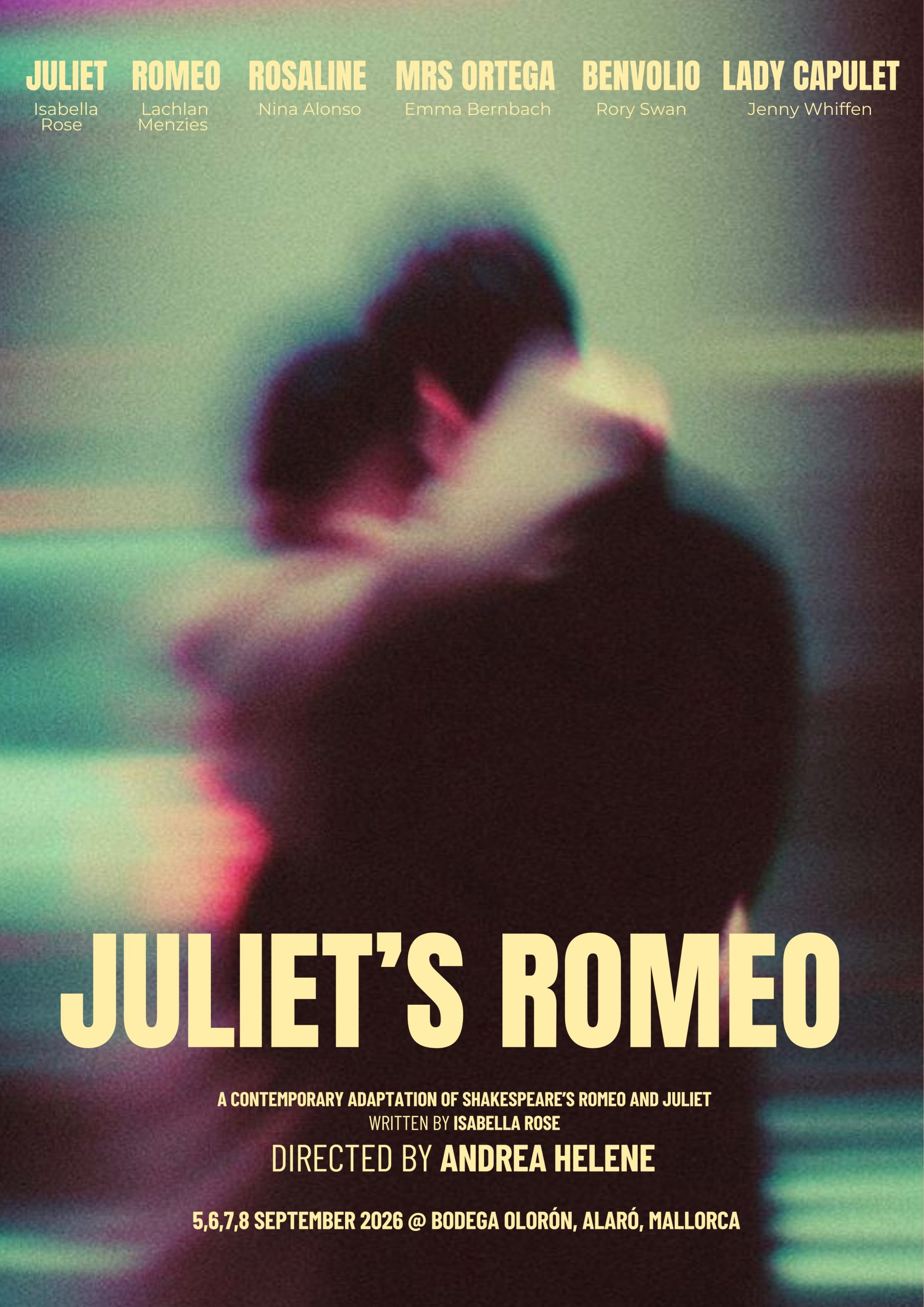
Shakespeare, wine, a Mallorca vineyard and a thoroughly modern take on young love. Juliet’s Romeo, a new adaptation of Romeo and Juliet written by Mallorca-raised actress Isabella Rose, comes to Bodega Olorón in Alaró for four performances from 5 to 8 September 2026.
Forget any memories you might have of struggling through Shakespeare at school. This is a 90-minute, fast-paced, funny and rather spicy reimagining of the story, created for a contemporary audience and performed inside the bodega’s modern winemaking space.
And while there is plenty that Shakespeare would recognise, Isabella has made some significant changes.
Romeo and Juliet for the swipe-left generation
The starting point for Juliet’s Romeo came from something Isabella noticed in the original play. Romeo may be remembered as one half of literature’s most famous pair of star-crossed lovers, but when we first meet him he is actually desperately in love with somebody else. “People always think about Romeo and Juliet as this sweeping, amazing romantic love story,” Isabella told Majorca Mallorca. “But Romeo is madly in love with Rosaline and within 12 hours he is able to fall madly in love with someone else.” That feels rather different when viewed from 2026. “Right now, we live in a very swipe-left culture,” Isabella says. “What is desire? What is lust? What is love? And how is that combined with being 18 and being super young? What is the definition of love for us nowadays?”
It is something that anyone with teenage or twenty-something children will probably recognise. Relationships have acquired an entire vocabulary which many of us are still trying to understand, and the boundaries between dating, seeing someone, being together and the dreaded “situationship” can be decidedly confusing. Perhaps Romeo was simply several centuries ahead of his time.
This time, Rosaline gets her say
Isabella has also corrected something which has always seemed slightly unfair.
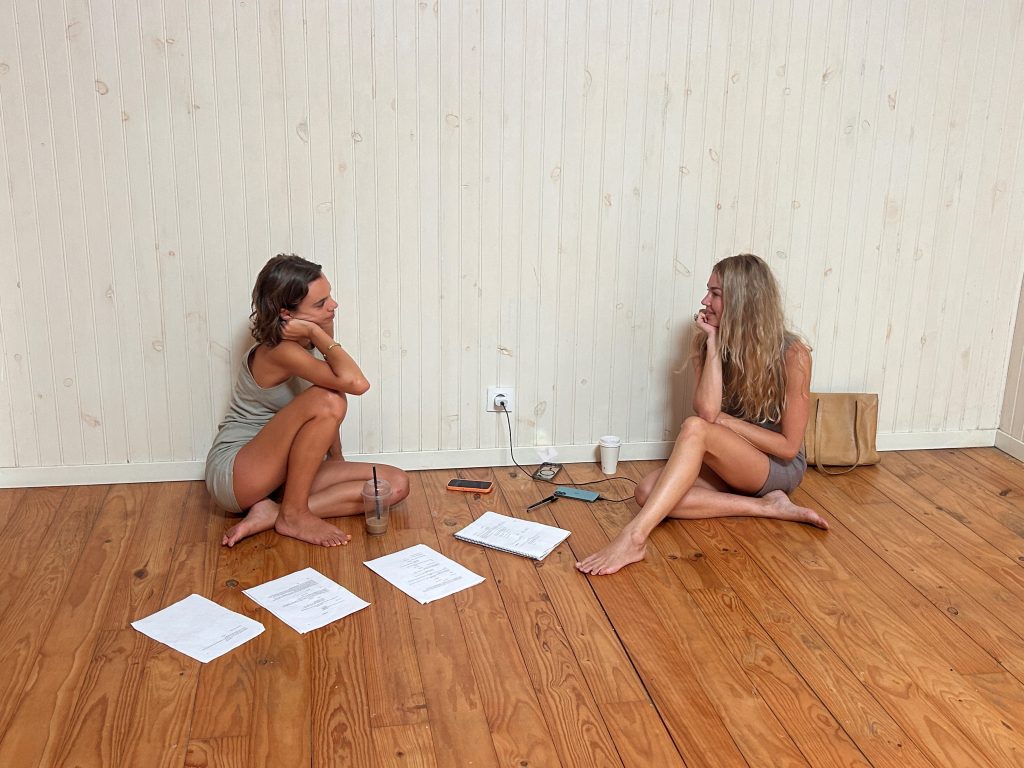
Rosaline, the woman Romeo claims to adore before meeting Juliet, never actually appears in Shakespeare’s play. We hear an awful lot about her, but Shakespeare never gives her the opportunity to tell us what she thinks about any of it. Isabella does. “I did something very cheeky,” she says. “I’ve given Rosaline a whole character. She comes and kind of gatecrashes.” Other characters from the original have been combined and reimagined too. Mrs Ortega, the owner of the guesthouse where much of the story unfolds, draws partly on Juliet’s Nurse, while the play also has feminist undertones around the women who somehow manage to hold everything together while the world around them is falling apart. (Photo above shows Nina who is playing Rosaline and Isabella rehearsing) And there is one fairly significant difference from the Shakespearean original that we can reveal without spoiling the ending: this is not a tragedy. “It has a lot of laughs,” says Isabella. “You know something is funny when you can barely get through rehearsals without cracking up.”
From Verona to a guesthouse in Spain
The Montagues and Capulets are gone too. In Isabella’s version, two countries are at war. Two young people from important families on opposite sides are sent away to neutral territory to keep them safe, only to find themselves staying at the same slightly crumbling guesthouse in Spain. Neither initially knows who the other really is. A summer romance follows, before the inevitable discovery that the person you have fallen for belongs to the very side you are supposed to oppose. The new setting allows Isabella to explore some of Shakespeare’s original questions about loyalty, identity, family and love while bringing them into a world which feels considerably closer to our own.

Meet Isabella Rose
Although Isabella was born in Australia, Mallorca is very definitely home. She arrived on the island at just four months old when her father’s work in the yachting industry brought the family here. “I literally don’t remember anything different. Mallorca was always home,” she says. She grew up performing with Mallorca’s Centre Stage drama group before leaving the island at 16 to attend boarding school in the UK. She subsequently studied journalism and film, but the desire to act never quite disappeared.
During Covid she decided to do something about it.
Isabella applied to just one drama school, the prestigious Oxford School of Drama, deciding that if she was accepted she would take it as a sign that acting was the path she was supposed to follow. There were five rounds of auditions. Around 3,000 people applied that year and just 18 were offered places. Isabella was one of them. “I didn’t realise it was so prestigious or so difficult to get into,” she admits. “I was slightly blasé about it, very relaxed. I think that definitely helped.”
From Mallorca to Silo
Since graduating, Isabella has worked in theatre and on screen. She has a role in the forthcoming Second World War film Lucky Strike and will also appear in season four of Apple TV+ series Silo. Anyone hoping for advance Silo spoilers is going to be disappointed. Isabella is firmly under NDA. She has also continued writing feature films, short films and television pilots, but Juliet’s Romeo is her first play. The idea emerged during a turbulent period in Isabella’s own romantic life, something which inevitably found its way into her writing. “I’ve always used art as a means of therapy,” she says. “A lot of my inner process comes through in my work because I feel like that’s what makes it more authentic.”
Theatre and wine at Bodega Olorón
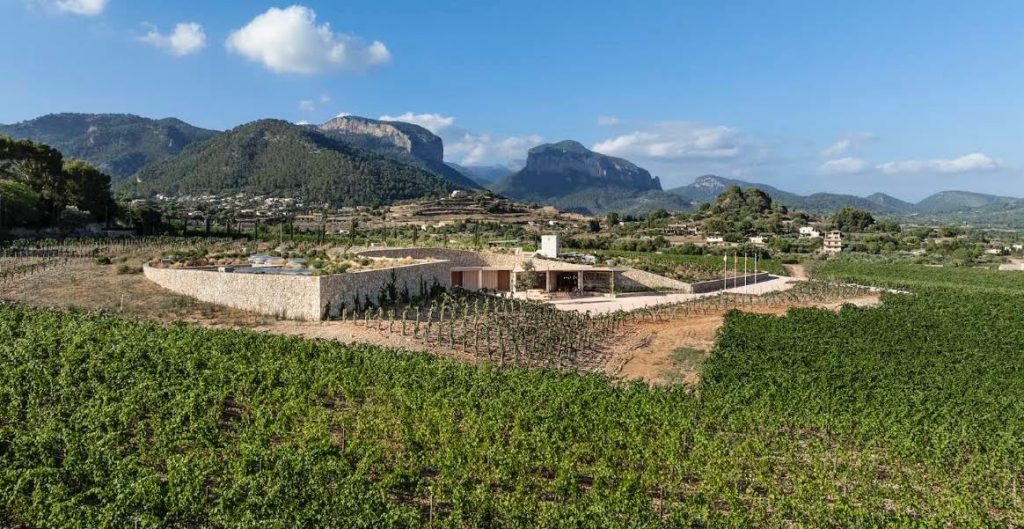
The Mallorca setting makes this production particularly interesting. Juliet’s Romeo is being staged at Bodega Olorón in Alaró, with performances taking place inside the contemporary building where the wine is made and the vineyard providing the setting for the wider evening. The production is directed by Andrea Helene, whose previous work in Mallorca includes Selling Shade, with a small cast working on an intensive rehearsal schedule ahead of opening night.
The original Shakespeare play has been considerably condensed, with Juliet’s Romeo running for around 90 minutes without an interval. “It’s a laugh, it’s fun, it’s super contemporary and engaging, and it’s quite fast-paced,” Isabella says.
So, if the words “Shakespearean theatre” usually make you imagine a very long evening sitting politely while wondering when everyone is going to die, this may be the production that changes your mind. There will also be wine. That generally helps.
Juliet’s Romeo Mallorca: dates, venue and tickets
Juliet’s Romeo will be performed at Bodega Olorón in Alaró, Mallorca, on 5, 6, 7 and 8 September 2026. The performance lasts approximately 90 minutes without an interval. Tickets are available through Eventbrite: Book tickets for Juliet’s Romeo
More from Majorca Mallorca
Want to discover more about what is happening across the island? Listen to the Majorca Mallorca Podcast for local stories, honest conversations and a closer look at the people, places and issues shaping Mallorca. We live here, and we go beyond the usual holiday headlines to explore what life on the island is really like. CLICK HERE TO EXPLORE THE MAJORCA MALLORCA PODCAST
Planning your September in Mallorca?
Several of September’s biggest events take place in central Palma, making public transport the easiest option, particularly for Patrona and Nit de l’Art. Programmes, access arrangements and starting times can change, especially for outdoor events. Check the linked organiser pages before travelling and reserve tickets early for performances with limited capacity. September may signal the end of the peak summer season, but Mallorca’s events calendar clearly has no intention of going home quietly! For more info on Events in Mallorca in September visit our listings here.
What’s On in Mallorca in September 2026: Events and Festivals
What’s On in Mallorca in September 2026
September is one of the loveliest months to be in Mallorca. The sea is still warm, the fiercest summer heat begins to ease and the island’s cultural calendar comes back to life. This September brings street theatre in Santa Eugènia, an English-language reimagining of Romeo and Juliet in an Alaró vineyard, night markets in Sineu, major concerts beneath Palma Cathedral, classical music, flamenco, contemporary art and sporting events along Palma’s waterfront.
Here is our guide to the best confirmed events taking place in Mallorca in September 2026. We will continue updating it as new programmes and events are announced, so bookmark this page and check back before making your plans.
Never miss a Mallorca event: Sign up for the Majorca Mallorca newsletter below for new events, local stories and island recommendations delivered to your inbox.
Festes del Rei en Jaume in Santa Ponça
When: Wednesday 26 August to Sunday 6 September 2026
Where: Santa Ponça
Price: Most events are free
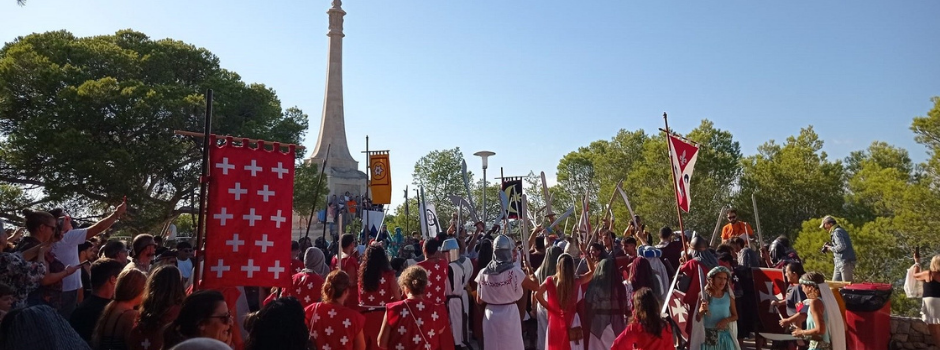
Santa Ponça commemorates the 797th anniversary of the landing of King Jaume I with almost two weeks of concerts, processions, markets, traditional celebrations and historical re-enactments.
The Festes del Rei en Jaume remember the arrival of King Jaume I’s forces in Mallorca in 1229. The centrepiece is the colourful re-enactment of the landing and the battle between the Moors and Christians, involving hundreds of costumed participants on and around Santa Ponça beach.
The wider programme includes a medieval market, a parade of giants, live music, sporting events, children’s activities, traditional dancing and a correfoc, when fire-running dimonis take over the streets.
It is one of the largest annual celebrations in Calvià and a particularly good opportunity for visitors to see that Santa Ponça has a life and history extending well beyond its hotels and beaches.
Some roads will be closed or restricted during the main processions and battle re-enactment. Arrive early and check the final programme before travelling.
Programme and practical information: Festes del Rei en Jaume 2026
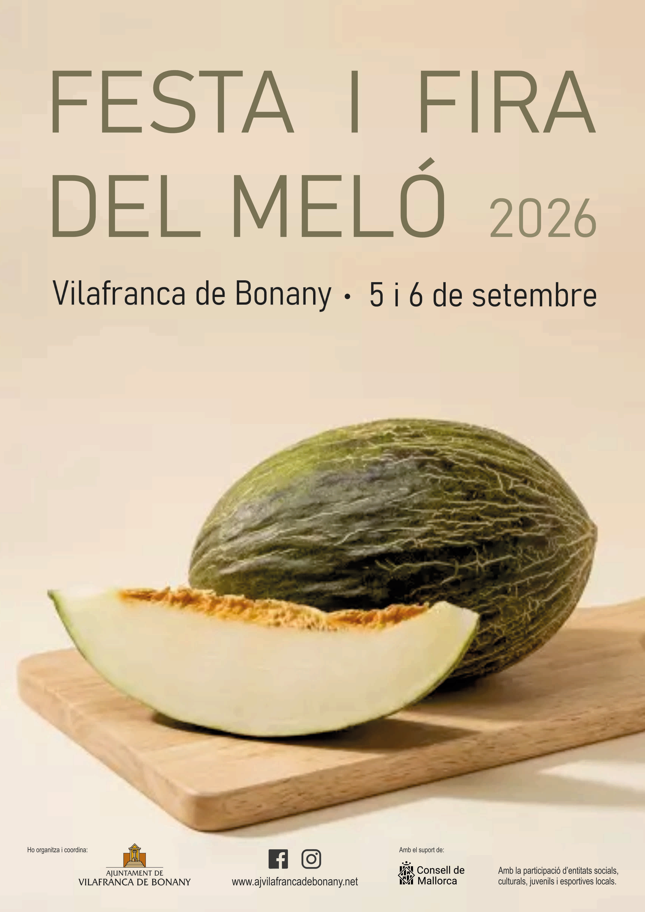
Festa i Fira del Meló in Vilafranca de Bonany
When: Saturday 5 and Sunday 6 September 2026
Where: Vilafranca de Bonany
Price: Free
Vilafranca de Bonany celebrates one of Mallorca’s most distinctive agricultural fairs during the first weekend of September.
The Festa i Fira del Meló pays tribute to the melons grown in the surrounding countryside and to the agricultural traditions of this part of central Mallorca.
The celebrations begin on Saturday evening with the Firó Nocturn Artesà, when craft stalls and local producers fill the centre of Vilafranca. The main Fira del Meló follows on Sunday, with local produce, traditional food, competitions, music and activities around the town.
Naturally, the melon is the star. Previous editions have included competitions for the largest and best melons, displays by growers and plenty of opportunities to taste local produce.
It is a relaxed, family-friendly village fair and a good reason to explore a part of Mallorca that many visitors pass without stopping.
Event information: Fira del Meló and Firó Nocturn Artesà 2026
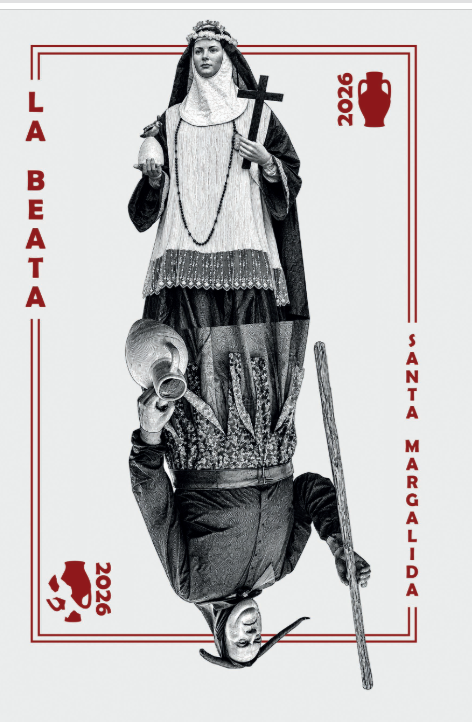
La Beata in Santa Margalida
When: Main procession expected on Sunday 6 September 2026
Where: Santa Margalida
Price: Free
La Beata is one of Mallorca’s most characterful traditional celebrations and takes place in Santa Margalida on the first Sunday of September.
The fiesta honours Santa Catalina Thomàs, known locally as La Beata. The main procession includes decorated floats, traditional costumes, music, dancing, xeremiers playing Mallorcan bagpipes and representations of scenes from the saint’s life.
Among its most distinctive participants are the dimonis, who attempt to snatch and break the clay jugs carried during the procession. The combination of religious tradition, village theatre and gleeful chaos makes this unlike almost any other event on the island.
The procession is the culmination of a broader programme of local festivities, usually including music, community meals, children’s activities and evening celebrations.
Santa Margalida becomes extremely busy for the main event. Visitors should arrive early, expect road closures and remember that this is a living local tradition rather than a performance staged for tourists.
Further information: Check the Ajuntament de Santa Margalida and its social-media pages for the final 2026 programme.
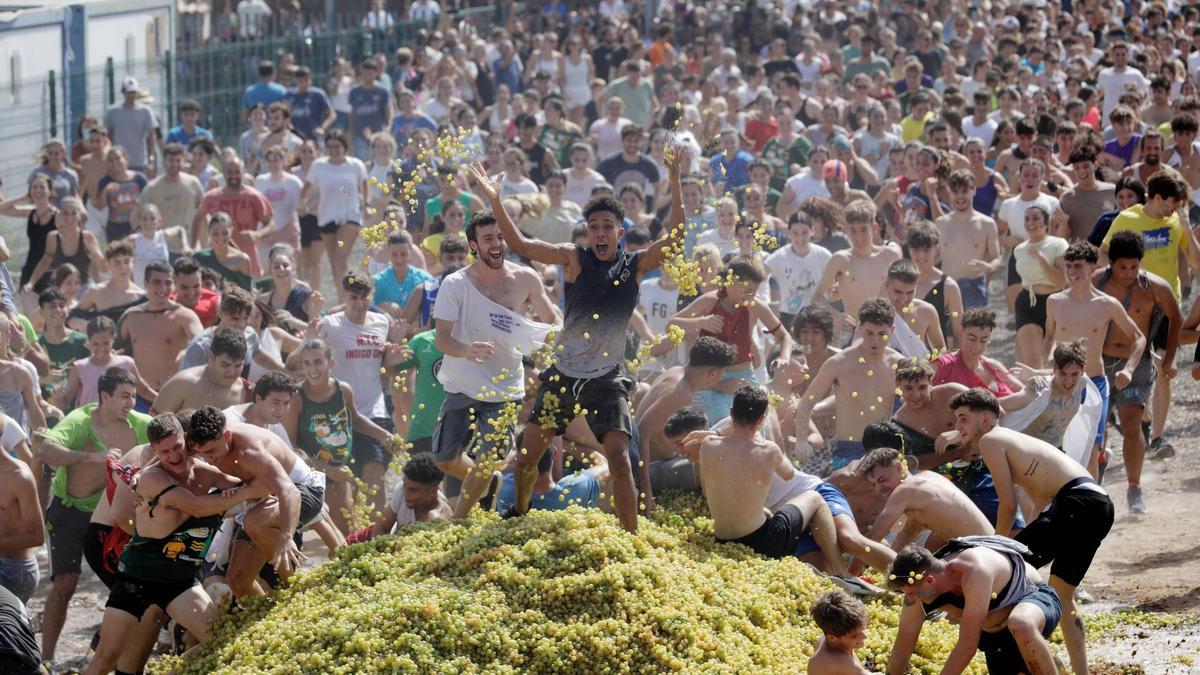
Festa des Vermar in Binissalem
When: During the second half of September 2026, with celebrations expected to extend across approximately three weeks
Where: Binissalem
Price: Most public events are free
Binissalem’s Festa des Vermar is one of the largest and most exuberant harvest celebrations in Mallorca.
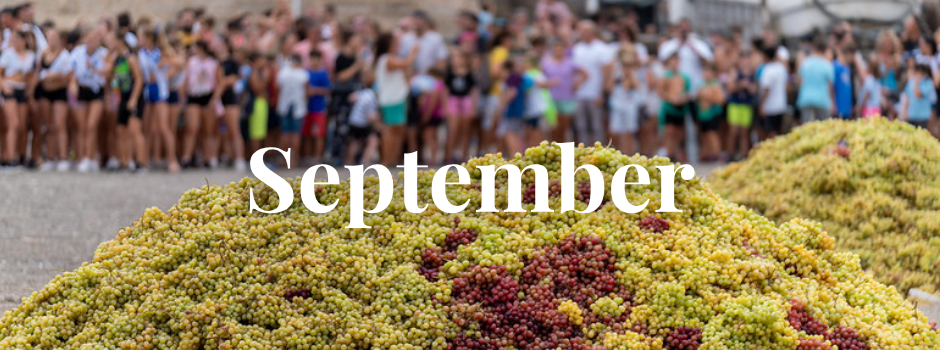
The festival marks the end of the grape harvest and celebrates the winemaking traditions that have shaped Binissalem and the surrounding area. For several weeks, the town fills with decorations, traditional costumes, communal meals, music, parades, exhibitions and events connected to grapes and wine.
The most famous event is the Batalla de Raïm, or grape battle, during which participants throw enormous quantities of grapes at one another. Anyone planning to join in should wear old clothes and expect to emerge looking as though they have been marinated.
Other traditional highlights usually include the grape-treading competition, the Vermadors and Vermadores parade, wine-related events, live music and a communal meal of fideus de vermar, a traditional harvest noodle dish.
The main celebrations generally take place over the final weekends of September. The complete 2026 programme had not been published when this guide was prepared, so individual dates should be checked before travelling. The festival itself is confirmed and very much belongs in any guide to September in Mallorca.
Latest information: Visit Binissalem Festa des Vermar information
Background to the festival: Official Balearic Islands Festa des Vermar guide

Mostra d’Arts Escèniques de Santa Eugènia
When: Thursday 3 to Saturday 5 September 2026
Where: Different locations around Santa Eugènia
Price: From €5, with several free performances
For three days in September, the streets, squares and courtyards of Santa Eugènia become one large open-air stage.
The Mostra d’Arts Escèniques brings theatre, circus, dance and live music into locations across the village, including Plaça Bernat de Santa Eugènia, Casa de la Vila, Can Prim, the Pati de les Escoles and the Casal de Joves.
The programme begins on Thursday evening with short theatrical performances staged in different venues around the village. Events continue from Friday afternoon and throughout Saturday, with both ticketed and free performances.
It is a particularly good opportunity to experience Mallorca’s local performing arts scene outside Palma. Rather than spending the evening in one conventional theatre, visitors can wander through Santa Eugènia with the programme and discover performances in different corners of the village.
Some events have limited capacity, so booking in advance is recommended for anything you particularly want to see.
Programme and tickets: Mostra d’Arts Escèniques de Santa Eugènia 2026
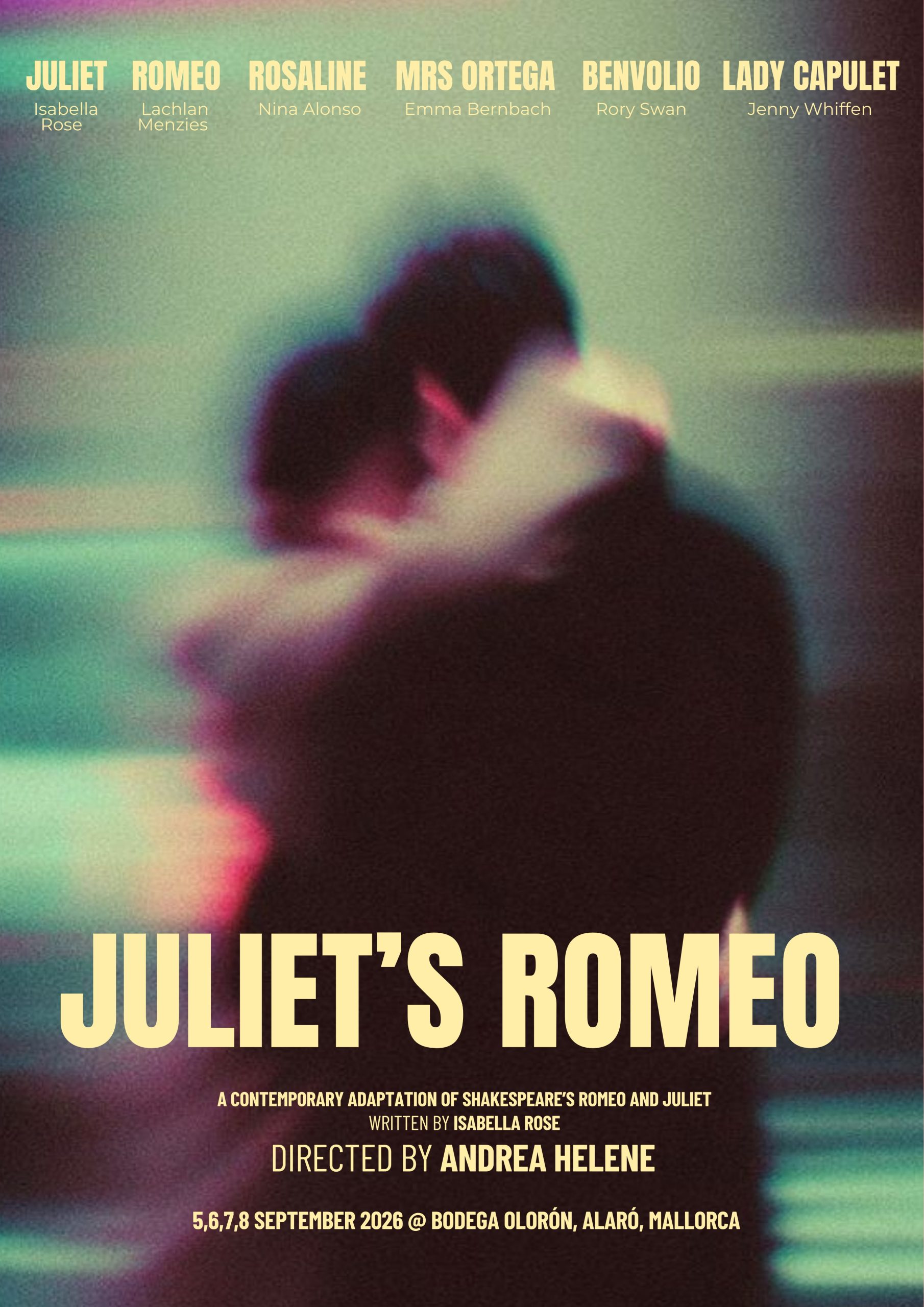
Juliet’s Romeo at Bodega Olorón
When: Saturday 5 to Tuesday 8 September 2026
Doors open: 7pm
Where: Bodega Olorón, Alaró
Language: English
Price: See the booking page for current ticket options
Shakespeare’s most famous love story is being reconsidered for a modern audience in Juliet’s Romeo, an original English-language production written by Mallorca-raised actress and writer Isabella Rose.
Performed among the vines at Bodega Olorón in Alaró, the play removes the warring Montague and Capulet families and places Romeo and Juliet’s relationship in a recognisably modern world. Two countries are in conflict, romantic expectations have changed and Romeo’s former love, Rosaline, is no longer prepared to disappear quietly from the story.
Rather than treating Romeo and Juliet as an unquestionable tale of perfect romance, Isabella examines its impulsive relationships through a contemporary lens. Romeo declares himself devoted to Rosaline, only to fall passionately in love with Juliet within hours. In Juliet’s Romeo, Rosaline finally gets the opportunity to respond.
The result is a funny, spicy and modern adaptation exploring love, loyalty, desire and the sometimes alarming speed with which people change their minds.
The vineyard setting forms part of the experience. Doors open between 7pm and 8pm, allowing guests to arrive early, enjoy the surroundings and sample wines from Bodega Olorón before the performance begins.
Read our interview: Meet Isabella Rose, the Mallorca writer reimagining Romeo and Juliet
Information and tickets: Book tickets for Juliet’s Romeo
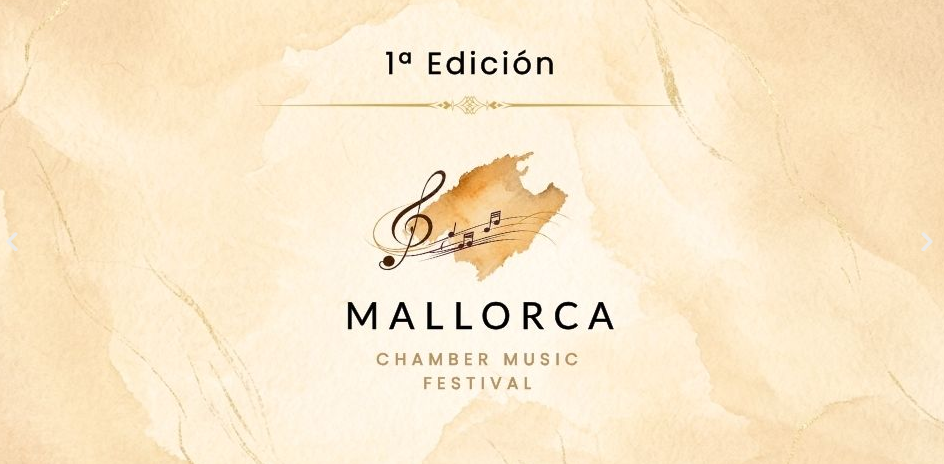
Mallorca Chamber Music Festival 2026
When: Thursday 3 to Monday 7 September 2026
Where: Palma and Alaró
Price: Free to €25, depending on the concert
The first Mallorca Chamber Music Festival takes place over five evenings in Palma and Alaró, bringing together eleven emerging musicians for a programme featuring some of the best-known works in the chamber music repertoire.
The first three concerts will be held in the Sala Mozart at the Auditòrium de Palma on 3, 4 and 5 September. These concerts begin at 7.30pm and include music by composers such as Strauss, Dvořák, Granados, Schubert, Mendelssohn, Mahler and Albéniz.
On Sunday 6 September, the festival moves to the courtyard of Ca n’Oleo in Palma for a free concert commemorating the 710th anniversary of the death of Mallorcan philosopher Ramon Llull. Admission is free, but a ticket must be reserved in advance.
The final concert takes place at the Teatre d’Alaró at 8pm on Monday 7 September.
The festival was founded by Mallorcan violinist Joan López de Soria Homar to give talented young performers greater visibility and create opportunities for international musical collaboration in Mallorca.
Dates and venues:
- 3, 4 and 5 September at 7.30pm, Sala Mozart, Auditòrium de Palma
- 6 September at 7.30pm, Ca n’Oleo, Palma
- 7 September at 8pm, Teatre d’Alaró
Information and Auditòrium tickets: Mallorca Chamber Music Festival at the Auditòrium de Palma
Free Ca n’Oleo concert: Reserve a ticket for the Ramon Llull concert
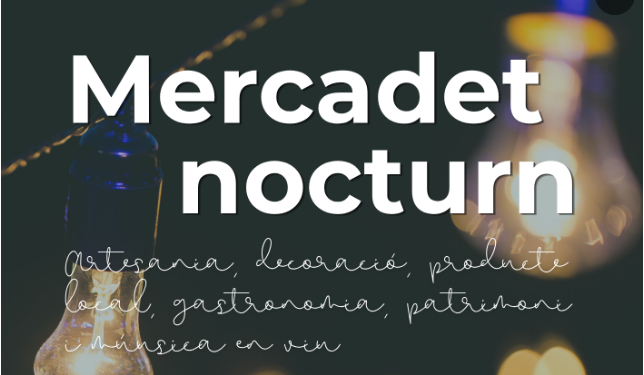
Sineu Night Markets
When: Friday 4, 11 and 18 September 2026
Time: 8pm to midnight
Where: Streets and squares in the historic centre of Sineu
Price: Free
Sineu’s Mercadets Nocturns Solidaris return on the first three Friday evenings of September, filling the historic centre with market stalls, local food, live music and evening activity.
The markets are designed to showcase local commerce, crafts and Mallorcan products while giving people another reason to explore the centre of Sineu after dark.
Mater Sineu, an inclusive café and social enterprise at Carrer de Ponent 1, will also participate. Its work supports employment and social inclusion for adults with intellectual and developmental disabilities.
The municipal market runs until midnight. Mater’s own advertised market programme runs from 8pm until 11pm, and tables can be reserved by calling 673 56 28 60.
This is a gentler alternative to Mallorca’s larger September festivals. Come for an evening walk, browse the stalls and stay for something to eat or drink in one of the island’s most characterful inland towns.
Official information: Ajuntament de Sineu night-market announcement
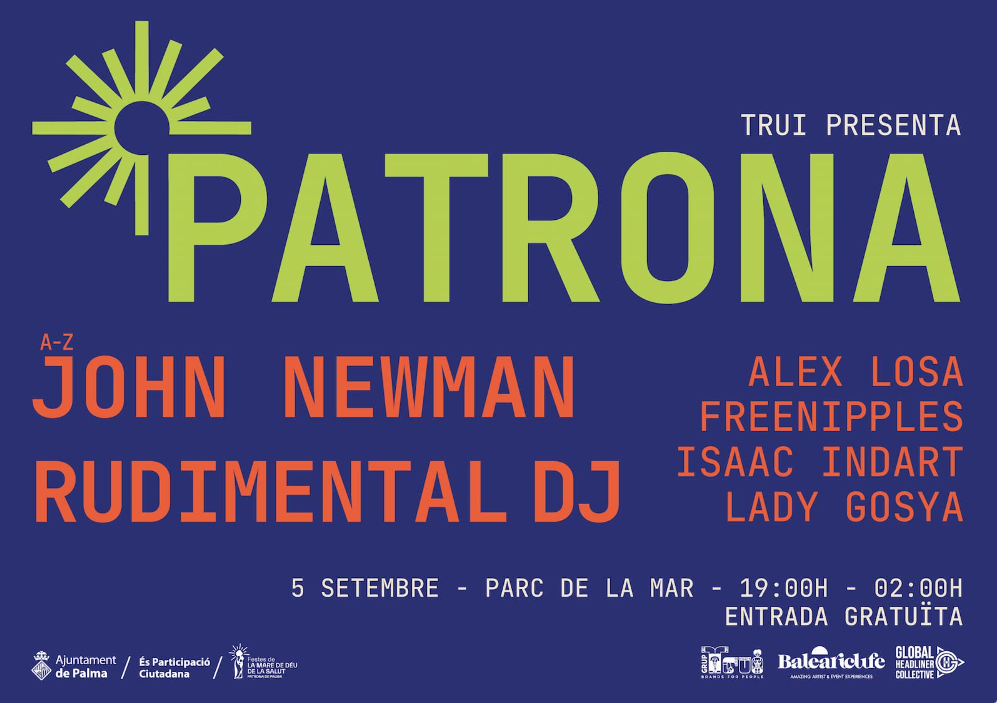
Patrona 2026 at Parc de la Mar
When: Saturday 5 September 2026
Time: 7pm to 2am
Where: Parc de la Mar, Palma
Price: Free
One of Palma’s biggest free music events of the summer returns to Parc de la Mar on Saturday 5 September.
Patrona forms part of Palma’s celebrations for the Mare de Déu de la Salut. This year’s line-up is led by British singer John Newman and Rudimental DJ, accompanied by Mallorcan artists Freenipples, Lady Gosya, Álex Losa and Isaac Indart.
The setting is difficult to beat. The stage sits in Parc de la Mar beneath Palma Cathedral, creating a dramatic backdrop as the concert continues into the night.
Admission is free and no advance booking is required. With international headliners and a central Palma location, however, it is likely to draw a considerable crowd. Arrive early and use public transport if possible.
Event information: Patrona 2026 at Parc de la Mar
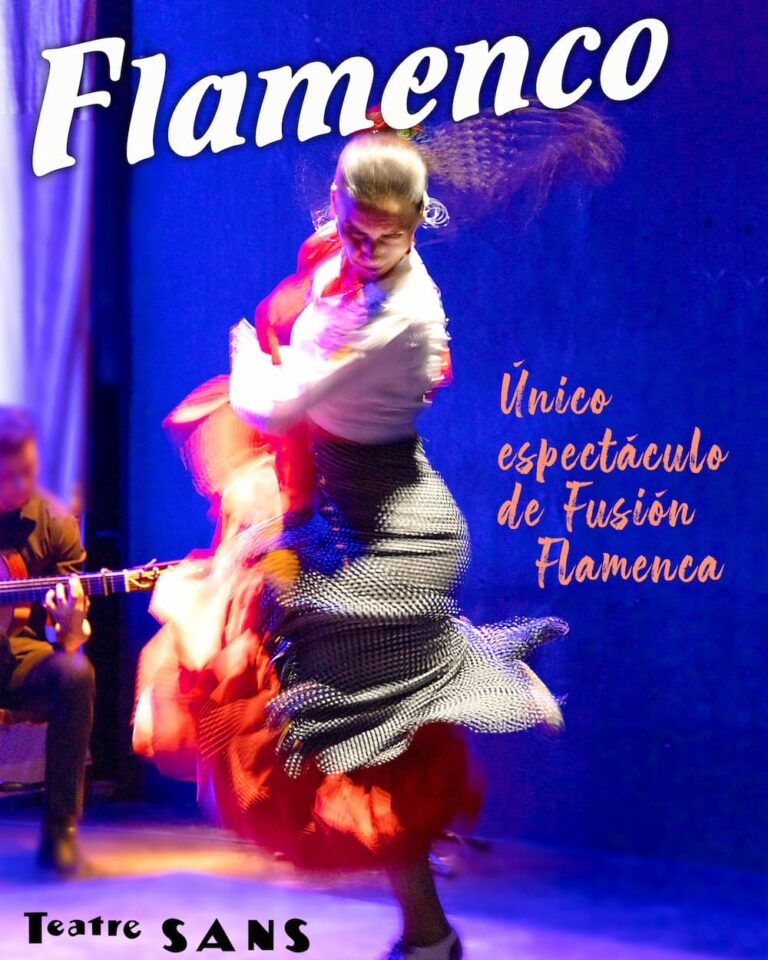
Flamenco Nights at Teatre Sans
When: Every Wednesday until 23 September 2026
Time: 9pm
Where: Teatre Sans, Carrer de Can Sanç 5, Palma
Price: €35 adults, €25 residents and €20 for children aged 5 to 12
Flamenco Nights returns to Teatre Sans every Wednesday until 23 September, combining traditional flamenco with the creative freedom of jazz.
The performance takes place inside a historic 14th-century Gothic building in Palma Old Town. Its intimate setting makes this very different from a large, highly polished tourist production.
The evening brings together live music and flamenco dancing, while the ticket also includes a tasting of Mallorcan products and a glass of wine.
Resident tickets cost €25. Standard adult tickets are €35, children aged 5 to 12 pay €20 and children under five can attend free of charge.
It is an excellent bookable evening for couples, visiting friends and anyone looking for live flamenco in central Palma without having to organise an entire night around it.
Information and booking: Flamenco Nights at Teatre Sans
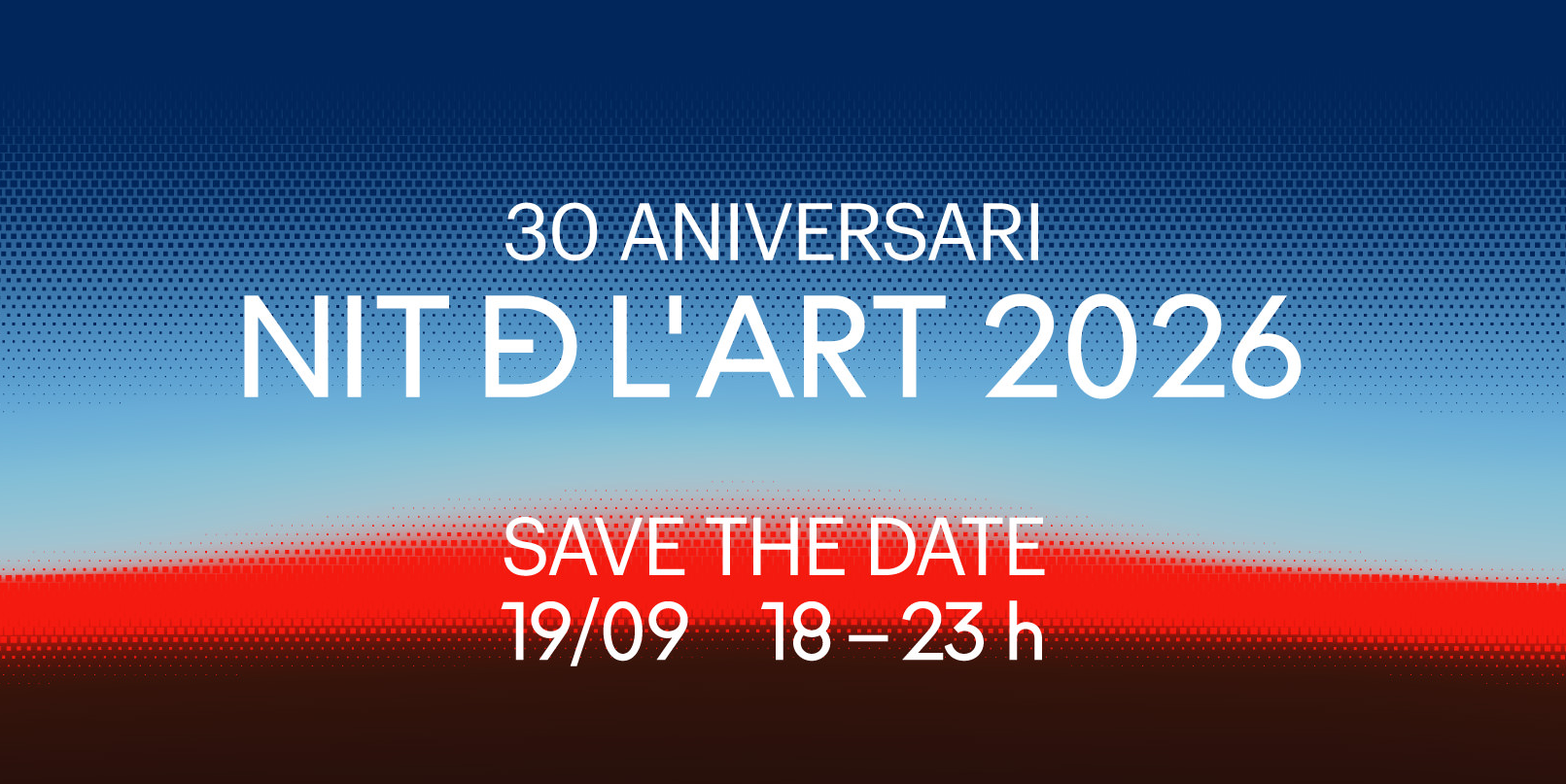
Nit de l’Art 2026
When: Saturday 19 September 2026
Time: 6pm to 11pm
Where: Galleries, museums and cultural spaces across Palma
Price: Free, although individual activities may require registration
Palma celebrates the 30th anniversary of Nit de l’Art on Saturday 19 September.
For one evening, galleries, museums, cultural institutions and independent exhibition spaces across the city open their doors for new exhibitions, installations and special events.
The official launch takes place in Plaça de l’Olivar, but the event spreads throughout central Palma. Part of the pleasure is choosing a few galleries and then allowing the crowds, open doors and unexpected exhibitions to alter your route.
Free guided visits in several languages are expected to form part of the programme. Places on these tours may be limited, so check the final programme and reservation arrangements before attending.
Nit de l’Art is one of the best evenings of the year for exploring Palma on foot. You do not need to know a great deal about contemporary art to enjoy it, although comfortable shoes are strongly recommended.
Event information: Nit de l’Art 2026
Organiser and participating galleries: Art Palma Contemporani
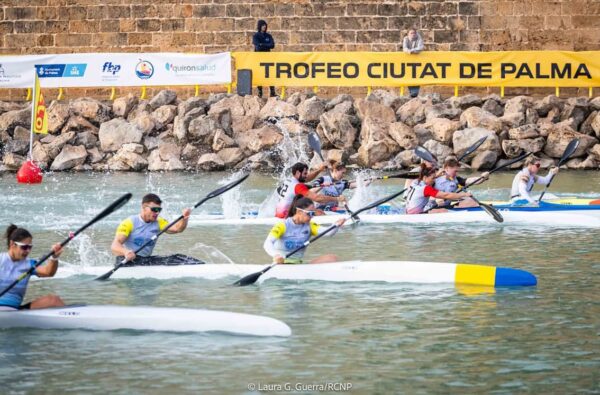
III Trofeo Ciutat de Palma de Piragüismo
When: Saturday 19 September 2026
Where: Parc de la Mar, Palma
Spectator price: Free
Parc de la Mar becomes a sporting venue on 19 September for the third Trofeo Ciutat de Palma de Piragüismo.
The canoeing competition brings paddlers from different categories to Palma, with the cathedral and historic city providing a particularly impressive backdrop. The 2026 event also introduces a C1 canoe category.
Registration is already open for competitors. The public listing does not yet provide a definitive start time, so anyone planning to watch a particular category should check the organiser’s information shortly before the event.
For spectators, it offers a chance to watch local sporting competition in one of Palma’s most accessible waterfront locations. It can also be combined with Nit de l’Art later that evening.
Event and registration information: III Trofeo Ciutat de Palma de Piragüismo
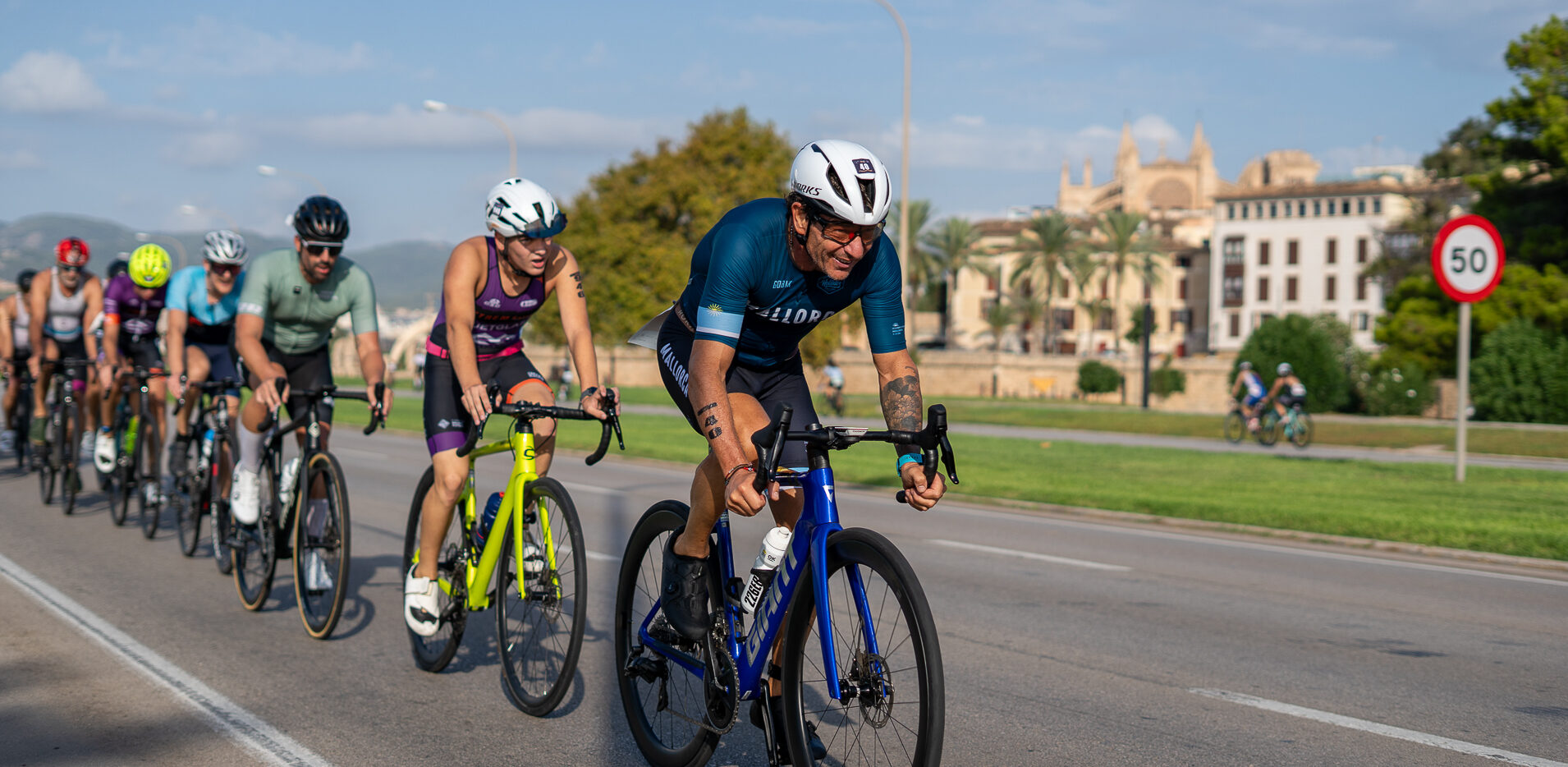
Port de Palma Triathlon Mallorca 2026
When: Sunday 20 September 2026
First start: 8.30am
Where: Can Pere Antoni, Portixol and Palma’s seafront
Entry price: Varies by race and entry date
The Port de Palma Triathlon Mallorca returns on Sunday 20 September, with swimming, cycling and running routes based around Can Pere Antoni, Portixol and Palma’s waterfront.
Competitors can choose from Olympic, Sprint and Super Sprint distances, with relay categories also available. The first Olympic-distance athletes start at 8.30am, followed by the other distances.
The seafront course makes this an enjoyable event to watch, even if you have no desire to enter the water voluntarily at 8.30 on a Sunday morning. Spectators can follow sections of the race from the Portixol and Can Pere Antoni areas.
Anyone driving through Palma that morning should allow for road closures and diversions along the seafront.
Registration closes: 11.59pm on Friday 18 September, unless places sell out sooner.
Official information and registration: Port de Palma Triathlon Mallorca
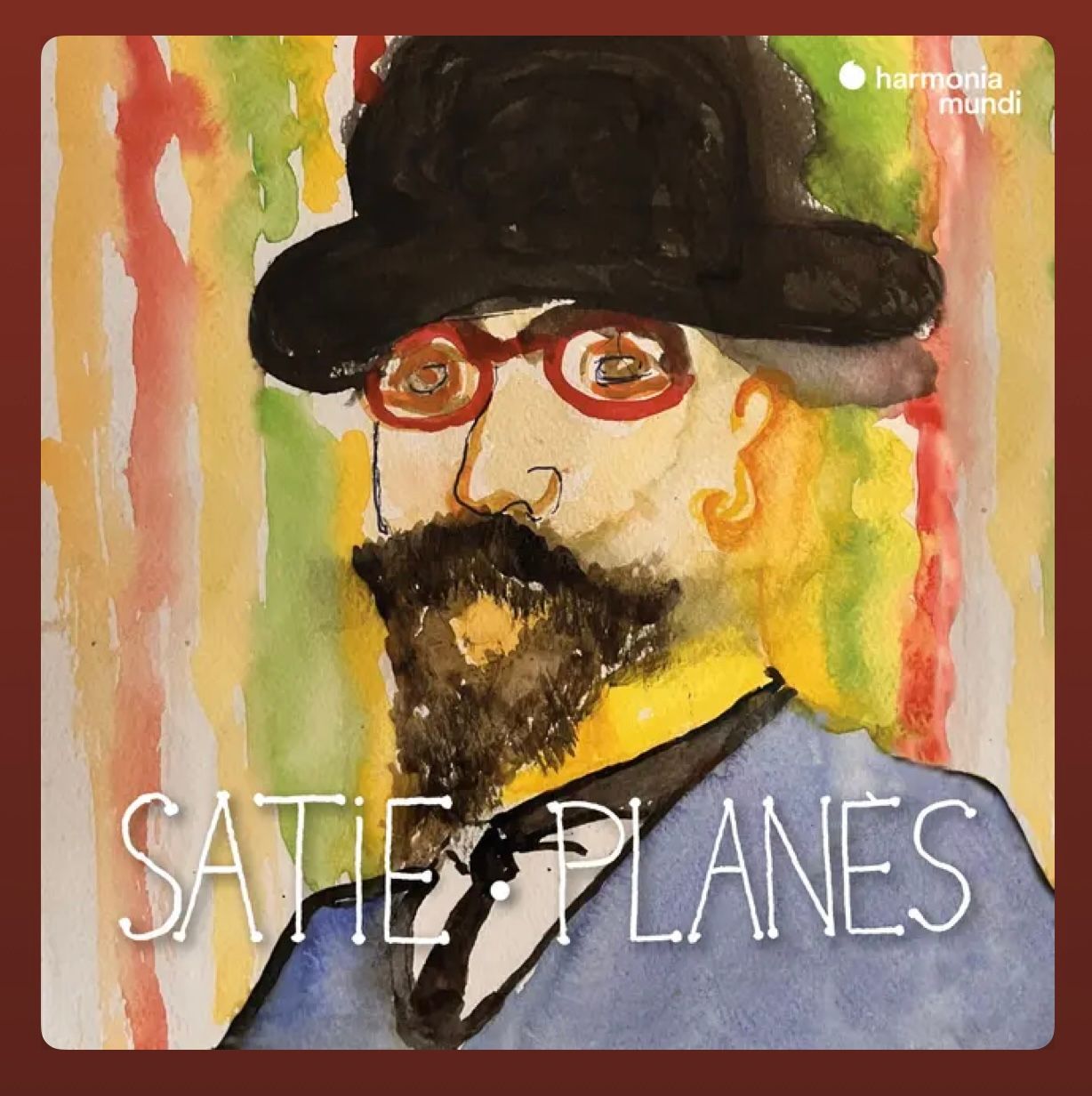
Satie, performed by Alain Planès
When: Friday 25 September 2026
Time: 8pm to 10pm
Where: Fundació Miró Mallorca Auditorium, Carrer de Saridakis 29, Palma
Price: €30
French pianist Alain Planès performs the music of Erik Satie at Fundació Miró Mallorca on Friday 25 September.
The concert forms part of the Miró and Music series, organised in collaboration with the Deià International Music Festival.
Planès is known for his interpretations of French repertoire and his longstanding interest in painting and poetry, making Fundació Miró a particularly appropriate setting for this programme.
The combination of Satie’s music, Planès’s performance and the atmosphere of Fundació Miró makes this one of September’s more contemplative cultural evenings.
Information and tickets: Satie, Alain Planès at Fundació Miró Mallorca
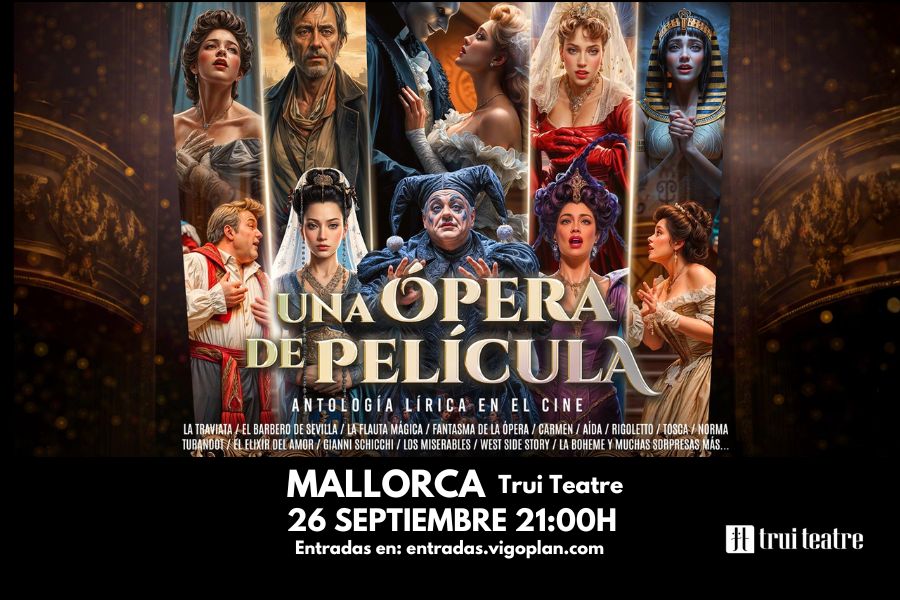
Una Ópera de Película at Trui Teatre
When: Saturday 26 September 2026
Time: 9pm to 10.30pm
Where: Trui Teatre, Camí de Son Rapinya 29, Palma
Price: Approximately €20 to €28
Una Ópera de Película brings famous operatic and lyrical music from the cinema to Trui Teatre.
The production is framed around an auction in an old theatre and the legend of a mysterious musical prodigy who once lived in the building’s catacombs.
The soundtrack includes familiar music from La Traviata, The Barber of Seville, The Magic Flute, Carmen, Aida, Tosca, Turandot, The Phantom of the Opera, Les Misérables, West Side Story and La Bohème.
It is designed to be accessible to people who enjoy theatrical music but may not consider themselves regular opera audiences. The recognisable pieces and narrative staging make it suitable for couples and mixed-age groups.
Information and tickets: Una Ópera de Película at Trui Teatre
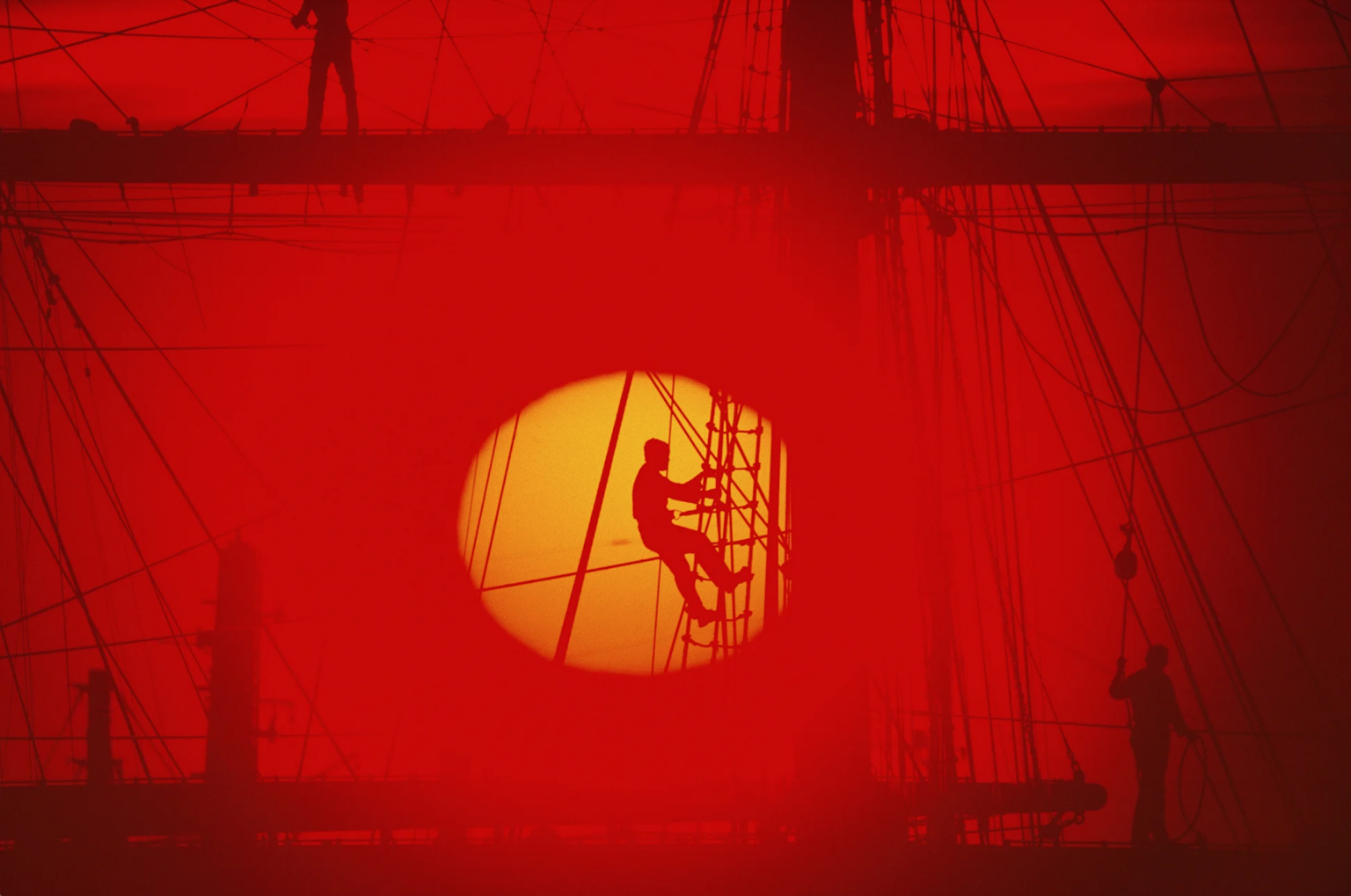
Colours of the World, National Geographic
When: Throughout September, until 10 October 2026
Where: CaixaForum Palma, Plaça de Weyler 3
Price: €4
Colours of the World is a National Geographic photography exhibition exploring how colour appears in landscapes, wildlife, communities and cultural traditions around the planet.
The exhibition brings together photographs taken in different parts of the world, creating a visual journey through natural environments and human life.
It is an easy addition to a day in central Palma and a particularly useful option when the weather is too hot, unexpectedly wet or simply not cooperating with your original plans.
The exhibition should appeal to photographers, families and anyone interested in travel and visual storytelling.
Opening hours can vary, so check the CaixaForum Palma timetable before visiting.
Information and booking: Colours of the World at CaixaForum Palma
For new events, local recommendations, island news and ideas for your next Mallorca adventure, sign up for our newsletter.
We will send the latest Majorca Mallorca stories and useful guides directly to your inbox.
I am raw html block.
Click edit button to change this html
More from Majorca Mallorca
Want to discover more about what is happening across the island?
Listen to the Majorca Mallorca Podcast for local stories, honest conversations and a closer look at the people, places and issues shaping Mallorca. We live here, and we go beyond the usual holiday headlines to explore what life on the island is really like.
CLICK HERE TO EXPLORE THE MAJORCA MALLORCA PODCAST
Planning your September in Mallorca
Several of September’s biggest events take place in central Palma, making public transport the easiest option, particularly for Patrona and Nit de l’Art. Programmes, access arrangements and starting times can change, especially for outdoor events. Check the linked organiser pages before travelling and reserve tickets early for performances with limited capacity.
September may signal the end of the peak summer season, but Mallorca’s events calendar clearly has no intention of going home quietly!
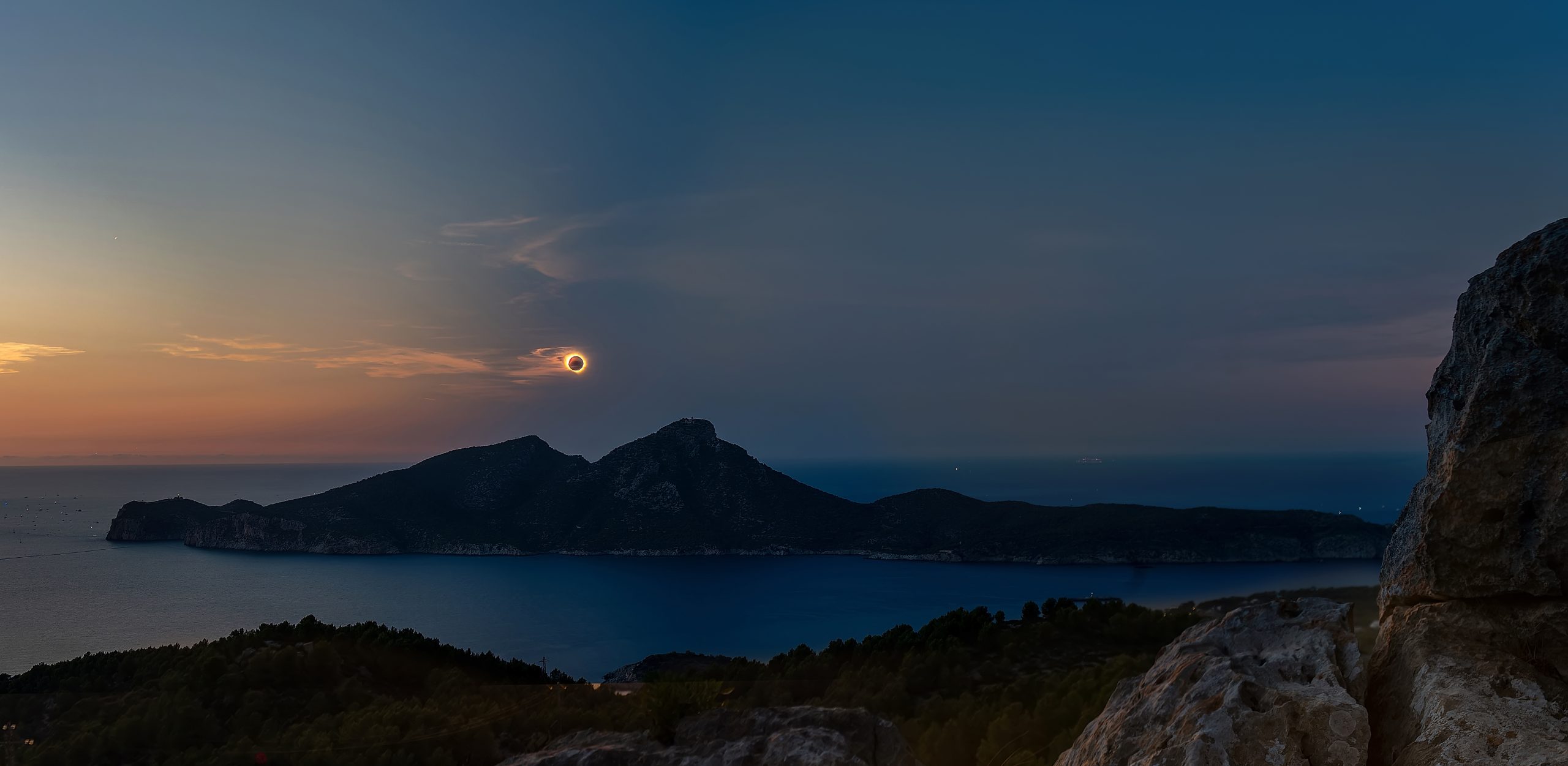
When Mallorca Went Dark: What the Total Solar Eclipse Was Really Like
When Mallorca Went Dark: What the Total Solar Eclipse Was Really Like
For months, Mallorca had been preparing for 12 August 2026.
Road closures were announced, emergency plans were drawn up, official viewing areas were created, buses were added, firefighters were put on standby and residents and visitors were repeatedly asked not to descend on the island’s most vulnerable natural areas.
Then, finally, the Moon moved in front of the Sun…
For 90 seconds, Mallorca went dark.
The build-up
The atmosphere across the island had been building throughout the days before the event.
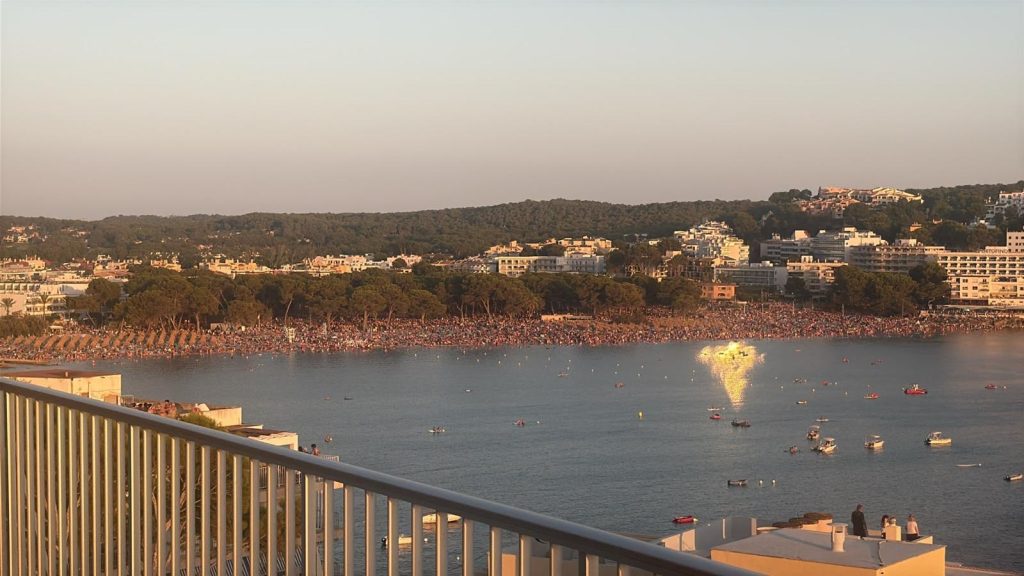
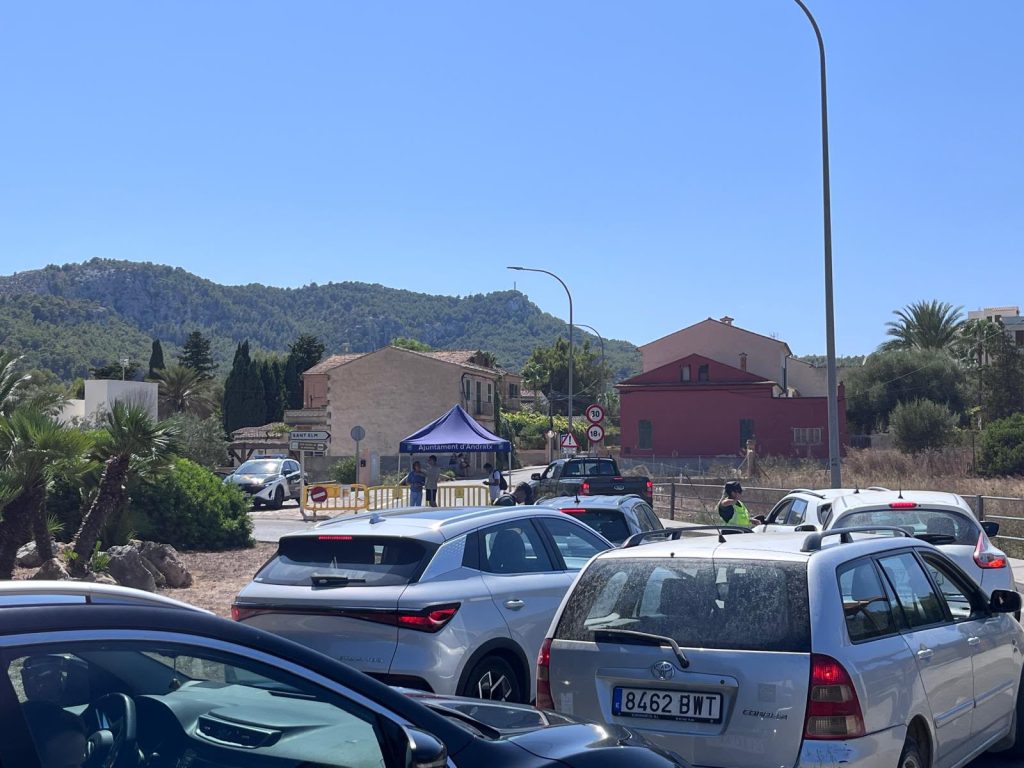
By late morning of the 12 August several of the restrictions planned for later in the day had already been brought forward as car parks filled and traffic pressure increased. Roads into parts of the Serra de Tramuntana were closed earlier than originally planned, while popular coastal locations including Cala Tuent and sa Calobra reached capacity.
Elsewhere, people gathered on beaches, hotel terraces, boats, rooftops, village streets and anywhere with a clear view towards the western horizon.
For us in the South West, it was quite bizarre to see a traffic jam outside of our house in s’Arraco!
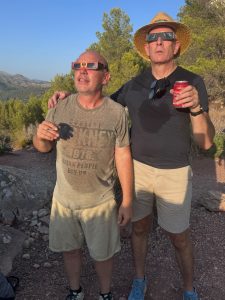
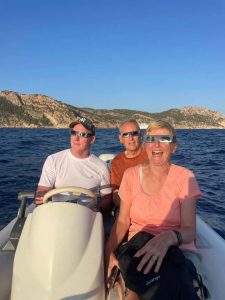
And then the light began to change
The partial phase began at around 19:38.
At first, the changes were subtle. The Sun was still bright and the island still looked familiar.
But as the eclipse progressed, the light became increasingly strange.
It also became increasingly cool, which was a welcome relief from the intense temperature of the day.
This was one of the things photographs could not entirely capture.
Mallorca was still Mallorca, but for a few minutes it did not look quite like itself.
The moment Mallorca went dark
Visibility across the island seems to have been perfect for everyone who has reported their experience.
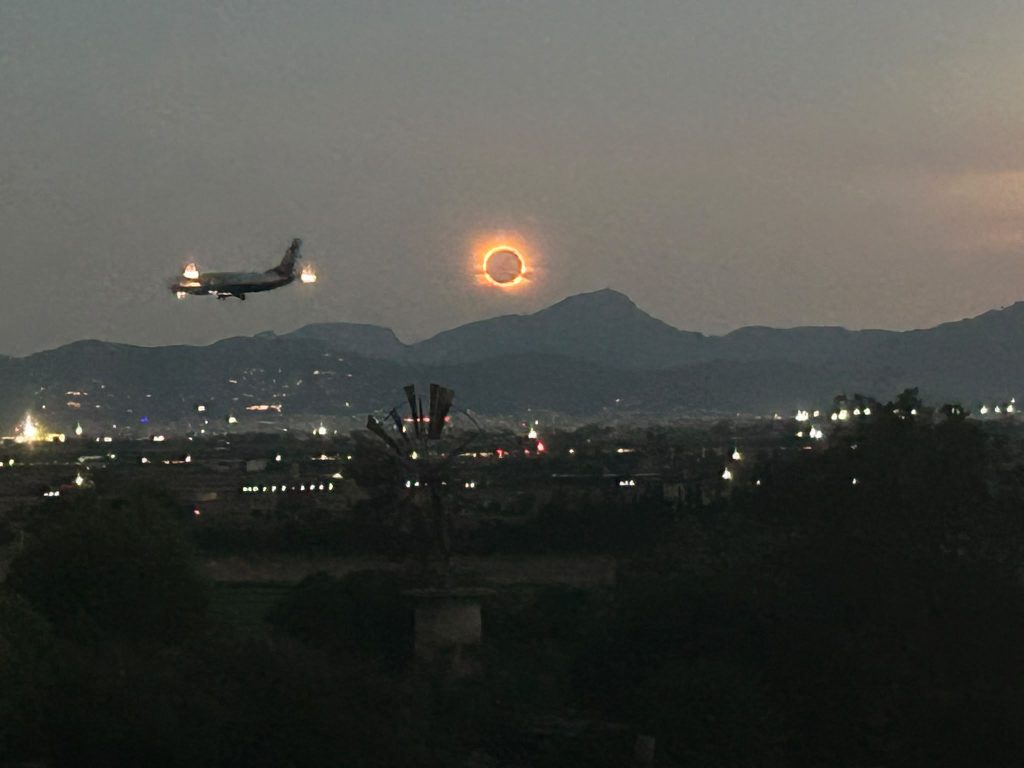
Totality swept across the Balearic Islands shortly after 20:30, with Mallorca experiencing roughly a minute and a half of complete eclipse.
After weeks of discussing viewing angles, cloud forecasts, mountains, road closures and whether everyone’s carefully selected viewpoint would actually work, suddenly none of that mattered.
The Sun disappeared.
It was the culmination of so much effort on our part at Majorca Mallorca to report to our group and advise them on how to experience the eclipse safely and enjoyably. To be finally “just watching” was a beautiful moment of peace followed by an awe inspiring show of nature’s power. As the Moon finally moved into position in front of the Sun, I don’t think anyone was truly prepared for the sight of the glowing solar prominences visible around its edge.
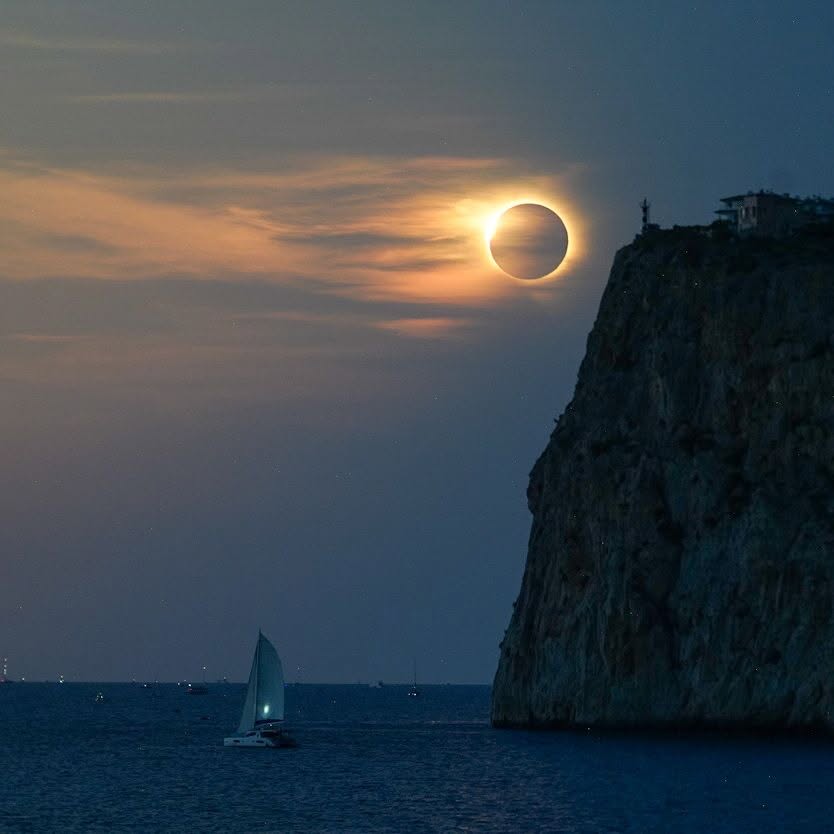
Around the island, people reacted in completely different ways.
Some cheered. Some went silent. Some cried.
Some simply stared upwards.
Where were you when Mallorca went dark?
One of the most interesting things about the eclipse was how differently it was experienced around Mallorca.
Someone watching from a beach had a completely different perspective from somebody standing in a village street, on a boat or in the mountains.
Holly Lowe said “We also hiked up a mountain – just behind Andratx. Absolutely EPIC. Taking the glasses off at maximum and seeing this huge black disc in the sky is something I will never ever forget! I honestly felt like I was on another planet! Coolest thing ever ever ever!! Absolutely buzzing about it! Scratched to bits from the no-path-mountain-expedition but un-bloody-believable!!!!”
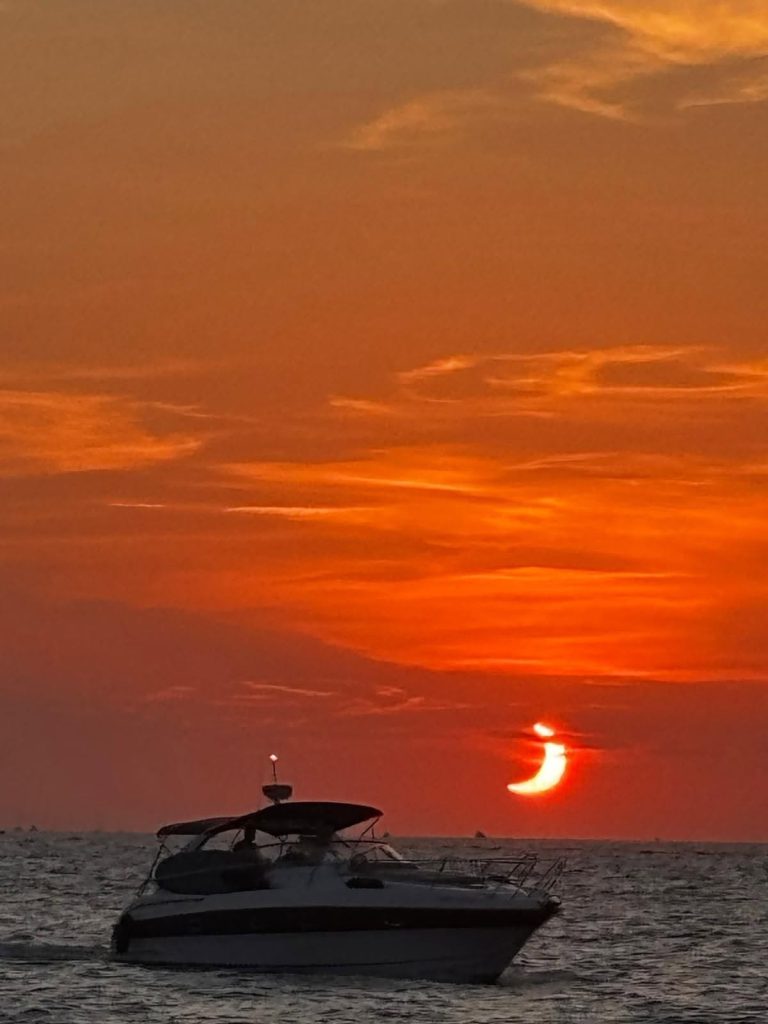
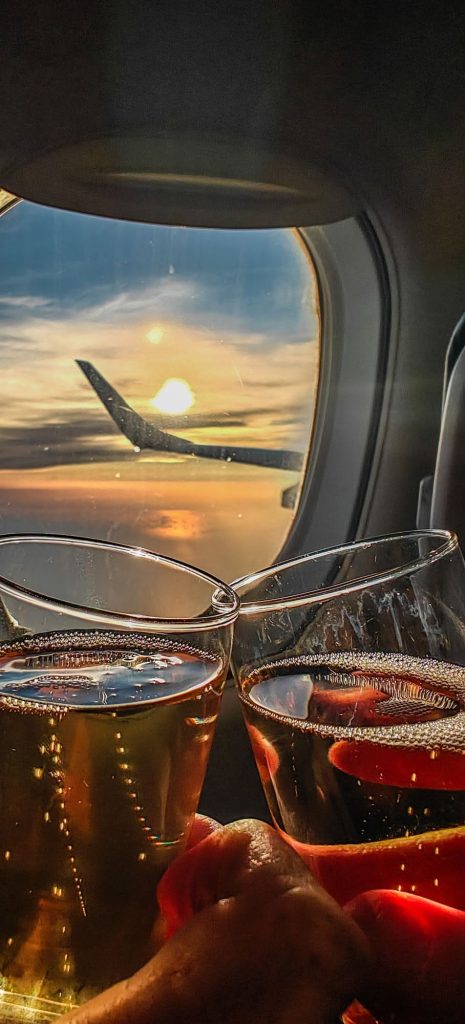
We would love to keep adding experiences from around the island to this record of the evening. You can see everyone’s reactions to the eclipse here
If you’d like to share your own experiences please do in our Facebook group here.
After months of planning, Mallorca got through it
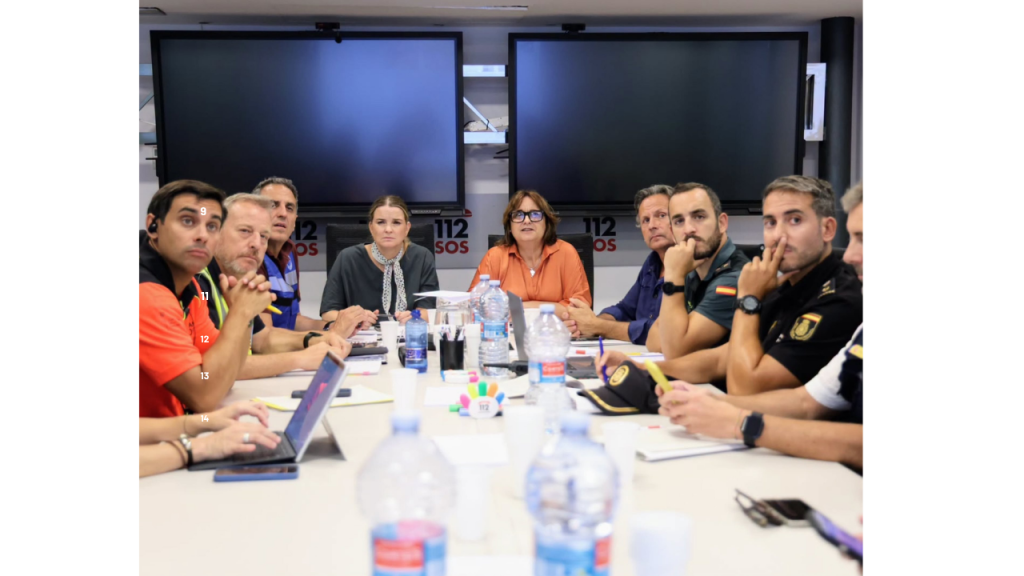
The scale of the official preparation had been extraordinary. The Balearic Government treated the eclipse as an emergency-planning event, coordinated through Cecopi, its operational emergency coordination centre. During the morning, some planned road closures in the Tramuntana had to be introduced earlier than expected as traffic increased. The Eclipse Protocol was also raised to Level 2 during the busiest period to strengthen coordination between the different authorities and emergency services.
More than 3,000 personnel took part in the wider eclipse operation across the Balearics, with up to 2,147 professionals mobilised simultaneously during the busiest hours of the day.
There had been understandable concerns about overcrowded roads, blocked emergency access and, perhaps most seriously, the danger of wildfire during one of the driest periods of the Mallorcan summer. In the end, however, the event passed without any major incidents being reported. For the emergency services who had spent months preparing for every possible scenario, that must have been an enormous relief. Anne Todd said "What an amazing experience the eclipse was! I didn't think I'd get there as it sounded like it was going to be chaos, but was actually very easy!"
Official assessment: Eclipse operation ends with 46 minor incidents and no serious problems
The Balearic Government has described the eclipse operation as a success for Balearic society as a whole, saying the historic day passed with normality, responsibility and without any serious incidents. The ECLIPBAL emergency protocol closed with 46 minor incidents registered by 112.
More than 3,000 personnel took part in the wider eclipse operation, with up to 2,147 professionals mobilised simultaneously during the busiest hours of the day. Authorities have highlighted the importance of the information provided in advance, coordination between different administrations and organisations, and, above all, the responsible behaviour of the public. After weeks of preparation and repeated warnings about traffic congestion, wildfire risk, overcrowding and the need to protect emergency access routes, that is probably the best possible outcome Mallorca could have hoped for.
The eclipse brought huge numbers of people outdoors and required one of the largest coordinated operations the islands have seen for a single event, but in the end the overwhelming majority of people followed the advice, respected the restrictions and helped the evening pass safely.
Not everything went completely according to plan
There were inevitably a few problems.
People were reported walking along roads in the Tramuntana despite restrictions, creating exactly the sort of safety issue authorities had hoped to avoid. There was also an unexpected crowd at Mirador des Grau, on the road between Andratx and Estellencs. The viewpoint had been reserved for the Mallorca Astronomical Observatory, which had spent around a year preparing for the eclipse, but tourists nevertheless arrived despite the road having been closed from 10am. Even so, these were relatively minor problems compared with some of the scenarios officials had been preparing for.
Did the road closures work?
That will probably be debated for a while… There were certainly frustrations as some roads closed earlier than people expected. Popular locations filled quickly. There were queues, diversions and people discovering that the place they had planned to watch from was no longer accessible. But there was also a reason for all that planning. Mallorca had to accommodate an extraordinary movement of people towards a relatively small number of west-facing locations, many of them reached by narrow mountain or coastal roads.
At the same time, emergency vehicles still needed access, the island’s forests and natural areas needed protecting, and thousands of people needed to be able to get home again once the Sun had set. The fact that the evening ended without major incidents suggests that at least some of that preparation did exactly what it was supposed to do.
Staying local turned out to be pretty good advice
One message came up repeatedly in the days before the eclipse:
If you have a good view close to home or your accommodation, stay there.
For many people, that turned out to be excellent advice. The eclipse did not require a famous lighthouse, a mountain summit or a supposedly secret beach.
Some of the best experiences came from gardens, terraces, neighbourhood streets, nearby beaches and village viewpoints. “We thought we would have to go to the mountains, but after reading the advice in the Majorca Mallorca group we realised we could see the eclipse from our roof terrace! It was a magical night”. Clare.
That may be one of the best lessons from the whole event: sometimes you do not need to chase Mallorca around the island to experience something extraordinary.
A few tone-deaf moments
For the most part, people seemed to understand that the eclipse was something to be shared. That was part of what made the evening so special. Families, neighbours, visitors and locals all stood outside together, looking up at the same sky and experiencing the same extraordinary moment.
But not everyone got the memo.
There were a few reports of people behaving as though parts of Mallorca could be turned into private eclipse viewing areas for the evening. At Es Carbó, beachgoers objected after a group was brought ashore from a yacht by tender. At Es Trenc, umbrellas, sunbeds and towels were reportedly laid out in an apparent attempt to reserve a private section of beach for yacht guests. At Port de Valldemossa, there were also complaints about a yacht anchoring over Posidonia, prompting an angry reaction from people nearby.
Then there was Bahía Grande, where residents were left furious after German broadcaster ZDF set up a substantial live television production at the mirador. Trucks, tents and technical equipment reportedly occupied much of the public viewpoint area, with some local people saying their usual place to watch the eclipse had effectively been blocked by a live broadcast being sent back to Germany.
None of this quite captured the spirit of the day.
The eclipse was one of those rare events that belonged to everyone. It was not something to be fenced off, reserved, privatised or turned into a film set at the expense of the people already there. If there was one lesson in those more tone-deaf moments, it was that Mallorca’s landscapes, beaches and viewpoints are not simply backdrops for private experiences. On a night like that, they were part of a shared one.
What we think was missing
A couple of suggestions have come up since the eclipse that might have relieved some of the pressure on the roads and created more opportunities for people to experience the event together.
We knew IB3 would be broadcasting the eclipse, so why not have shown the coverage on big screens in town squares? That could have given people who were unable, or simply unwilling, to travel the chance to watch together as a community.
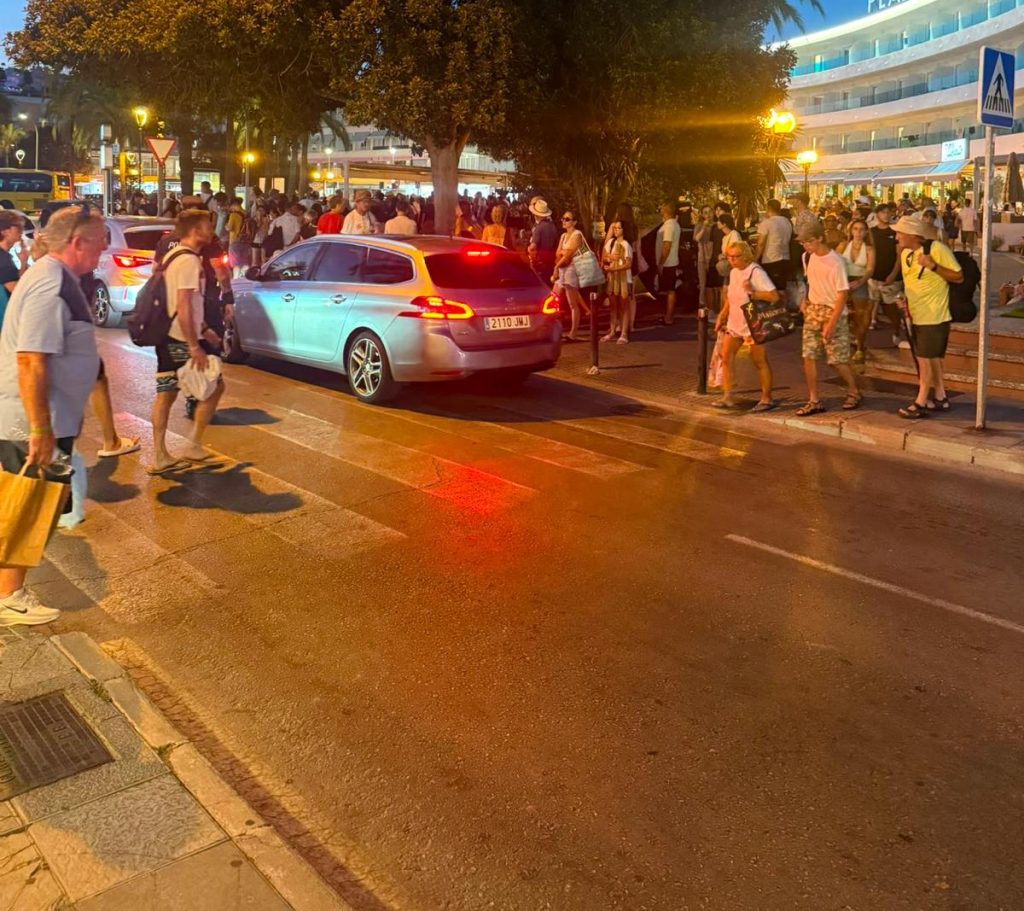
More thought could perhaps also have been given to getting people home afterwards. In Santa Ponça, for example, huge queues developed for taxis and buses once the eclipse was over.
What we will remember
There will be plenty of practical analysis of the eclipse. We will talk about traffic plans, buses, road closures, emergency operations and whether particular viewing areas worked.
But that probably will not be what most people remember, they will remember the light, the temperature changing, the strange colour of the island. The people around them suddenly becoming quiet and the cheering when totality arrived. And the extraordinary evening when a Mallorca evening became something none of us had seen before.
For me, that shared moment was very familiar. It reminded me of the evening “clap” during lockdown when neighbours stepped outside at the same time and, for a few minutes, everyone experienced something together. This time, thankfully, the reason was something wonderful.
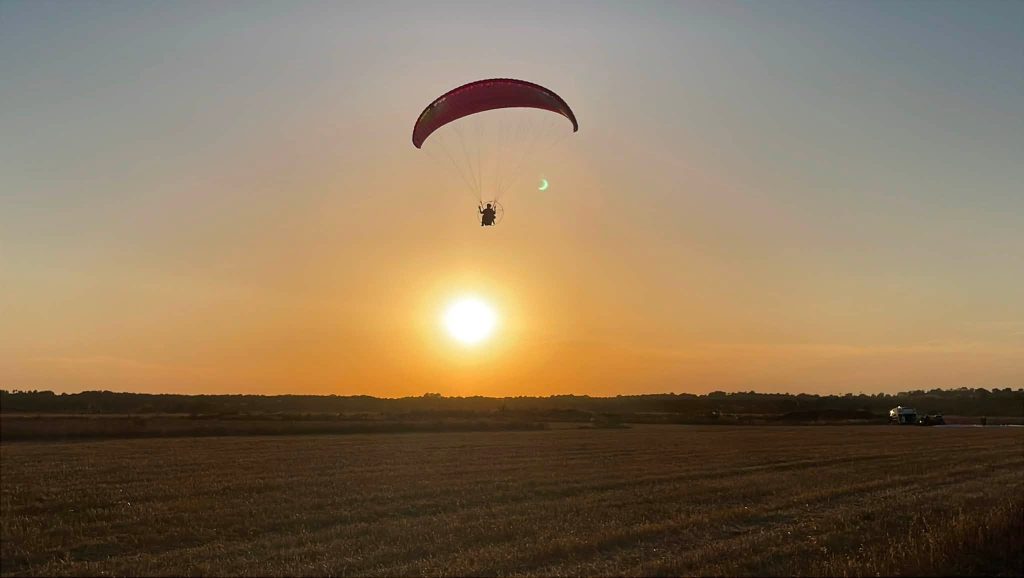
And then the light came back
A minute and a half is not very long, after all the planning, discussion and anticipation, Mallorca’s total eclipse was over quickly. As the Sun began to reappear, people took relaxed and conversations started again. Roads reopened, people went home, although quite a lot of you apparently went for midnight swims! Others stayed out in the dark and watched the Perseid Meteor showers. And the island returned to normal. More or less. If the peak of the Mallorca tourist season can ever really be described as normal.
For those who stood outside on 12 August 2026 and watched Mallorca disappear briefly into the Moon’s shadow, it is going to be one of those evenings we talk about for a very long time.
And if you missed it…
The good news is that Spain does not have to wait very long for another total solar eclipse. On 2 August 2027, another total eclipse will cross the south of Spain. The path of totality will include much of Cádiz and Málaga, as well as Ceuta, Melilla and parts of Granada and Almería.
In Málaga, totality is expected to begin at around 10:48 in the morning and last approximately 1 minute 48 seconds. So if Mallorca’s eclipse has suddenly turned you into an eclipse chaser, you have less than a year to wait.
Málaga 2027, anyone?
More from our Mallorca eclipse coverage
- [Mallorca Solar Eclipse 2026: Where to Watch and How to Prepare]
- [Mallorca Eclipse Road Closures 2026]
- [How to Watch the Mallorca Solar Eclipse Safely]
- [Majorca Mallorca Eclipse Podcast]
How one Mallorca holiday swim inspired the Cleaner Seas Collective
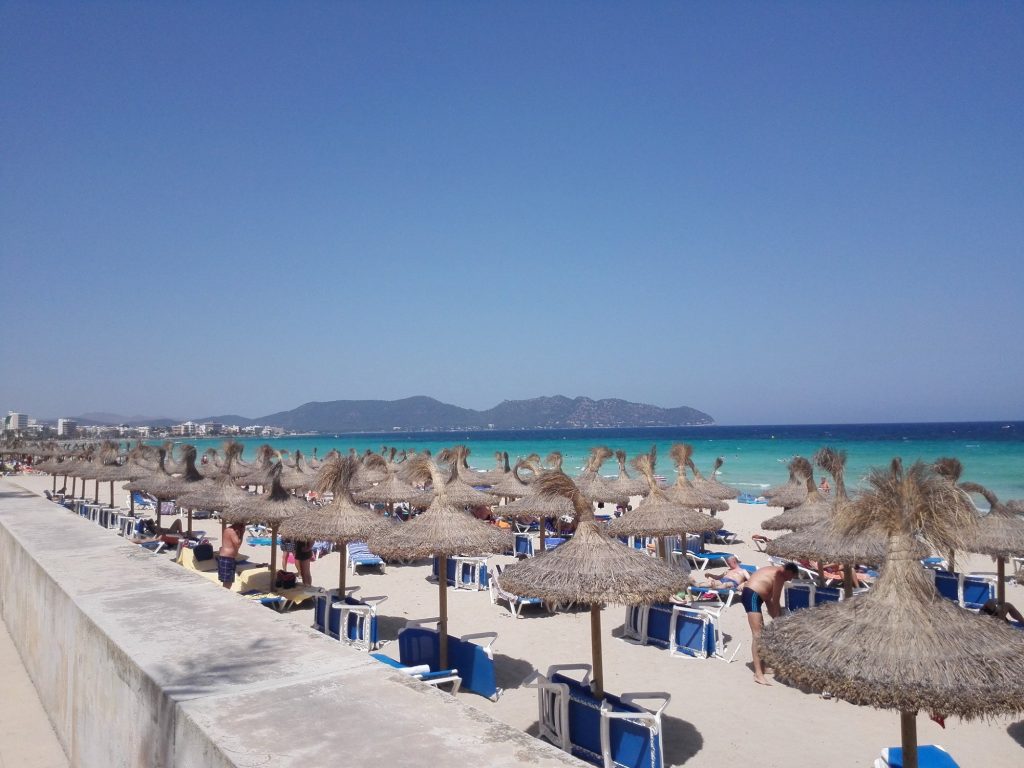
A broken fishing trap, an empty sack and two hours in the shallow water at Sa Coma gave British holidaymaker Gregg Thompson an idea. Now he wants visitors around the world to spend a few minutes caring for the beaches they have travelled to enjoy.
The unexpected discovery that changed Gregg’s holiday
When Gregg Thompson travelled to Mallorca with his wife, Rebecca, the plan was to celebrate their tenth wedding anniversary, enjoy a few child-free days and then return home to their kids, Oscar and Phoebe.
Gregg had visited Mallorca once before, but this was his first stay in the Sa Coma area. On the final beach day of the holiday, he left his sunbed and went into the sea for a swim.
Gregg admits he is not particularly good at sitting still for an entire day. A swim gave him something to do while still making the most of the sunshine and clear water. He certainly did not go into the sea intending to collect rubbish, launch an environmental project or write a business plan... Then he noticed what appeared to be a broken fishing trap floating in the water.
His first thought was simply to carry it back to the beach and dispose of it properly. Once he had picked it up, however, he began to notice everything else drifting around him. Bottle tops and pieces of plastic were moving through the water. Some of the debris floated just below the surface, making it less obvious from the beach but very noticeable to somebody swimming amongst it. “I thought I would do my bit and take the trap in,” Gregg told Majorca Mallorca. “Then I started noticing all the other floating rubbish that was in the sea. There was more than I was expecting.”
A sack appeared at exactly the right moment
As Gregg continued swimming, an empty sack floated past him. It seemed to arrive just when he needed something in which to place the rubbish he was finding. So, he opened the sack and started collecting. What began with one damaged fishing trap continued for approximately two hours. Gregg walked backwards and forwards through the shallows, sometimes waist or chest-deep in the water, picking up pieces of plastic from the sea and shoreline.
Importantly, he did not feel as though he had abandoned his holiday to undertake a gruelling environmental mission. He was still outside, enjoying the water and spending the day at the beach. The difference was that he was also removing rubbish as he went. That experience would later become central to the Cleaner Seas Collective concept. Gregg does not expect holidaymakers to surrender a day of their trip or attend a scheduled event. He wants to make it easy for people to act while they are already beside the sea.
“You’re still getting the sun and enjoying yourself,” he said. “People could do five minutes, an hour or the whole afternoon if they wanted to.”
The beach looked clean, but the water told a different story
Gregg is keen to point out that Sa Coma beach did not appear neglected. He was impressed by the bins and recycling facilities available nearby, and he was able to dispose of what he collected appropriately. The rubbish he found was primarily in the sea or moving along the shoreline. It was not necessarily waste left by people sitting on the beach that day. Marine litter can travel significant distances before currents and waves bring it into a bay.
From a sunbed, the beach may have appeared perfectly clean. From inside the water, Gregg had a different view.
Some pieces washed towards the shore before being pulled back out again. Others floated below the surface and brushed against him as he swam. It made him realise how much plastic may be present without being immediately visible to people on land.
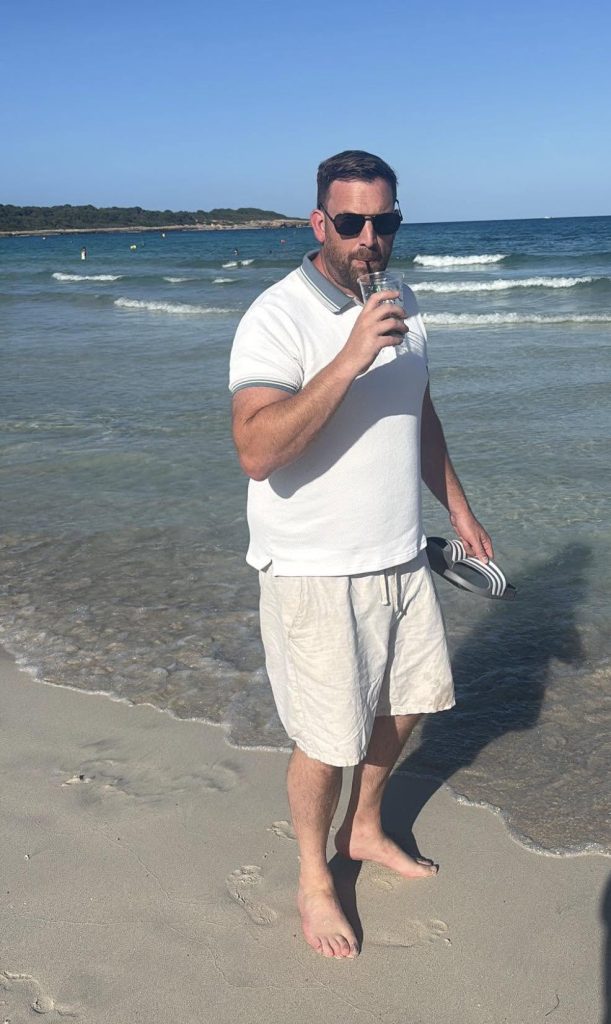
One person’s actions encouraged others
Gregg’s unusual activity did not go unnoticed. There were many other people enjoying the beach, and some began watching the man walking through the water with a sack of rubbish. Two women started picking up items and passing them to him. Other people thanked him.
This spontaneous response made Gregg consider the wider effect of taking visible action. Removing one bag of rubbish would make a tangible difference, but doing it in front of hundreds of people could also encourage somebody else to look more carefully at the beach and water around them.
The value was not only in the amount collected. It was also in showing that a visitor could help care for the destination they were enjoying.
For Mallorca, where conversations about tourism increasingly include pressure on natural resources and the responsibilities of visitors, that message has particular relevance. Tourism does not have to be a passive exchange in which people arrive, consume an experience and leave. Visitors can also make a small, positive contribution to the places hosting them.
Gregg believes children and families could be especially important to the project.
“If children see families and other holidaymakers doing it, they know it isn’t acceptable for litter to be in the sea,” he said. “The visual side of it can be as powerful as the act itself.”
Cleaner Seas Collective takes shape at Palma Airport
The idea stayed with Gregg for the rest of the day. While sitting on a sunbed after the clean-up, he wondered whether local businesses could help recognise people who took part.
It did not have to involve a major prize. A bar might offer somebody a cold drink after noticing their effort, for example. A hotel could provide guests with collection sacks. Tour operators and travel companies might help spread the message or sponsor incentives.
Gregg and Rebecca flew home the following day. Like many package-holiday travellers, they arrived at Palma Airport with plenty of time to spare before their flight.
Gregg used that waiting time to write a business plan.
By the time he left Mallorca, an unplanned swim had become Cleaner Seas Collective, a community-led initiative that Gregg now hopes to establish as a Community Interest Company in the UK.
How does Cleaner Seas Collective work?
The model is intentionally uncomplicated:
People request a free Cleaner Seas Collective collection sack before travelling. The sack is light, folds down small enough to fit easily inside a suitcase and can be taken to any coastal destination.
During the holiday, the participant spends as much or as little time collecting litter as they choose. This could mean picking up plastic during a five-minute walk along the water’s edge or spending longer cleaning a particular stretch of beach.
There is no organised meeting, fixed starting time or group commitment.
Once finished, participants dispose of the rubbish responsibly and separate recyclable materials wherever suitable facilities are available. They can then share a photograph with the Cleaner Seas Collective community, together with the location and details of what they collected.
The aim is not to pressure holidaymakers or make them feel guilty about visiting coastal destinations. It is to offer them a practical way to help.
“The target audience is people who are already on the beach,” Gregg explained. “There is no event you need to join and no organised litter collection. It is a case of: I’m here, I’ve got this and I can make a bit of a difference.”
What should participants collect?
Cleaner Seas Collective is focused on ordinary, safe pieces of marine litter, including plastic bottles, bottle tops, packaging and other items that can be handled without risk.
Participants should not pick up sharp objects, medical waste, unidentified substances, dog waste or anything potentially hazardous. Children must be supervised and should only collect safe items.
Dangerous objects should be reported to the lifeguard, beach marshal, police or relevant local authority rather than placed inside the sack.
Nobody should put themselves at risk by entering rough water, swimming after debris or attempting to retrieve large or heavy objects. The project is intended to fit safely around an ordinary beach visit.
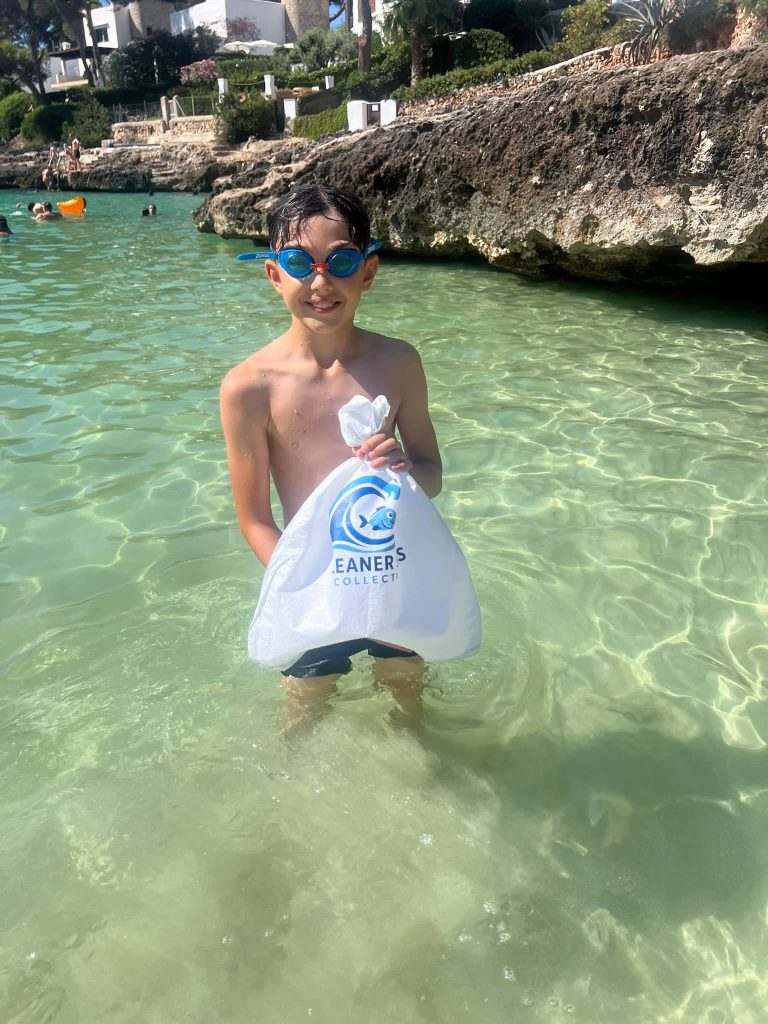
The first pilot bag returns to Mallorca
Fittingly, the first Cleaner Seas Collective pilot bag to be used on holiday travelled back to the island where the idea began.
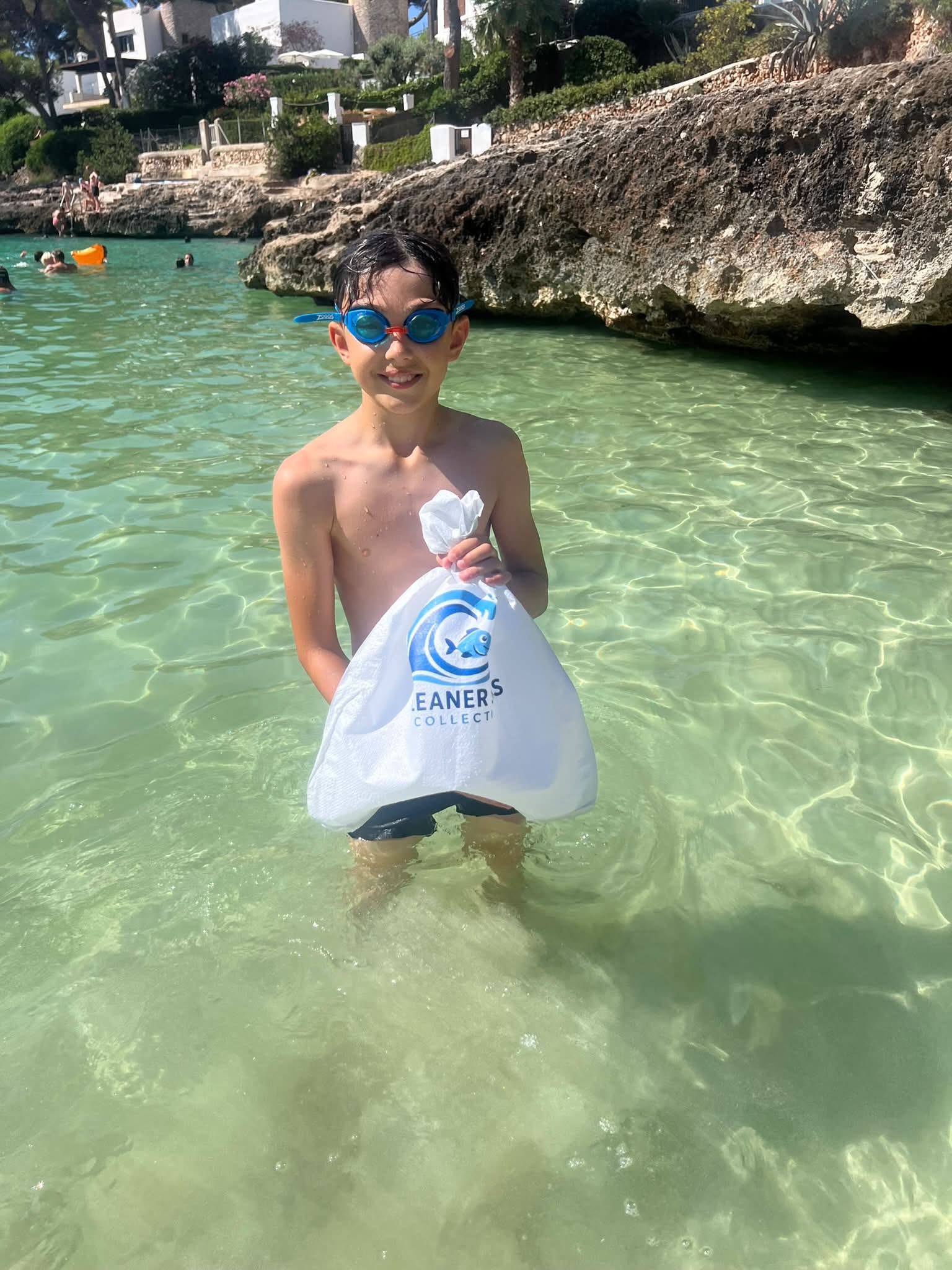
Ethan and his family took their bag to one of the small cove beaches near Cala d’Or. While swimming and enjoying the cove, they collected plastic bottles and other pieces of litter from the water and surrounding area.
The photograph of Ethan standing in the clear Mallorcan sea with the Cleaner Seas Collective sack provided Gregg with the first evidence that the idea could work beyond his own experience in Sa Coma.
One bag had completed its first journey. Now more are being sent out to other participants and destinations.
Gregg hopes that at least 50 people will take part in the initial summer pilot. Their photographs and reports will help him understand how people use the sacks, where clean-ups take place and what types of waste they find.
The information could also help Cleaner Seas Collective demonstrate its potential to prospective sponsors and tourism partners.
From Mallorca to a worldwide impact map
Although the project was inspired by Mallorca, the sacks can travel anywhere.
Gregg is willing to send one to somebody visiting another Spanish island, the British coast or a beach on the other side of the world. The location does not matter. The principle remains the same. His long-term plan includes the development of a dedicated digital platform. Participants would scan a QR code, upload a photograph and record information about their activity. Each clean-up could then be displayed on an interactive map.
If the project grows as Gregg hopes, the map could eventually show thousands of individual actions taking place across different coastal destinations. It would also allow Cleaner Seas Collective to measure its impact, including the number of participants, clean-ups completed, locations reached and estimated quantity of waste removed.
“There could be thousands of pins showing where litter has been collected,” Gregg said. “The data from that would be amazing.”
A role for Mallorca’s hotels and tourism businesses
Gregg would particularly like the project to develop in Mallorca and hopes to work with Protur Hotels, the hotel group with which he stayed when the idea was born. Rather than posting sacks individually from the UK, participating hotels could keep a supply for guests. A visitor who wanted to take part could collect one from reception, use it during the holiday and share the result online. Bars, restaurants, activity providers and other local businesses could also support the initiative.
Some might act as collection or distribution points. Others could offer a small gesture to participants or help fund the bags. Larger travel businesses could potentially sponsor prizes, although Gregg is clear that rewards should encourage participation rather than become the reason for it. The environmental benefit still matters even when somebody collects rubbish without photographing it or adding it to the project’s data. The sea does not care whether the clean-up appeared online.

Small effort, visible difference
Cleaner Seas Collective is not intended to replace the organised beach-cleaning groups already doing important work in Mallorca and elsewhere. Its purpose is different.
Gregg wants to reach the people who may never sign up for an official clean-up but would happily spend a few minutes helping if somebody placed the means to do so in their hands.
“The aim is to bring together people who want to make a small difference while enjoying time by the sea,” he said.
“There are no organised beach cleans, no pressure, no guilt and no expectation that you become an eco-warrior. It is simply about ordinary people spending a few minutes helping the beaches they already love.”
That ordinary quality may prove to be the project’s strength. Cleaner Seas Collective began without a committee, campaign strategy or organised event. It began because one holidaymaker saw something floating in the sea and decided not to leave it there.
How to request a free Cleaner Seas Collective bag
The Cleaner Seas Collective pilot is taking place now. Gregg is looking for holidaymakers who would like to take a bag on their next coastal trip, as well as hotels, tourism businesses, sponsors and environmental organisations interested in supporting the initiative.
Taking part involves five simple steps:
- Request a free Cleaner Seas Collective bag.
- Pack it for your next visit to the coast.
- Spend five or ten minutes collecting suitable, safe litter.
- Dispose of everything responsibly, recycling where possible.
- Share a photograph and tell the community where the bag travelled.
To request a pilot bag, offer support or discuss a partnership, contact Gregg Thompson at gregg@cleanerseascollective.org. or join the Facebook group here .
Mallorca Eclipse 2026 — Complete Live Guide
Mallorca Eclipse 2026 — Complete Live Guide
The total solar eclipse on Wednesday 12 August 2026 will be visible from Mallorca, with totality occurring shortly before sunset. This Mallorca Eclipse 2026 guide covers where to watch, the official viewing areas, eclipse times, road closures, transport restrictions, safety advice and the latest local updates.
🔴 LAST CHECKED: 12 AUGUST 2026 17:00
17.28 UPDATE
17:30 UPDATE: El Toro vehicle access closed
Calvià has announced a new eclipse traffic restriction affecting El Toro.
Vehicle access to the town has now been closed, although residents, public transport and workers are still permitted to enter.
Authorities are also asking people to take particular care around the viewpoint area, where there is a risk of falls and possible rockfall.
If you are heading towards El Toro, respect the road signs and do not assume you will be able to drive into the area unless you fall into one of the permitted categories.
LIVE UPDATE: Airport queues, Sóller congestion and more Serra closures
Traffic pressure is continuing to build across Mallorca as the island moves closer to this evening’s total solar eclipse.
At Palma Airport, Última Hora is reporting very long queues for taxis, with access difficulties affecting the normal flow of vehicles. Anyone travelling to or from the airport this afternoon should allow considerably more time than usual.
In the Serra de Tramuntana, conditions are becoming increasingly difficult in several of the most popular viewing areas.
Port de Sóller is now very busy, both on the beach and in the harbour, while Sa Foradada access has been closed. People are also gathering along the roadside between Valldemossa and Deià near Son Marroig.
Valldemossa is becoming difficult to access, with queues reported and the road between Valldemossa and Deià already closed.
Guardia Civil teams are using drones and motorcycles at access points, including around Andratx and Cala Blanca, as part of the wider traffic and security operation.
Elsewhere, Es Caragol beach is filling quickly, while Caimari remains relatively calm for now, although access towards the Serra is restricted and being controlled.
More than 1,400 professionals are now involved in the eclipse operation across the Balearics, with additional resources expected as the afternoon progresses.
The latest AEMET outlook remains encouraging, with less cloud development expected than yesterday and generally favourable conditions for viewing.
The practical advice remains the same: if you already have a clear view from somewhere close to home or your accommodation, stay local if you can. Roads and viewing areas are continuing to fill, and access conditions can change at very short notice.
UPDATE: Playa de Palma, Sóller and eclipse glasses
The eclipse operation is now fully under way across Mallorca, with emergency teams deployed and conditions continuing to change as the afternoon develops.
In Playa de Palma, the special traffic controls are operating and the EMT E-00 eclipse buses are running. The area was still relatively calm at the latest update, and the special buses were not yet full. Firefighters, Local Police and Civil Protection are also deploying, concrete bollards have been installed between Balnearios 4 and 1, and the Red Cross has established a post in Plaza de las Maravillas.
There are already queues at some Palma pharmacies for eclipse glasses, and at least one pharmacy in Playa de Palma has sold out. If you still need glasses, do not leave it until the last minute. Only use proper eclipse glasses suitable for direct solar viewing.
The situation in Sóller is becoming much busier. Access to the lighthouse has been closed earlier than originally planned and reports indicate that fuel for boats has run out locally.
The latest AEMET forecast remains encouraging, with almost clear skies expected over Mallorca. Temperatures between 19:00 and 21:00 are forecast to remain around 30 to 32°C, with humidity of approximately 60 to 70 per cent.
The first CECOPI emergency coordination meeting has taken place, with officials reporting that the overall operation is currently proceeding as planned.
What about pets?
Animals do not need eclipse glasses. The advice is to keep their routine as normal as possible and, importantly, do not try to encourage pets to look towards the Sun for photographs or videos.
With roads already closing, parking areas filling and crowds building in some parts of the island, the advice remains the same: if you already have a good view from your home, hotel or somewhere nearby, stay local if you can.
LIVE UPDATE: New road restrictions in Mallorca
Further eclipse traffic restrictions are now in force across Mallorca:
- Ma-10: restricted between Andratx and Valldemossa
- Andratx: access onto the Ma-10 is closed
- Valldemossa: traffic is being diverted towards Deià and Sóller, with restrictions also in place from Esporles
- Sant Elm: road between Andratx and Sant Elm closed
- Es Trenc: access road to the car park closed
- Puig de Randa: access road closed
- Cala Tuent and sa Calobra: car parks full and road access closed
- Port des Canonge: access closed
- Port de Valldemossa: access closed
- Cap de ses Salines: access closed
If you can see the eclipse from your home or accommodation, authorities are asking people to avoid unnecessary journeys.
For the latest live traffic situation, check the DGT
13:45 LIVE UPDATE: More roads and car parks now closed
The eclipse traffic operation is escalating quickly, with more roads and parking areas across Mallorca now closed well before the originally expected 15:00 restriction period.
Four car parks in the Serra de Tramuntana are already full and closed:
- Cala Banyalbufar
- Cala Estellencs
- Cala Tuent
- sa Calobra
Access to Cala Tuent and sa Calobra has been closed because the parking areas have reached capacity.
The Ma-10 between Andratx and Valldemossa is already restricted, with traffic being diverted from Valldemossa towards Sóller and Deià.
Other closures now include:
- Andratx to Sant Elm
- Port des Canonge
- Port de Valldemossa
- Cap de ses Salines
- Puig de Randa
- The road from Ses Salines towards the Es Trenc parking area
- The Ma-10 towards Banyalbufar near Ses Mosqueres in Esporles
In Santa Ponça, traffic remains closed between Plaça Santa Ponça and Carrer Lisboa until the eclipse operation finishes.
The message now is very clear: do not wait until 15:00 to make your plan. Authorities are closing roads and parking areas as soon as they become too busy.
If you are already somewhere with a clear view of the western horizon, staying local is increasingly the sensible option.
Check live road information before setting off and have an alternative plan ready.
Other areas in the Andratx area under control (residents should remember to bring proof of residence with them in case they need to show police)
Cala Llamp: Carretera Vella de Cala Llamp together with the Ma-1020, the Camp de Mar road.
Sa Mola: Camí San Carles at Carrer Cristóbal Serra, formerly Carrer Lepanto.
Cala Egos and Can Borràs: Carrer Cala Egos and Carretera Aldea Blanca at the junction with the Ma-1022, Pla de Son Llarg.
Road closures are already being brought forward
Updated 12 August, 13:30
Road restrictions are already being introduced earlier than originally planned as Mallorca prepares for this evening’s total solar eclipse.
The Ma-10 between Andratx and Valldemossa is currently restricted, with access from Andratx cut and traffic being diverted around Valldemossa and Esporles. The Ma-10 between Andratx and Estellencs has also already been closed, despite the general restriction period originally being scheduled to begin at 15:00.
Several popular mountain and coastal locations are already full. The car parks at Cala Tuent and sa Calobra have reached capacity and road access has been closed. Access has also been closed to Port des Canonge, Port de Valldemossa and Cap de ses Salines, while parking at Cala Banyalbufar and Cala Estellencs had already filled earlier in the day.
In Palma, access to El Molinar was closed at 13:00 because of concerns about crowding. In Santa Ponça, the main road between Plaça Santa Ponça and Carrer Lisboa has also been closed and will remain controlled until the eclipse operation finishes.
Parking pressure is also building in Port de Sóller, where queues are already heavier than usual.
The important message is simple: do not rely on the published 15:00 start time for road restrictions. Authorities have always warned that closures could be introduced earlier if roads, car parks or viewing areas became too busy, and that is now happening.
If you already have a good viewing location close to where you are staying, stay local if you can. Check the latest official traffic information before setting off and have a Plan B.
Mallorca is also at Fire Alert Level 4, the highest level of fire risk, with additional forest firefighters and environmental officers deployed across the Balearics today. Please take extreme care around dry vegetation and natural areas.
Mallorca will experience a total solar eclipse on Wednesday 12 August 2026.
The eclipse begins at approximately 19:38, with totality at around 20:31–20:33, depending on your location. Totality will last for roughly 90 seconds in favourable parts of Mallorca.
But watching the eclipse is not simply a question of finding a beach or viewpoint.
The Sun will be extremely low in the west-north-western sky, while mountains, hills, buildings and headlands can block the view. At the same time, major traffic restrictions and controlled-access measures will operate across parts of Mallorca.
This page brings together our latest Mallorca-specific information and links to our detailed guides.
🔴 Latest Mallorca Eclipse Update
11 August 2026 — latest information
Official viewing areas and traffic restrictions are now in place, with controls operating across a number of Mallorca roads and popular viewing locations.
Some areas may close before the published time if they reach capacity or if traffic, fire risk or public safety requires it.
Playa de Palma has particularly extensive restrictions, while Santa Ponça’s viewing operation begins on 11 August and access will close when capacity is reached.
A special EMT “00 Eclipsi” bus service will also operate between Plaça d’Espanya and s’Arenal.
Our advice: if you already have a safe location with a clear west/north-western horizon, consider watching from there rather than attempting to cross Mallorca late in the day.
We are updating this guide as official information changes.
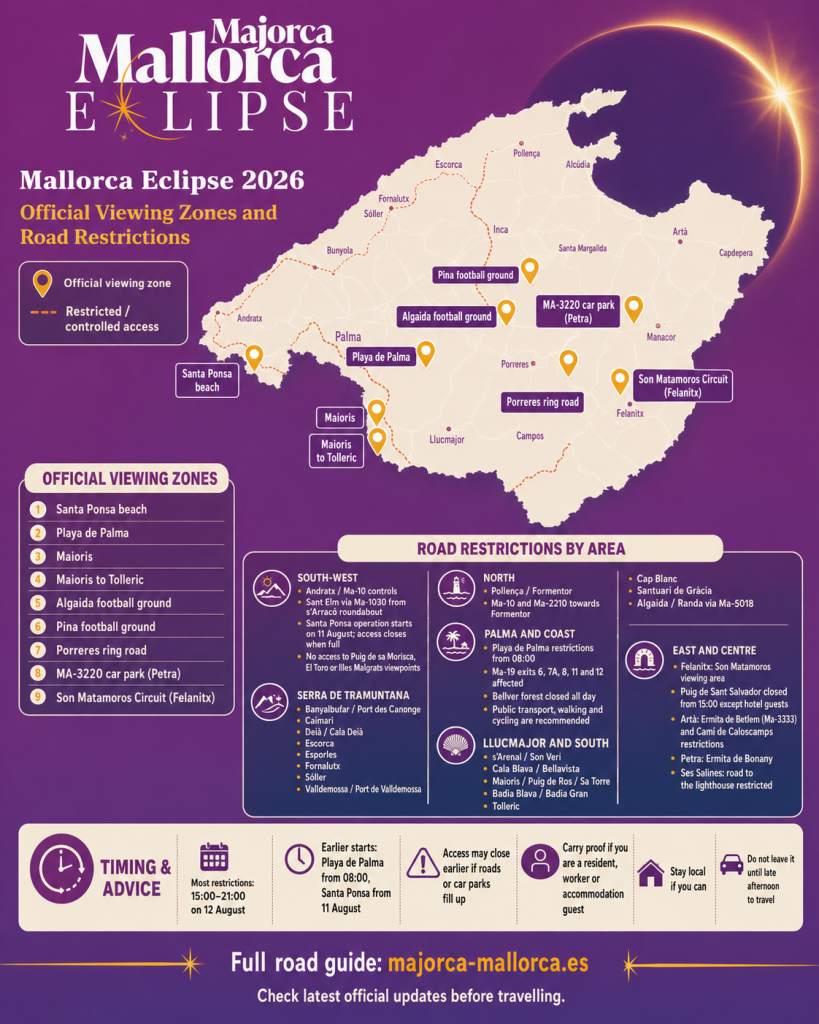
🗺️ Where can I watch the eclipse in Mallorca?
The Balearic authorities have designated nine official viewing areas in Mallorca:
- Santa Ponça beach
- Playa de Palma
- Maioris
- Maioris to Tolleric
- Algaida football ground
- Pina football ground
- Porreres ring road
- MA-3220 car park, Petra
- Son Matamoros Circuit, Felanitx
See the complete viewing guide
→ Where to watch the Mallorca solar eclipse and how to choose your location
🚗 Mallorca Eclipse Road Closures
Around twenty roads and access routes are affected by eclipse-related traffic measures.
Restrictions are particularly important around:
- Serra de Tramuntana
- Andratx and Sant Elm
- Pollença and Formentor
- Playa de Palma
- Llucmajor and the south
- Algaida and Randa
- Felanitx
- Artà
- Petra
- Ses Salines
Most restrictions are expected to operate from approximately 15:00 to 21:00 on 12 August, although some begin earlier and controls can be introduced sooner if necessary.
Residents, registered accommodation guests, authorised workers and other people with justified reasons may have access to some restricted areas, subject to the relevant controls and documentation.
Read the full road-by-road guide
→ Mallorca Eclipse Road Closures 2026: Full Traffic Restrictions by Area
🚌 Getting around Mallorca on eclipse day
If you’re staying in Palma or Playa de Palma, public transport may be a much better option than driving.
EMT Palma is operating a special “00 Eclipsi” service between Plaça d’Espanya and s’Arenal.
Playa de Palma will have particularly extensive vehicle restrictions, so visitors should avoid assuming that they will be able to drive to the coast shortly before the eclipse.
If you’re staying somewhere with a good view, staying local may be the simplest option.
👁️ How to watch the eclipse safely
During the partial phases, never look directly at the Sun without proper solar protection.
Use certified solar viewing glasses complying with ISO 12312-2 and follow the manufacturer’s instructions.
Ordinary sunglasses are not sufficient.
Binoculars, telescopes and cameras must never be used to look at the Sun without appropriate solar filters.
During complete totality only, the bright solar surface is completely covered and eclipse glasses can be removed. Put them back on immediately as totality ends.
Read our complete safety guide
→ How to Watch the Mallorca Solar Eclipse Safely
🌅 Can I see the eclipse from my hotel?
Possibly — and staying where you are may actually be your best option.
Because the Sun will be only around 2° above the horizon at totality, a location that normally has an excellent view may not have a clear eclipse view.
Check what lies towards the west-north-west from your accommodation.
Look for:
- mountains
- hills
- headlands
- buildings
- trees
- other obstructions
An elevated terrace or rooftop with a clear horizon could be much better than travelling to a famous viewpoint.
Our full guide explains how to assess your location before deciding to travel.
→ Check whether you can see the eclipse from where you’re staying
🏔️ What about the Serra de Tramuntana?
The Serra de Tramuntana creates a particular problem because the eclipse occurs so close to sunset.
Some famous Mallorca viewpoints may actually have the Sun hidden behind the mountains before totality.
The mountains also have:
- restricted roads
- limited parking
- narrow access routes
- dry vegetation
- increased fire risk
- limited capacity
For these reasons, we would not recommend making a last-minute journey into the Tramuntana simply because a viewpoint looks spectacular on a normal evening.
📍 Mallorca eclipse information by area
Palma & Playa de Palma
Official viewing area, extensive traffic restrictions and special public transport.
Calvià & Santa Ponça
Santa Ponça is an official viewing area. Access will be controlled according to capacity.
Llucmajor & the south
Several official and controlled-access locations, including Maioris and the areas towards Tolleric.
Central Mallorca
Algaida, Pina and Porreres have designated viewing arrangements.
Felanitx
Son Matamoros Circuit is an official viewing area with controlled vehicle capacity.
Petra
The MA-3220 car park is an official viewing location.
Serra de Tramuntana
Numerous roads and viewpoints will be subject to restrictions. Clear horizons can also be difficult because of the mountains.
North Mallorca
Viewing possibilities are highly location-dependent because of the Tramuntana and low position of the Sun.
East Mallorca
Check your precise location rather than assuming an entire resort will have the same view.
⏰ Mallorca Eclipse Timings
Date: Wednesday 12 August 2026
Partial eclipse begins: approximately 19:38
Totality: approximately 20:31–20:33
Totality duration: approximately 90 seconds in favourable parts of Mallorca
Sunset: approximately 20:49
Direction: west-north-west
Sun’s altitude during totality: approximately 2°
Exact timings vary slightly depending on where you are on the island.
🎧 Listen to our Mallorca Eclipse Special
We’ve also recorded a Majorca Mallorca podcast special looking at the eclipse from a local perspective.
Oliver and Nick Brown discuss the unusual viewing conditions, the problems created by Mallorca’s mountains and why travelling across the island at the last minute could be a bad idea.
→ Listen to the Majorca Mallorca Eclipse Special
📚 More Mallorca Eclipse Guides
🗺️ Viewing Map & Complete Guide
Where to watch, how to choose a location and what you need to know.
🚗 Road Closures
The complete list of restricted roads and areas, organised by Mallorca region.
👁️ Eye Safety
Everything you need to know about eclipse glasses and safe viewing.
🌌 What happens after the eclipse?
The Perseid meteor shower will also be active around the same period.
→ See all our Mallorca Eclipse 2026 coverage
⚠️ Important: check before travelling
Eclipse arrangements can change according to:
- traffic
- crowd numbers
- parking capacity
- fire risk
- weather
- emergency requirements
- local authority decisions
Do not assume that a road, beach or viewpoint will remain accessible simply because it is listed in an earlier announcement.
Before travelling, check the latest official information and our latest updates.
Our sources
Majorca Mallorca compiles its eclipse information from official and local sources, including the Govern de les Illes Balears, Consells Insulars, Ajuntaments and Instituto Geográfico Nacional (IGN).
Information last checked: 11 August 2026.
The best family activities in Mallorca: 18 ideas for children and teenagers
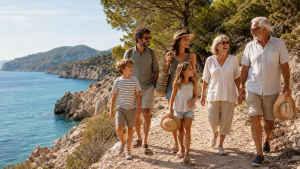 Finding a family activity that pleases a toddler, a teenager and the adults paying for it can feel like an advanced diplomatic exercise. Fortunately, Mallorca gives you plenty to work with.
The island has gentle beaches, caves, castles, mountain railways, water parks, wildlife experiences, boat trips and cities that can become an adventure rather than a forced march around monuments.
These ideas cover different ages, budgets and parts of the island. Always check seasonal opening dates, age or height restrictions and the weather before setting out.
1. Solve an outdoor escape room in Palma
Adventure Hunt Palma turns sightseeing into a game. Families follow clues through an app and solve puzzles using real features around the city.
There is no fixed start time and no guide, so you can pause when somebody needs food, shade or a strategic ice cream. A booking costs €19.50 for a group of up to six people.
It works particularly well for older children and teenagers who might be unenthusiastic about an ordinary walking tour. Younger children can help spot details while adults handle the more difficult reasoning.
Adventure Hunt is our own Majorca Mallorca product, developed to give families a flexible and affordable way to experience Palma together.
2. Spend the day at a family-friendly beach
Mallorca has hundreds of coves and beaches, but family suitability depends on access, facilities, sea conditions and the age of your children.
Longer sandy beaches such as Playa de Muro, Alcúdia and parts of Palma’s coastline tend to offer easier access and more nearby facilities than remote calas. Arrive early in summer and never assume the sea will be calm simply because it was calm yesterday.
3. Take the historic train to Sóller
The wooden train from Palma to Sóller crosses the plain and mountains before arriving in the town. From Sóller, the tram continues towards Port de Sóller.
The journey is the experience, especially for younger children. Book or arrive with a plan during busy periods, and check the current timetable rather than relying on an old blog post.
4. Explore the Caves of Drach
Near Porto Cristo, the Caves of Drach offer a dramatic underground landscape of stalactites, stalagmites and a large subterranean lake.
The visit follows a managed route and includes steps and dim lighting, so check accessibility and suitability for your family before booking.
5. Visit Palma Aquarium
Palma Aquarium is one of the island’s most dependable family options, especially when the weather is too hot, wet or windy for the beach. Exhibits explore Mediterranean and tropical marine life, and the experience can occupy a substantial part of the day.
Advance booking can be sensible during school holidays.
6. Climb up to Bellver Castle
Palma’s circular Gothic castle feels sufficiently castle-like to interest children, while adults get some of the best city and bay views in the capital.
The final approach can involve walking and steps depending on how you arrive. Bring water and avoid the hottest part of a summer day.
7. Choose a boat trip with care
Boat trips range from short glass-bottom excursions to private charters and longer sailing days. Match the duration to the youngest child, ask about shade and toilets, and check what happens if sea conditions change.
For small children or uncertain sailors, a shorter trip can be far more enjoyable than an ambitious full day.
8. Try coasteering, kayaking or paddleboarding
Active families can explore the coast from the water with a qualified local operator. Age limits, swimming ability and weather policies vary, so be honest about everybody’s confidence and fitness.
Teenagers often enjoy having a proper challenge rather than an activity designed primarily for younger children.
9. Visit a water park
Mallorca’s water parks are a full-day option in the warmer months. Check height restrictions in advance so children know which slides they can use, and budget for lockers, food and any paid extras.
Water shoes, sun protection and a clear family meeting point are all useful.
10. Walk through a nature reserve
The island’s protected landscapes offer gentler alternatives to major mountain hikes. S’Albufera near Alcúdia is known for wetlands and birdlife, while other reserves reveal dunes, coast and Mediterranean habitats.
Binoculars can transform a walk for children who enjoy spotting things. In summer, choose a short route early in the day.
11. Discover a traditional market
Mallorca’s weekly markets can be an easy family outing when paired with breakfast, a village walk or another nearby activity. Let older children manage a small budget for fruit, pastries or a souvenir.
Keep bags and phones secure in busy crowds, and remember that the best market atmosphere is usually in the morning.
12. Visit a finca or farm experience
Some rural estates and farms offer family visits, animal encounters, workshops or tastings. These experiences vary seasonally and may require advance booking.
Choose places that are transparent about animal welfare and supervise children carefully around all animals, however calm they appear.
13. Go underground at the Caves of Artà or Campanet
The Drach caves are not the island’s only underground option. The Caves of Artà have a dramatic coastal setting, while Campanet offers a smaller-scale cave experience in the north.
Each has a different route, duration and level of access, so compare them rather than assuming all cave visits are alike.
14. Plan an easy Tramuntana walk
The Serra de Tramuntana is magnificent, but family walking requires judgement. A short signed route with shade and an obvious turnaround point is better than an overambitious hike downloaded from the internet.
Avoid exposed mountain walks in extreme heat, carry more water than you think you need and do not treat flip-flops as hiking footwear.
15. Explore an old town as a family
Palma, Alcúdia and several inland towns have walls, lanes, squares and small discoveries that lend themselves to a family challenge. Ask children to find coats of arms, unusual door knockers, gargoyles or the oldest-looking building.
Our Palma Old Town guide gives adults the context, while Adventure Hunt adds a complete puzzle experience.
16. Spend a few hours in Port de Sóller
The tram, horseshoe bay, beach and promenade make Port de Sóller easy to understand as a family destination. It can become crowded in high season, so arrive early and agree on a meeting point.
17. Look for local fiestas and events
Village festivals can include giants, music, craft activities, dancing, fireworks and food. They are a lively way for families to encounter Mallorcan culture rather than only purpose-built attractions.
Programmes and times change, and some evening events begin much later than British families may expect. Check the local council’s current programme.
18. Allow time for absolutely nothing
A successful family holiday does not need a booked attraction every day. A shaded playground, an evening swim, cards on the terrace or a slow breakfast may be the part everyone remembers most fondly.
Use this list to create a rhythm, not a military timetable.
Family planning tips for Mallorca
- Avoid exposed outdoor activities in the hottest part of summer days.
- Carry water, hats and high-factor sun protection.
- Check parking before driving to popular beaches or villages.
- Keep one weather-proof activity in reserve.
- Do not underestimate journey times in peak-season traffic.
- Confirm age, height and swimming requirements before promising an activity.
- Choose a sensible pace and leave room for food and rest.
Family activities in Mallorca FAQs
What are the best things to do in Mallorca with children?
Beaches, Palma Aquarium, the Sóller train, caves, castles, boat trips and simple nature walks are popular choices. The best option depends on the children’s ages and the weather.
What can teenagers do in Mallorca?
Teenagers may enjoy Adventure Hunt Palma, coasteering, kayaking, paddleboarding, cycling, a boat trip or exploring Palma’s shops and food scene.
What can families do in Mallorca when it rains?
Consider Palma Aquarium, selected caves, museums, an indoor play space, a cinema or a long lunch. Check travel conditions before crossing the island in severe weather.
Is Palma good for families?
Yes. Palma offers beaches, parks, markets, museums, Bellver Castle and interactive activities. Summer heat and uneven Old Town streets require sensible planning.
Do we need to hire a car for a family holiday in Mallorca?
Not always. Families staying in Palma or a well-connected resort can use buses, taxis, transfers and organised trips. A car provides flexibility for remote areas but also brings parking and traffic considerations.
Is Mallorca suitable for babies and toddlers?
Yes, particularly if you choose accommodation and activities around their routine. Look for shade, easy beach access and short transfers, and avoid packing too much into each day.
Visiting Palma from a cruise ship: an independent guide to your day ashore
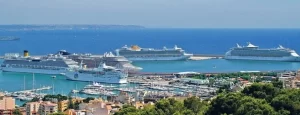 Palma is an excellent cruise stop, but the first thing to understand is that the Port of Palma is large. Your ship may be some distance from the historic centre, and the view of the Cathedral from the deck can make everything appear closer than it really is.
The good news is that Palma is easy to enjoy independently once you reach the centre. Its principal sights are close together, the Old Town is walkable and you can build a satisfying day around history, food, shopping or a more interactive activity.
Where do cruise ships dock in Palma?
Cruise vessels use different berths around Palma’s port, including areas near Estació Marítima and the more distant outer cruise facilities. The berth can change according to the vessel and port operations. Do not rely on advice based on another person’s ship. Check the information supplied on board and follow the signs and instructions at your own terminal. You can find out more here.
How to get from Palma cruise port to the city centre
Depending on your berth and the arrangements for your sailing, your options may include a cruise-line shuttle, public bus, taxi or a pre-booked transfer.
Walking is only sensible from some locations and in suitable weather. The port is extensive, pavements and pedestrian routes are not equally convenient from every terminal, and the summer sun can turn an optimistic walk into a poor use of limited time.
If several large ships are in port, allow for queues for taxis and shuttle services in both directions.
What to see in Palma during a cruise stop
For a first visit, concentrate on the historic centre rather than trying to cover half of Mallorca.
Palma Cathedral and Parc de la Mar
La Seu is the city’s defining landmark. Begin at Parc de la Mar for the famous exterior view, then decide whether your schedule permits an interior visit. Admission queues and security can take time during the busiest part of the day.
The Royal Palace of La Almudaina
The palace stands beside the Cathedral and combines naturally with it. If you are short of time, admire both buildings from outside before entering one rather than rushing through two ticketed sites.
Palma Old Town
Behind the Cathedral is a dense network of historic streets, patios, churches and squares. Our Palma Old Town guide gives you a more detailed route, but Plaça de Cort, Santa Eulàlia, the Arab Baths area and the lanes around the former Jewish quarter are all within the central area.
Markets, shops and lunch
Mercat de l’Olivar is a good central market stop, while Passeig des Born, Jaume III and the surrounding lanes cover everything from international brands to Mallorcan food and independent shops.
Build lunch into the day rather than treating it as an interruption. Palma is a city to taste as well as photograph.
An independent Palma activity for cruise passengers
Adventure Hunt Palma is particularly well suited to independent cruise visitors because there is no guide to meet and no fixed departure time.
The app-led outdoor escape room sends your group through Palma solving clues based on real details around the city. You book online, begin during daylight hours and play at your own pace.
It costs €19.50 for a group of up to six, rather than per person. If your arrival is delayed, you are not missing a scheduled guide. You can also pause for lunch or coffee as you go.
You still need to manage your own return time carefully. Set a firm point at which you will stop playing and head back to the port, even if the competitive member of the family insists that the next clue will only take two minutes.
A realistic half-day Palma itinerary
If you have around four to five usable hours ashore after transport, try this:
- Travel directly from the ship to the Cathedral area.
- See Parc de la Mar, the Cathedral exterior and La Almudaina.
- Walk through the Old Town towards Plaça de Cort and Passeig des Born (these are covered in the Adventure Hunt itinerary).
- Choose one main experience, such as the Cathedral interior, Adventure Hunt or a focused food stop.
- Leave the centre with a generous margin for the return journey.
Do not calculate your day from the ship’s arrival and departure times alone. Disembarkation takes time, and the all-aboard time will be earlier than the published sailing time.
Should you book a cruise excursion or explore independently?
An organised excursion can make sense if you want to visit places beyond Palma, need accessible transport or prefer having the timing managed for you.
Exploring independently gives you more control over your pace, where you eat and how long you spend in each place. Palma is especially suitable for this because the central attractions are compact once you reach them.
The trade-off is responsibility. You must monitor the time, understand how you will return to the terminal and leave room for traffic or queues.
Common cruise-day mistakes in Palma
- Assuming the terminal is beside the Cathedral
- Trying to visit Palma, Valldemossa and Sóller in a short call
- Forgetting to check the ship’s all-aboard time
- Leaving the return taxi until the last possible moment
- Underestimating the heat and the amount of walking
- Booking independent activities with rigid times too close to arrival
- Carrying purchases without checking the ship’s rules
Palma cruise port FAQs
Can you walk from Palma cruise port to the city centre?
It depends on your berth, mobility, available time and the weather. Some port locations are much farther from the centre than others. A shuttle, bus or taxi is often more practical.
How far is Palma Cathedral from the cruise terminal?
There is no single answer because cruise ships use different berths. Check your specific terminal and the transport information provided for your sailing.
Can I explore Palma without booking a shore excursion?
Yes. Palma’s historic centre is compact and straightforward to explore independently once you arrive. You must organise transport and manage your return time yourself.
What is the best thing to do in Palma on a short cruise stop?
For a first visit, combine the Cathedral area with a walk through the Old Town. Add one main activity, museum or meal rather than trying to see everything.
Is Adventure Hunt Palma suitable for cruise passengers?
Yes, especially for passengers who want a flexible, self-guided activity. There is no fixed start time, but players remain responsible for leaving enough time to return to the ship.
Should I take euros into Palma?
Cards are widely accepted, but carrying a modest amount of cash can be useful for small purchases. Use standard precautions with valuables in busy visitor areas.
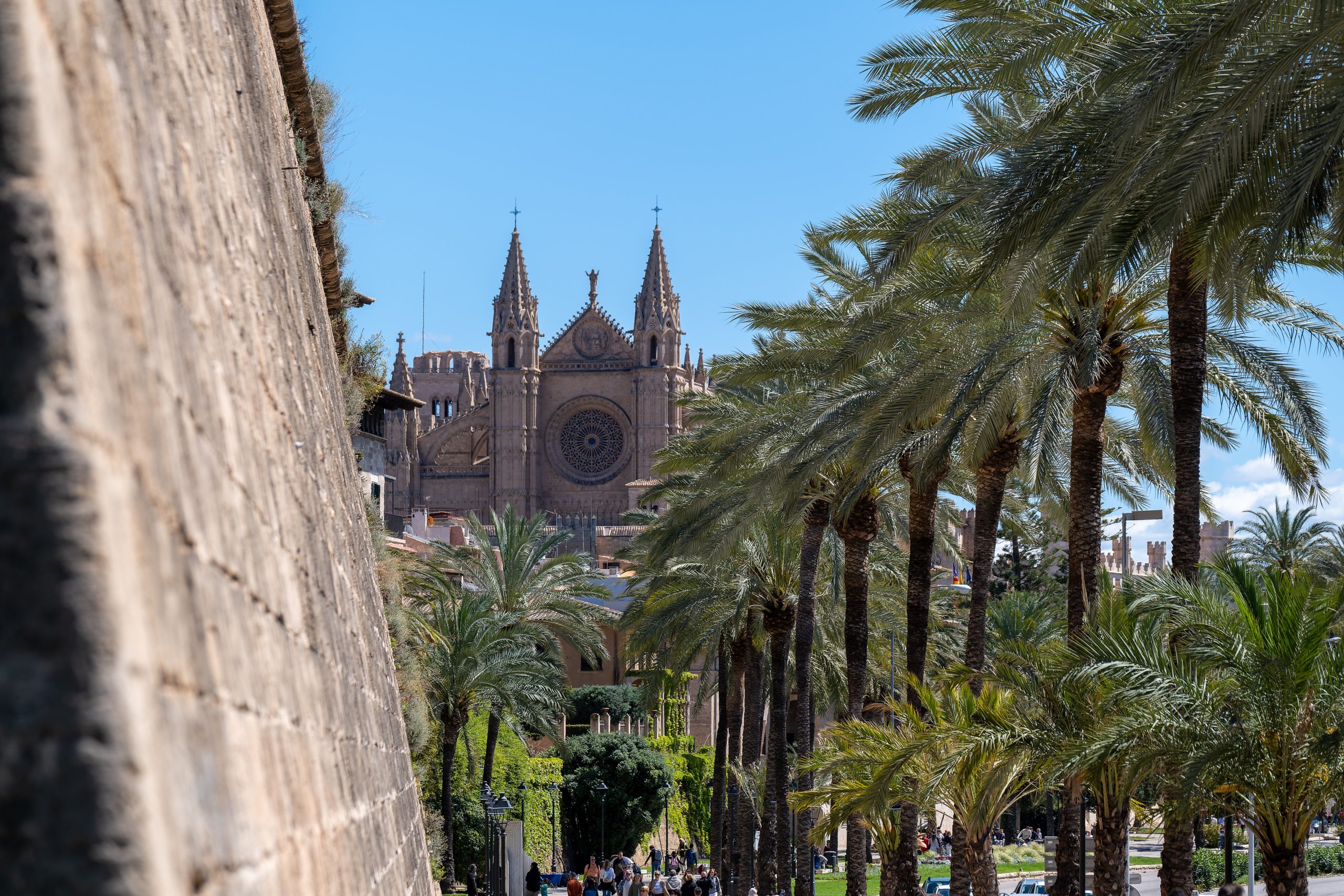
Palma Old Town guide: what to see, where to wander and what not to miss
Palma Old Town does not reveal itself all at once.
The Cathedral may command the skyline, but the historic centre behind it is a dense and fascinating mix of Gothic churches, Renaissance mansions, Arab remains, former Jewish streets, Modernista shopfronts and ordinary homes where washing still appears above lanes polished by centuries of footsteps.
You can walk from one side to the other quickly. You should not.
This Palma Old Town guide explains what to see, how to shape a route and where to slow down enough to notice the details that make the city more than a collection of famous buildings.
Where is Palma Old Town?
Palma’s historic centre lies largely within the line of the old city walls, between the waterfront and the avenues that now circle the centre.
For visitors, it stretches roughly from the Cathedral and Calatrava in the east through Plaça de Cort and Plaça Major towards La Rambla and Passeig des Born. Different areas have distinct personalities, and the quieter eastern side feels very different from the main shopping streets.
Begin at Parc de la Mar
Parc de la Mar gives you the essential view of Palma Cathedral rising above the old walls. It also helps explain the relationship between the city and the sea.
The present waterfront is farther from the Cathedral than it was historically. From the park, climb towards La Seu and pause before entering the narrow streets behind it.
Palma Cathedral, La Seu
Palma Cathedral took centuries to complete and remains the Old Town’s most important landmark. Its Gothic scale, vast rose window and waterfront position make it worth seeing even if you do not go inside.
If you plan an interior visit, check current opening times and ticket options directly before travelling. Religious services and special events can affect tourist access.
The Royal Palace of La Almudaina
Next to the Cathedral, La Almudaina reflects the city’s Islamic and Christian history. The present palace incorporates earlier foundations and later Gothic architecture, and it remains an official royal residence.
The terrace views and the contrast with the Cathedral make the two buildings natural companions, but allow enough time if you intend to enter both.
Look for Palma’s historic patios
Behind the imposing façades of Palma’s old mansions are interior courtyards known as patios. Traditionally, these spaces gave access, light and ventilation while also signalling the status of the family who lived there.
Some can be glimpsed from the street when their outer doors are open. They are not all public attractions, so admire private courtyards respectfully and do not walk in unless access is clearly permitted.
Plaça de Cort and the ancient olive tree
Plaça de Cort is home to Palma City Hall and a monumental old olive tree. The square connects several important routes through the centre and is an easy meeting point.
Nearby streets lead towards Plaça de Santa Eulàlia, Passeig des Born and Plaça Major, but take a moment to study the City Hall façade and the life of the square before moving on.
Santa Eulàlia and the medieval city
The Church of Santa Eulàlia is one of Palma’s significant Gothic churches. Its surrounding streets offer a stronger sense of the medieval city than the broad modern shopping avenues nearby.
This is also a useful point from which to turn east towards the former Jewish quarter and the quieter side of the Old Town.
Palma’s former Jewish quarter
The old Jewish quarter, commonly associated with the area around Carrer del Sol and Monti-sion, is an important part of Palma’s history. Much of its earlier built fabric has changed, so this is not a district of obvious monuments at every turn.
Its meaning comes from understanding the people, persecution and long legacy connected to these streets. A specialist guided tour can provide context that is difficult to obtain from architecture alone.
The Arab Baths
The Banys Àrabs are among Palma’s best-known surviving reminders of the Islamic city of Madina Mayurqa. The small site includes a domed chamber supported by columns and a quiet garden.
Do not expect an enormous bathing complex. Its importance lies in its rarity and the glimpse it offers into a much earlier Palma.
Calatrava, the quieter Old Town
East of the main Cathedral area, Calatrava has old walls, convents, handsome houses and streets that are often calmer than the central shopping zone.
Walk towards the walls and the sea views, but remember that this is also a residential neighbourhood. Keep noise down and avoid treating doorways and private steps as photo props.
Plaça Major and the upper centre
Plaça Major is one of Palma’s most recognisable squares and a useful orientation point, although it can feel more commercial than the smaller plazas.
From here, explore the lanes towards La Rambla, Sant Miquel and Mercat de l’Olivar, or turn back through the older streets towards Cort.
Modernisme in Palma
Palma’s historic centre is not exclusively medieval. Look for Modernista buildings such as Can Forteza Rey near Plaça Major and the former Gran Hotel, now CaixaForum Palma.
Their curved lines, colourful decoration and elaborate façades provide a striking contrast with the Gothic stonework elsewhere in the city.
Explore Palma by solving clues
One of the best ways to make yourself notice a city is to be given a reason to inspect it properly.
Adventure Hunt Palma is our self-guided outdoor escape room, using real details around Palma as part of a sequence of clues and puzzles.
It is not a conventional historical tour. It is a game designed for couples, families and groups who want to explore independently and interact with their surroundings. You begin during daylight hours, follow the app at your own pace and can pause whenever you choose.
The price is €19.50 per group of up to six people.
Where to eat and drink in Palma Old Town
The Old Town has everything from bakeries and traditional cellers to contemporary restaurants and polished hotel terraces. Avoid choosing solely by proximity to the Cathedral.
Walk a few streets away, check recent menus and decide whether you want a quick snack, a market visit or a proper meal. For a structured experience, Food Tours Mallorca offers a Palma Old Town route, and Majorca Mallorca readers can use MM10 for 10% off online bookings.
Shopping in the historic centre
The lanes around Sant Feliu, Cort and the lower Old Town contain independent shops, galleries, food specialists and local brands. Plaça Major and the busiest streets have more souvenir-oriented businesses.
If you want something genuinely connected to Mallorca, look for clear information about where and how it was made rather than relying on island-themed packaging.
A self-guided Palma Old Town walking route
For a first visit, use this simple order:
- Start at Parc de la Mar.
- Walk up to the Cathedral and La Almudaina.
- Continue to the Arab Baths.
- Wander through Calatrava and the former Jewish quarter.
- Stop at Santa Eulàlia and Plaça de Cort.
- Continue to Can Forteza Rey and Plaça Major.
- Finish at La Rambla, Mercat de l’Olivar or Passeig des Born.
This is a framework, not a race. The pleasure lies in the streets between the named stops.
Practical tips for exploring Palma Old Town
- Wear shoes suitable for cobbles, stone and a substantial amount of walking.
- Go early in summer and use museums, lunch or shade during the hottest hours.
- Carry water, but do not expect public toilets on every street.
- Check attraction hours on official websites before setting out.
- Keep valuables secure in busy areas.
- Respect residents, private patios and places of worship.
- Allow yourself to get slightly lost. The centre is compact and that is often how you find its best corners.
Palma Old Town FAQs
How long do you need to explore Palma Old Town?
You can see the principal exterior sights in two or three hours, but a full day allows time for the Cathedral, a museum, shopping and a relaxed meal.
Is Palma Old Town free to visit?
The streets, squares and exterior sights are free to explore. Major attractions such as the Cathedral, La Almudaina and some museums charge admission.
Is Palma Old Town walkable?
Yes, but many streets have cobbles, slopes or uneven surfaces. Accessible routes are available through Palma’s official tourism information, and individual attractions should be checked directly.
What should I not miss in Palma Old Town?
Do not miss the Cathedral, La Almudaina, Plaça de Cort, the Arab Baths area and a wander through the quieter eastern streets. Look for patios and architectural details along the way.
Is Palma Old Town good for children?
Yes, if the visit is paced appropriately. Bellver Castle is outside the Old Town, while Adventure Hunt Palma can make exploring the centre more interactive for children and teenagers.
Can I visit Palma Old Town from a cruise ship?
Yes. Once you reach central Palma, the main Old Town sights are close together. Allow ample time to travel back to your specific cruise terminal.
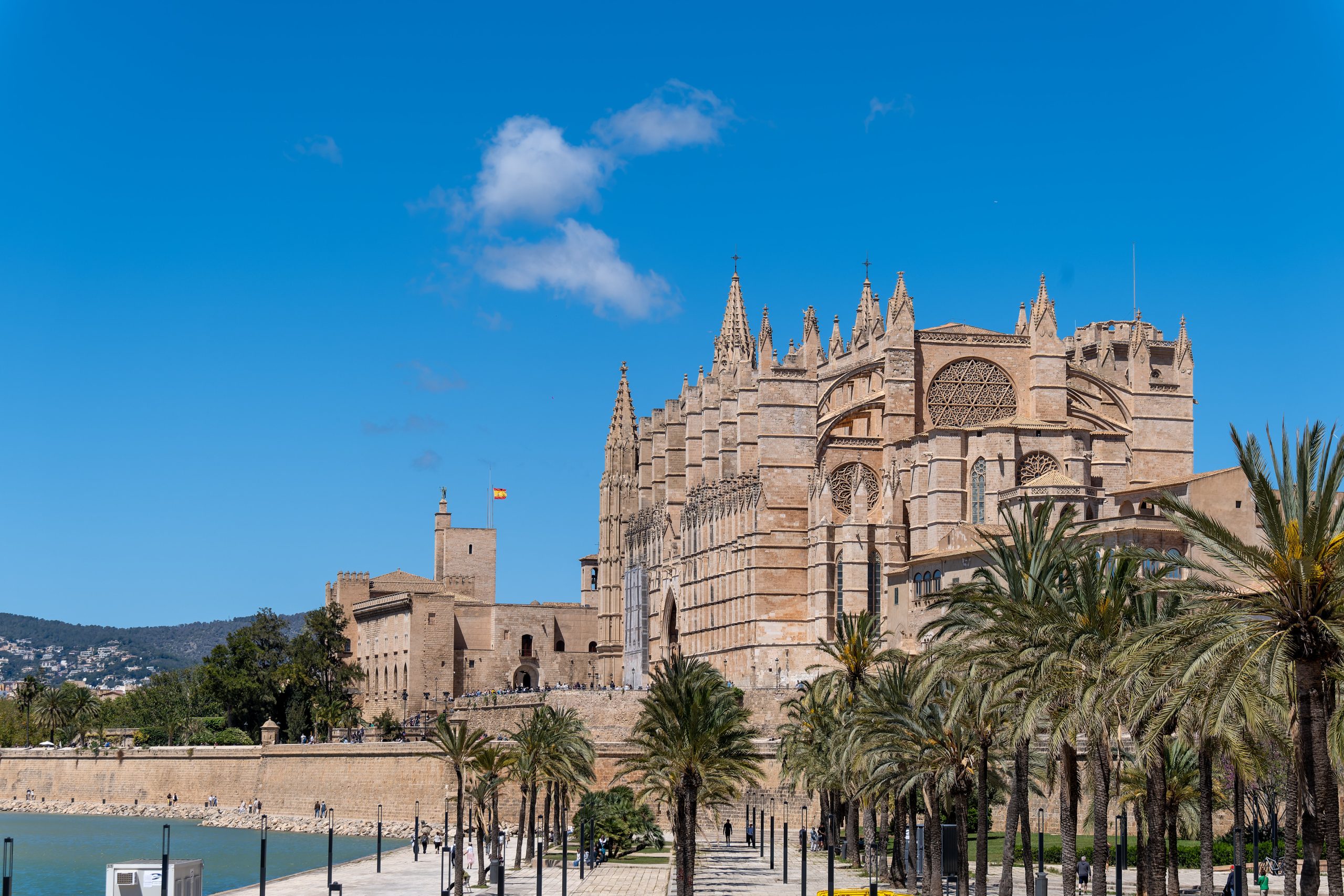
15 of the best things to do in Palma, Mallorca
Palma deserves much more than a hurried dash from the airport to the beach.
Mallorca’s capital is a proper Mediterranean city, with a magnificent Gothic cathedral, a maze of old streets, excellent food markets, independent shops, beaches, galleries and neighbourhoods that change character from one block to the next.
Whether you have a few hours in the city or several days, these are some of the best things to do in Palma, including the famous landmarks and a few activities that make you look at the city rather differently.
1. Visit Palma Cathedral
La Seu dominates Palma’s waterfront and is the natural place to begin. Its vast sandstone exterior is impressive from every angle, but the interior deserves time too. Light pours through one of the world’s largest Gothic rose windows, while additions associated with Antoni Gaudí and contemporary Mallorcan artist Miquel Barceló give the building an unusual mix of periods and styles.
Walk through Parc de la Mar first for the classic view across the reflecting lake, then approach the Cathedral through the old city walls.
2. Explore Palma Old Town
Palma Old Town is not one single attraction. It is a whole district of lanes, courtyards, churches, palaces, shops and small squares that rewards aimless wandering.
Look for the patios behind grand wooden doors, the Arab Baths, the former Jewish quarter and the quieter streets around Calatrava and Monti-sion. Some of the best details are above eye level, so remember to look up at balconies, carved stonework and painted tiles.
For a more detailed route, read our Palma Old Town guide.
3. Turn Palma into an outdoor escape room
If you prefer doing something to simply following a sightseeing route, try Adventure Hunt Palma.
This self-guided outdoor escape room uses the streets of Palma as the game. Your group follows clues through an app, examines real features around the city and solves a series of puzzles along the way.
There is no guide and no fixed departure time, so you can start during daylight hours when it suits you, pause for food or drinks and explore at your own pace. It costs €19.50 per group of up to six people, making it one of the more affordable activities in central Palma.
Adventure Hunt is our own Majorca Mallorca experience, created as a genuinely entertaining way to help visitors and residents notice more of the city.
4. See the Royal Palace of La Almudaina
Beside the Cathedral stands the Royal Palace of La Almudaina. The site reflects Palma’s layered history, with Islamic origins and later Gothic alterations after the Christian conquest of Mallorca.
Its rooms are more austere than those of many European palaces, but the architecture, tapestries and views make it a worthwhile companion visit to the Cathedral.
5. Walk along the waterfront
Palma’s broad waterfront promenade is ideal for a walk or cycle ride. One side opens towards the marina and the Bay of Palma, while the other passes the old city walls and some of the capital’s most recognisable buildings.
Continue west towards Santa Catalina and Portixol, or hire a bicycle if you want to cover more ground without taking a taxi.
6. Eat your way around a Palma market
Mercat de l’Olivar is the central choice for fresh fish, meat, fruit, vegetables and casual places to eat. Mercat de Santa Catalina is smaller and surrounded by one of Palma’s liveliest food neighbourhoods.
Go before the late afternoon, when many traditional market stalls have already closed, and remember that these are working markets used by local residents rather than attractions created only for visitors.
7. Discover Santa Catalina
Once associated with fishermen and rope makers, Santa Catalina is now filled with restaurants, bars, cafés and small independent businesses. It is particularly good in the evening, although its market and colourful streets make it worth exploring earlier too.
The neighbourhood sits just west of Palma Old Town and is easy to combine with a walk through Es Baluard or along the waterfront.
8. Visit Es Baluard Museum
Es Baluard Museu d’Art Contemporani occupies part of Palma’s Renaissance defensive walls. Its collection focuses on modern and contemporary art, with connections to artists who lived or worked in the Balearics.
Even visitors who are not committed gallery-goers may enjoy the building itself, its terraces and the views across Palma’s rooftops and marina.
9. See Palma from Bellver Castle
Bellver is one of Europe’s few circular Gothic castles. Set on a wooded hill above the city, it offers broad views across Palma, its port and the bay.
It is not in the Old Town, so allow time for the journey. You can reach it by taxi, bus or the sightseeing bus, followed by some walking depending on where you alight.
10. Find Joan Miró’s Mallorca
At Fundació Miró Mallorca, visitors can see studios used by Joan Miró as well as exhibitions exploring his work and legacy. The preserved creative spaces give the experience an intimacy that is difficult to reproduce in a conventional gallery.
The foundation is outside the historic centre in Cala Major, so treat it as a separate half-day outing rather than squeezing it into a rushed Old Town itinerary.
11. Have a Palma beach break
You do not have to leave the city to reach the sea. Can Pere Antoni is the closest substantial beach to central Palma and can be reached on foot or by bicycle along the promenade. Ciutat Jardí and Cala Major are other options accessible from the city.
In summer, go early or later in the day to avoid the strongest heat.
12. Try a local food experience
A food tour gives structure to Palma’s enormous choice of bars and restaurants while helping you discover dishes you might not order without a little guidance.
Majorca Mallorca readers can use the code MM10 when booking online with Food Tours Mallorca to receive 10% off.
13. Shop beyond the souvenir stands
Passeig des Born and Avinguda Jaume III carry familiar international names, but Palma is also excellent for independent shops. Explore Carrer de Sant Feliu, Carrer dels Paraires and the lanes around Plaça de Cort for fashion, interiors, food and locally made products.
14. Sit in a square and do very little
Not every hour needs an attraction. Palma makes a strong case for ordering a coffee and watching the city go by.
Plaça de Cort, Plaça de Santa Eulàlia, Plaça del Mercat and the smaller Old Town squares all have their own atmosphere. Choose one that is not overwhelmed by passing groups and give yourself permission to stop.
15. Check what is happening while you are here
Palma’s calendar includes exhibitions, concerts, open-air cinema, traditional fiestas, food events and sporting fixtures. Programmes change throughout the year, so check the official cultural agenda closer to your visit.
Planning your day in Palma
Central Palma is highly walkable, but summer heat changes what is realistic. In July and August, explore exposed sights and the Old Town in the morning, use the middle of the day for a museum, market lunch or rest, then return for the evening.
Comfortable shoes matter. Old Town streets can be uneven, and a day that looks modest on a map can involve far more walking than expected.
Things to do in Palma FAQs
What are the top things to do in Palma for a first visit?
Start with Palma Cathedral, La Almudaina and the Old Town. Add a market, the waterfront and either Bellver Castle or Es Baluard if time allows.
Is Palma worth visiting for a day?
Yes. The historic centre is compact enough to see several major sights in one day. Staying longer allows time for galleries, neighbourhoods, beaches and slower meals.
What can you do in Palma with children?
Families can try Adventure Hunt Palma, visit Bellver Castle, spend time at the beach, explore the markets or choose an age-appropriate museum. Build in shade and rest stops during summer.
What are some unusual things to do in Palma?
Turn the city into a puzzle with Adventure Hunt, visit Joan Miró’s preserved studios, look for historic patios or explore the less-visited Calatrava side of the Old Town.
Is Palma easy to explore on foot?
The centre and Old Town are very walkable. Bellver Castle, Cala Major and Fundació Miró require additional transport or a much longer walk.
What can you do in Palma when it rains?
Visit the Cathedral, La Almudaina, Es Baluard, CaixaForum, the markets or another museum. Palma also has cafés, shops and indoor cultural venues throughout the centre.
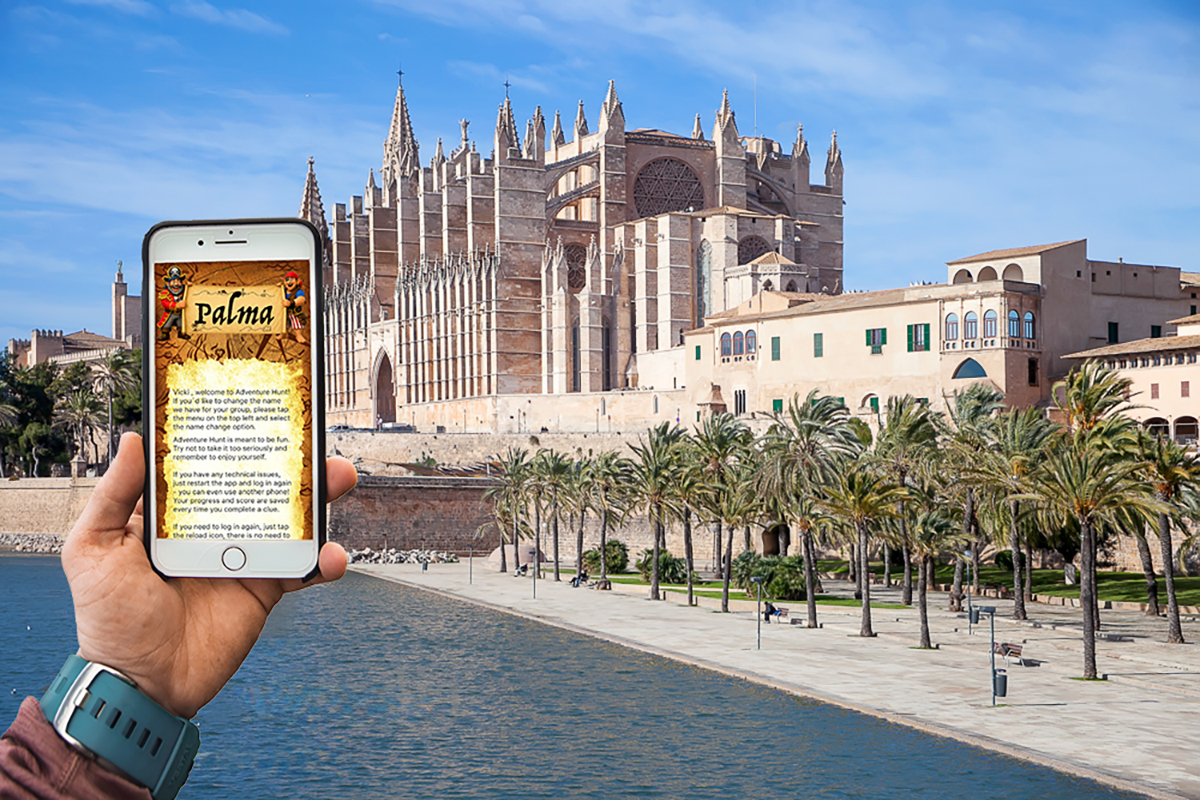
Adventure Hunt Palma: Turn the City into an Outdoor Escape Room
What if a walk through Palma became a game, the streets supplied the clues and the city itself was the escape room?
Adventure Hunt Palma is a new self-guided outdoor escape room that invites you to explore the Mallorcan capital by solving puzzles, spotting easily missed details and working together as a team. Part treasure hunt, part scavenger hunt and part puzzle walk, it offers a more playful way to discover Palma without following a guide or committing to a fixed departure time.
It is designed for families, couples, friends, colleagues and visitors looking for something genuinely different to do in Palma. Locals can play too. In fact, people who think they know the city may be the most surprised by how much they normally walk past without noticing.
The experience costs €19.50 per group, not per person, and one booking can be used by a group of up to six people.
What is Adventure Hunt Palma?
Adventure Hunt Palma is an app-led puzzle experience played outdoors in the streets of Palma. Instead of entering a themed room and trying to escape before the clock runs out, your group follows a route through the city and uses real features in the surroundings to solve each challenge.
Buildings, signs, statues, landmarks and small architectural details become part of the game. At each stage, the Adventure Hunt app presents a new clue. Your job is to observe your surroundings, discuss possible answers and use a little logic or lateral thinking to move on.
No knowledge of Palma or Mallorcan history is required. Everything needed to solve the puzzles can be found along the route, although it helps to have a mixture of sharp eyes and differently wired brains in the group.
Helpful hints are available in the app if a clue has everybody stumped.
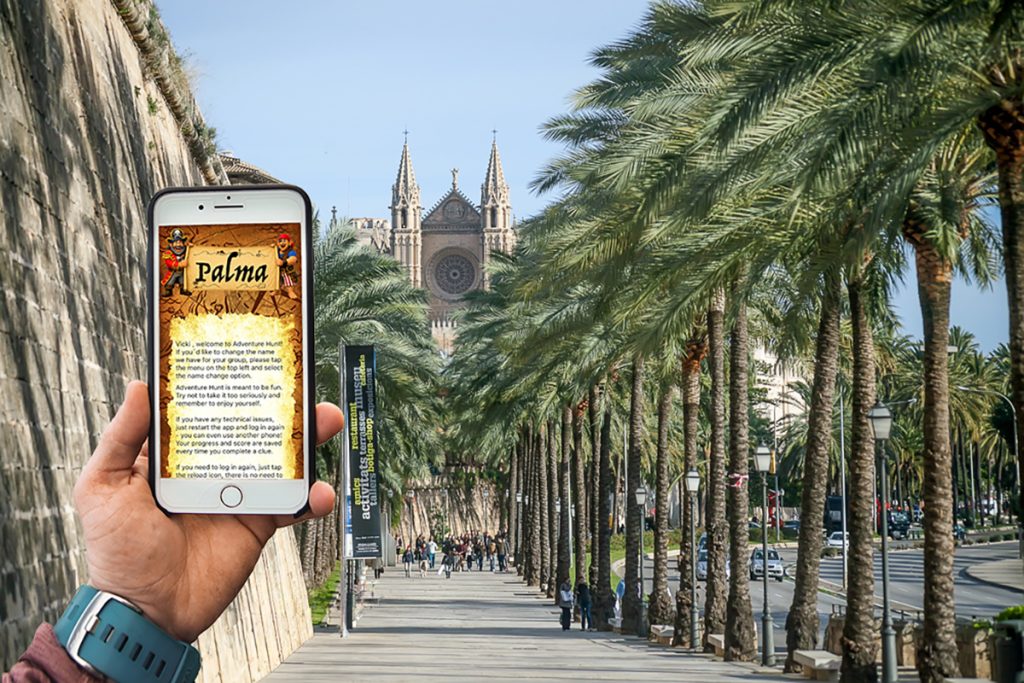
How does the Palma outdoor escape room work?
Getting started is deliberately simple:
- Book the Palma Adventure Hunt online.
- Download the Adventure Hunt app on an Android phone or iPhone.
- Enter the email address and booking reference from your confirmation email.
- Go to the starting point shown in the app.
- Follow the route, find the clues and solve the puzzles together.
There is no guide to meet and no group of strangers to join. Your booking is for your own private group, and you decide when to start during daylight hours.
There is also no overall time limit. You can take the game seriously, compete for a strong score and move briskly from clue to clue, or treat it as a relaxed way to explore Palma. If somebody spots a tempting café or decides lunch is more urgent than lateral thinking, you can pause and continue afterwards.
That flexibility makes Adventure Hunt particularly useful on holiday, when rigid schedules have a habit of becoming a nuisance.
Is Adventure Hunt Palma a real escape room?
Not in the traditional sense. Nobody is locked inside a room, and there is no frantic countdown to escape.
Adventure Hunt borrows the most entertaining parts of an escape room, including teamwork, observation, problem-solving and the satisfaction of cracking a difficult clue, then moves the whole experience outside.
It is better described as an outdoor escape room, puzzle walk or treasure hunt through Palma. The city provides the setting and the physical clues, while the app guides the experience.
This means you get fresh air, gentle exercise and sightseeing alongside the puzzles. It is also a good option for people who enjoy escape rooms but would rather explore Palma than spend part of a sunny day indoors.
A different way to explore Palma
Palma rewards people who pay attention. Beyond the Cathedral, the seafront and the main shopping streets, the city is full of old doorways, carved stone, courtyards, statues, signs and surprising details hidden in plain sight.
Most of us miss them because we are looking at a map, checking our phones or concentrating on where to find the next coffee.
Adventure Hunt changes the way you move through the city. Suddenly, every façade, plaque and sculpture looks as though it might contain the answer. You stop simply passing through Palma and start examining it.
This is not intended to replace an in-depth historical tour. The emphasis is on playing, exploring and solving puzzles rather than memorising dates. However, it can reveal corners and details that a conventional sightseeing walk might miss, and it gives groups a shared reason to engage with their surroundings.
One of the best family activities in Palma
Finding an activity that entertains children and adults at the same time is not always easy. Adventure Hunt Palma gives everyone a role.
Children are often excellent at spotting visual details, while adults may be quicker with wordplay, patterns or logic. Nobody needs specialist knowledge, and the ability to request hints helps prevent one stubborn puzzle from bringing the family outing to a halt.
Because the experience is self-guided, families can set their own pace, take breaks when needed and choose the most comfortable time of day. In the hotter months, we recommend starting earlier in the morning or later in the afternoon, carrying water and using sun protection.
Parents should remember that the hunt takes place in a working city, so children must be supervised around roads, crossings and busy pedestrian areas.
A fun Palma activity for friends, couples and groups
Adventure Hunt Palma works just as well for adults who want an alternative to another afternoon at the beach or another round of drinks.
Couples can tackle the route together, groups of friends can discover who is competitive under pressure, and visiting family members can explore Palma without being marched around behind an umbrella.
It can also be used for birthdays, hen and stag activities, company outings and team-building in Palma. Larger parties can split into smaller teams and compare their results. Live scores in the app allow teams playing the same hunt to see how others are doing, adding a little friendly rivalry.
For organised large-group or corporate experiences, it is best to contact Adventure Hunt in advance so the game can be configured appropriately.
An independent Palma shore excursion
Cruise passengers often want to explore Palma independently but still make good use of limited time ashore. Because Adventure Hunt Palma has no guide, fixed departure or overall time limit, it can fit around a ship’s arrival and departure schedule more easily than many organised excursions.
Players remain responsible for allowing enough time to reach the starting point, complete as much of the experience as they wish and return to the port well before their all-aboard time. The flexible format means the group can stop whenever it needs to rather than risk missing the ship for the sake of one last clue.
How much does Adventure Hunt Palma cost?
Adventure Hunt Palma costs €19.50 per group, not per player. One booking accommodates up to six people.
For a group of four, that works out at less than €5 per person. There is no guide to tip, no equipment to collect and no need to book a particular departure slot.
After booking, the confirmation email provides the details needed to access the hunt, download the app and find the starting point.
Why try Adventure Hunt Palma?
Adventure Hunt Palma is:
- Flexible: start when it suits your group during daylight hours.
- Self-guided: explore privately without following a tour guide.
- Good value: pay €19.50 for the group rather than per person.
- Interactive: solve puzzles instead of simply walking past the sights.
- Family-friendly: different types of clues give everyone a chance to contribute.
- Social: work together, compare ideas and enjoy a little friendly competition.
- Easy to pause: stop for coffee, food, shopping or a rest and continue later.
- Suitable for visitors and locals: discover Palma for the first time or see familiar streets differently.
Our latest Mallorca adventure
We spend a great deal of time at Majorca Mallorca looking for interesting things to do, useful experiences to recommend and better ways to help people enjoy the island. This time, we have gone a step further.
Adventure Hunt Palma is operated locally by the team behind Majorca Mallorca as part of our Balearic Adventure Hunt franchise. We wanted to create an activity that was flexible, affordable and fun, while encouraging people to look more closely at the city rather than simply ticking off its most famous sights.
We are delighted that the Palma hunt is now ready to play.
Book Adventure Hunt Palma
If you are searching for an outdoor escape room in Palma, a family activity, an unusual date idea, a team challenge or simply a new way to explore the city, assemble your team and give it a go.
Adventure Hunt Palma costs €19.50 per group for up to six players. Book online through the Adventure Hunt Palma website, download the app and turn Palma into your playground.
Frequently asked questions about Adventure Hunt Palma
What is Adventure Hunt Palma?
Adventure Hunt Palma is a self-guided outdoor puzzle game played through an app. Your group follows a route through Palma, finds clues in the surroundings and solves a series of challenges together.
Is Adventure Hunt Palma an escape room?
It uses puzzle-solving, teamwork and lateral thinking in a similar way to an escape room, but the experience takes place outdoors. Nobody is locked in a room and there is no overall countdown.
How much does Adventure Hunt Palma cost?
The Palma hunt costs €19.50 per group, not per person. A single booking accommodates up to six players.
How many people can play?
Up to six people can play on one booking. Smaller groups make it easier for everybody to see the phone and take part. Larger parties can divide into teams and make the experience competitive.
Do we have to book a particular start time?
No. There is no fixed departure time or guide to meet. Once booked, your group can begin when it suits you during daylight hours.
Is there a time limit?
There is no overall time limit. You can play at your own pace and pause for refreshments, shopping or a rest before continuing.
Is Adventure Hunt Palma suitable for children?
Yes, it is designed as a family-friendly activity, although children must be accompanied and supervised by an adult. Different puzzle styles allow children and adults to contribute in different ways, and hints are available if needed.
Do we need to know anything about Palma before playing?
No prior local or historical knowledge is required. The information needed to solve the clues can be found by observing the surroundings and thinking through the puzzles.
What happens if we cannot solve a clue?
Hints are available within the Adventure Hunt app, so you can ask for help and continue with the game.
What phone do we need?
The Adventure Hunt app is available for Android and iPhone. Make sure the phone you use is charged and has mobile data available before starting. A portable power bank can be useful.
Can we stop for food or a drink during the hunt?
Yes. The experience can be paused, so you can stop for coffee, lunch, shopping or a break and continue afterwards.
Can locals enjoy Adventure Hunt Palma?
Absolutely. The hunt encourages players to notice details that are easily missed, so even people who know Palma well can see familiar streets from a different perspective.
Is it suitable for corporate groups or team-building?
Yes. Groups can split into teams and compare scores. Larger company, celebration or team-building bookings should contact Adventure Hunt in advance to discuss the best configuration.
Can cruise passengers do Adventure Hunt Palma?
Yes. Its self-guided format and flexible start time make it a useful independent Palma shore activity. Cruise passengers must plan their own travel time and return to the ship comfortably before the published all-aboard time.
Can we play in bad weather?
The game takes place outdoors, so check the forecast and dress appropriately. Avoid playing during dangerous weather or official alerts. On hot days, choose a cooler time, carry water and use sun protection.
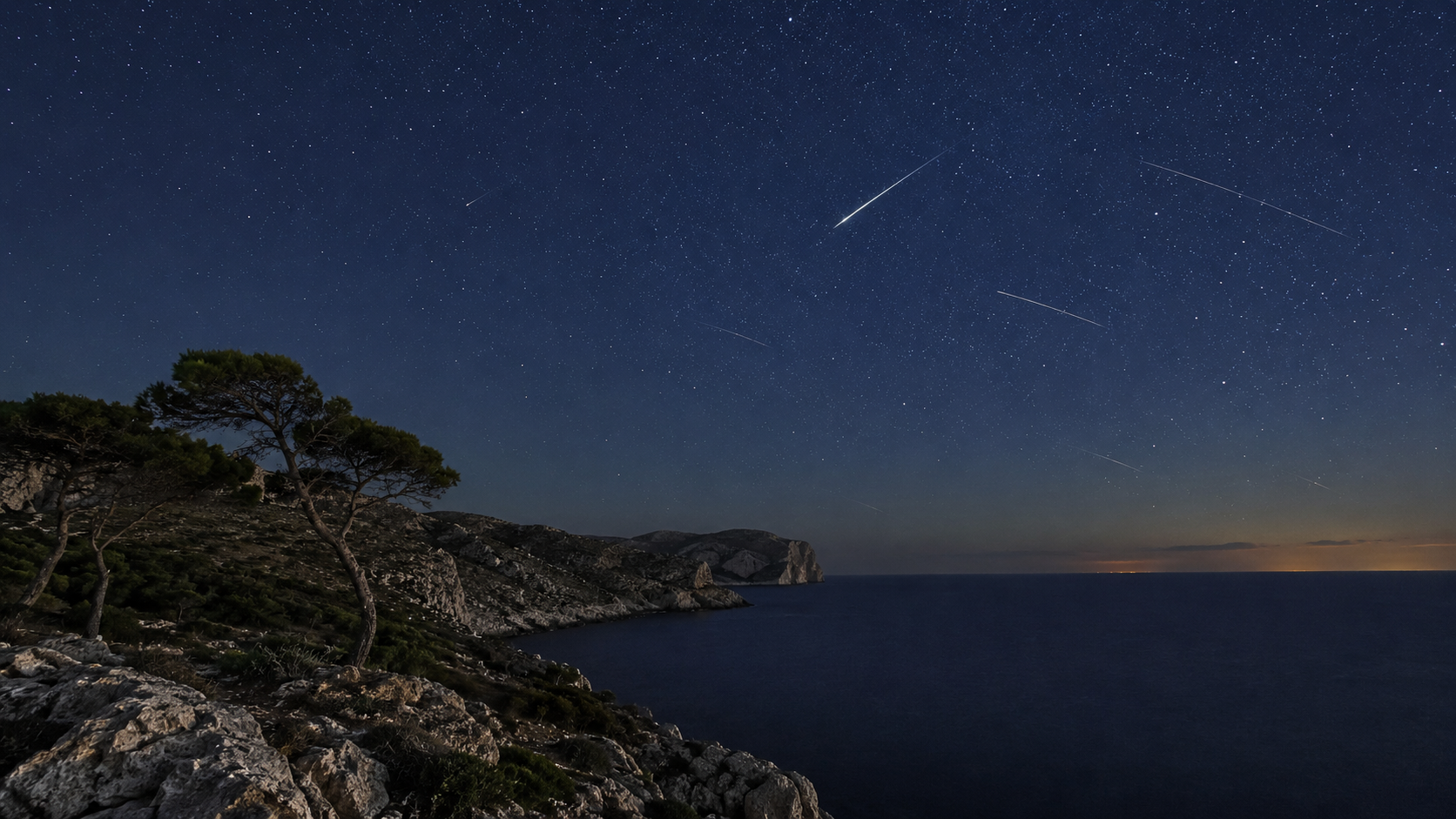
Perseid meteor shower 2026: how and when to see it in Mallorca
Mallorca’s extraordinary week in the sky will not end when the total solar eclipse disappears below the horizon on Wednesday 12 August.
Just a few hours later, the Perseid meteor shower will reach its annual peak, giving the island the possibility of a spectacular celestial double bill. With a new Moon, dark skies and warm summer temperatures, 2026 should offer some of the best Perseid viewing conditions for years.
Here is what to expect, when to look up and how to give yourself the best chance of seeing the display.
Mallorca Eclipse 2026 — Complete Live Guide
When can you see the Perseids in Mallorca?
The Perseid meteor shower is active from mid-July until late August, but it reaches its peak around 12 and 13 August.
For Mallorca, the best viewing periods will be:
- The early hours of Wednesday 12 August
- Late on Wednesday 12 August and throughout the early hours of Thursday 13 August
- Particularly between midnight and approximately 05.30
The predicted astronomical peak falls during the afternoon of 13 August, when it will be daylight in Mallorca. However, meteor showers do not switch on and off at a particular moment. Strong activity should still be visible during the surrounding nights.
The number of visible meteors usually increases after midnight as the constellation Perseus rises higher in the sky. By around 04.00, the radiant, the point from which the meteors appear to originate, will be much higher and a greater proportion of the shower should be visible. The American Meteor Society suggests that approximately 90 per cent of Perseid activity can be seen by this time.
A total eclipse followed by a meteor shower
The timing makes this year’s Perseids particularly special for Mallorca.
On Wednesday evening, the island will experience a total solar eclipse. In Palma, the eclipse begins at approximately 19.38, with totality taking place at around 20.31 and lasting for roughly one minute and 36 seconds. Exact timings vary slightly across the island.
The Moon will be new that evening, which is what makes the solar eclipse possible. It also means there will be no bright moonlight to wash out the fainter meteors later that night.
Once the eclipse crowds have dispersed, the roads have settled and full darkness has arrived, anyone still awake can prepare for the second sky show of the night.
Please remember that eclipse glasses are essential when looking at the Sun during the eclipse, but they must be removed once totality has ended and should never be worn for meteor watching.
How many shooting stars could you see?
Under perfect, exceptionally dark conditions, the Perseids can produce up to 100 meteors per hour. That figure is a theoretical maximum rather than a promise.
The number you actually see will depend on:
- Cloud cover
- Light pollution
- Your viewing location
- The time of night
- How long you allow your eyes to adjust
- How much of the sky is visible from where you are sitting
From a genuinely dark part of Mallorca, observers may see several dozen meteors during a good hour. In towns, resorts and brightly lit coastal areas, the number is likely to be considerably lower.
The shower is also known for producing bright fireballs. These are larger and more luminous than the average meteor and can sometimes be seen even where there is some light pollution.
Where should you look?
The meteors appear to come from the constellation Perseus, which rises in the north-east during the evening and climbs higher as the night continues.
You do not need to identify Perseus to enjoy the display. In fact, staring directly at the radiant is not necessarily the best strategy because meteors close to it tend to have shorter trails.
Find the widest, darkest view of the sky available and look roughly halfway up, keeping Perseus towards the edge of your field of vision. Meteors can appear anywhere overhead.
Do not use binoculars or a telescope. They restrict your view to a tiny section of the sky. The best equipment for watching the Perseids is simply your own eyes.
Where to watch the Perseids in Mallorca
The best location will be somewhere safely away from streetlights, illuminated buildings and the glow of Palma and the larger resorts.
The rural interior, quieter coastal areas and open countryside can all provide good conditions. An elevated viewpoint may offer a wide horizon, but height is less important than darkness and an unobstructed view.
Choose your location carefully:
- Use an established, publicly accessible place
- Do not enter private land
- Avoid stopping on roads, bends or verges
- Never block emergency access
- Do not park on dry grass
- Keep away from cliffs and unstable ground
- Take all rubbish home with you
This is an exceptionally busy week for Mallorca. Some roads and viewing areas may be affected by eclipse traffic, restrictions or temporary closures. Check the latest local information before setting out and do not assume that a remote viewpoint will be accessible by car.
A terrace, garden or quiet beach close to your accommodation may provide a better and safer experience than joining another traffic queue to reach a supposedly perfect location.
How to see more meteors
Your eyes need time to adapt to darkness. Allow at least 20 to 30 minutes and avoid looking at your phone while you wait.
Even a quick glance at a bright screen can spoil your night vision. Turn the brightness down, use a red-screen setting if available or put the phone away completely.
Lie back so that you can see as much of the sky as possible. A sun lounger, reclining chair or blanket will be much more comfortable than standing with your head tilted backwards.
Meteor watching also requires patience. You may see nothing for several minutes and then spot two or three meteors in quick succession.
Give yourself at least an hour if possible.
What to bring
Mallorca may be extremely warm during the day, but sitting still outside in the early hours can feel surprisingly cool, particularly in exposed coastal or mountain areas.
Take:
- Water
- A light extra layer
- A reclining chair, mat or blanket
- A small red torch
- Insect repellent
- Suitable shoes
- A fully charged phone for emergencies
- A bag for your rubbish
The current forecast suggests very hot weather around 12 and 13 August, so hydration will remain important even at night. Check the latest forecast and any official weather warnings before leaving.
Can you photograph the Perseids with a phone?
Possibly, although meteor photography requires patience and a little luck.
Place the phone or camera on a tripod, select a night or manual mode and use a wide view of the sky. Avoid zooming in. Longer exposures may capture a meteor, but many photographs will contain only stars.
A camera with a wide-angle lens, high ISO setting and repeated exposures offers a better chance. Aim at least 45 degrees away from Perseus so that any meteor trails appear longer in the frame.
Most importantly, do not spend the entire night watching a screen. The experience is in seeing a brilliant meteor cross the Mallorcan sky when you least expect it.
What causes the Perseid meteor shower?
The Perseids are created when Earth passes through a stream of dust and debris left behind by Comet 109P/Swift-Tuttle.
Most of the particles are extremely small, often no larger than a grain of sand. When they enter Earth’s atmosphere at high speed, they heat the surrounding air and produce the bright streaks we call meteors or shooting stars.
They appear to radiate from Perseus because of perspective, although the meteors themselves burn up in Earth’s atmosphere, around 100 kilometres above us. BBC Sky at Night Magazine has a helpful explanation of the science behind the shower.
If you miss the peak
Do not worry if clouds, tiredness or traffic spoil your plans on 12 August. Perseid activity continues after the peak, although meteor numbers gradually decline.
You may still see shooting stars on the nights immediately before and after 12 and 13 August. The combination of a new Moon and dark skies means the surrounding nights should remain worthwhile.
Mallorca is about to experience one of its most memorable astronomical events, followed only hours later by one of the year’s finest meteor showers.
Watch the eclipse safely, allow the roads to clear, find somewhere dark and comfortable, and keep looking up.