
How to Watch the Mallorca Solar Eclipse Safely: Essential Eye Protection Advice
Published: 10 August 2026
Last checked: 11 August 2026
Source: ESA / relevant official safety guidance
Mallorca is preparing for the total solar eclipse on Wednesday 12 August 2026, but amid all the excitement about where to watch it, road closures and finding the perfect viewpoint, there is one piece of advice that matters more than anything else:
Do not look directly at the Sun during the partial stages of the eclipse without proper eye protection.
The European Space Agency has published guidance explaining how to watch a solar eclipse safely and avoid permanent damage to your eyesight.
The good news is that enjoying the eclipse safely is straightforward, provided you use the right equipment and follow a few basic rules.
Complete guide to the Mallorca Eclipse 2026
Why is looking at an eclipse dangerous?
A solar eclipse does not make the Sun itself safer to look at.
During the partial phases, even when most of the Sun has been covered by the Moon, the remaining visible sunlight is still intense enough to damage the retina.
This can result in solar retinopathy, an injury to the light-sensitive tissue at the back of the eye. Damage can be permanent and, importantly, looking at the Sun may not hurt while the injury is happening.
That is why the advice is simple: if any part of the bright surface of the Sun is visible, protect your eyes.
Use certified solar eclipse glasses
Ordinary sunglasses are not suitable for watching an eclipse, regardless of how dark they appear.
Instead, use proper solar viewing glasses designed specifically for observing the Sun.
Look for glasses that comply with the ISO 12312-2 international safety standard for direct solar viewing.
Before using them, inspect the lenses carefully.
Do not use eclipse glasses if they are:
- Scratched
- Cracked
- Punctured
- Torn
- Damaged in any other way
If in doubt, replace them.

What should you NOT use to watch the eclipse?
The European Space Agency warns against trying to create improvised solar filters.
Do not look at the Sun through:
- Smoked glass
- X-ray film
- Floppy disks
- CDs or DVDs
- Aluminium foil
- Photographic negatives
- Ordinary sunglasses
- Several pairs of sunglasses worn together
- Water used as a reflective surface
None of these provides reliable protection against the harmful radiation produced by the Sun.
Be particularly careful with cameras, binoculars and telescopes
Optical devices require even greater care.
Never look at the Sun through binoculars, a telescope or a camera without an appropriate solar filter designed for the equipment.
These devices concentrate sunlight and can increase the risk of severe eye injury.
A solar filter needs to be fitted correctly at the front of the optical equipment, before the sunlight enters the lens.
Do not simply put eclipse glasses on and then look through binoculars or a telescope.
The concentrated sunlight can damage the glasses and your eyes.
The same caution applies to photographing the eclipse. Phones and cameras should not be pointed directly towards the Sun unless suitable solar protection designed for that equipment is being used.

Can you take your eclipse glasses off during totality?
There is one very brief exception to the rule.
During a total solar eclipse, it is safe to view the Sun without eclipse glasses only during the period of complete totality, when the Moon completely covers the bright surface of the Sun.
In Mallorca, totality is expected to last for roughly a minute and a half, depending on your exact location.
This is when the Sun’s corona becomes visible around the dark Moon.
However, the moment the bright surface of the Sun begins to reappear, eclipse glasses must go back on immediately.
If you are uncertain whether totality has begun or ended, keep your glasses on.
Use an indirect viewing method
You do not have to look towards the Sun at all to enjoy the partial phases.
An indirect projection method can be a particularly good option for families and children.
A simple pinhole projector projects an image of the Sun onto another surface.
The important point is that you look at the projected image, not through the hole towards the Sun.
There are many simple ways to create a pinhole projector using cardboard or a box.
Protect yourself from the August sun too
Eye safety is not the only concern on 12 August.
The eclipse takes place during one of the hottest periods of the Mallorca summer, and many spectators may spend several hours waiting outdoors before totality.
Take:
- Sun cream
- A hat
- Light-coloured clothing
- Plenty of water
- Shade where possible
The brief darkness during totality does not remove the risks associated with spending the afternoon outside in strong August sunshine.
Take regular breaks
If you are observing the eclipse for an extended period, do not spend the entire partial phase continually watching it.
Take breaks, rest your eyes and enjoy what is happening around you too.
A total eclipse is much more than simply watching the Moon move across the face of the Sun.
The changing light, falling temperature and atmosphere around you are all part of the experience.
Ten basic rules for watching the Mallorca eclipse safely
To keep things simple:
- Never look directly at the Sun during the partial eclipse without proper protection.
- Use certified solar eclipse glasses complying with ISO 12312-2.
- Check eclipse glasses for damage before using them.
- Do not use ordinary sunglasses or homemade filters.
- Never look through binoculars, telescopes or cameras without appropriate solar filters.
- Only remove eclipse glasses during complete totality.
- Put your glasses back on immediately when the bright Sun starts to reappear.
- Consider using an indirect method such as a pinhole projector.
- Protect yourself from the heat with water, sun cream, a hat and appropriate clothing.
- If you are using specialist optical equipment, seek advice from an experienced astronomical organisation or supplier.
What eclipse glasses should I buy in Mallorca?
Look for glasses specifically manufactured for direct solar observation and displaying compliance with ISO 12312-2.
Avoid buying something simply because the seller describes it as “eclipse glasses”.
Check the packaging, manufacturer information and certification, and buy from a reliable supplier.
Given the enormous interest in the 12 August eclipse, do not leave buying them until the afternoon of the event.
The glasses are currently being sold in Farmacias and supermarkets all over the island.
What time is the Mallorca eclipse?
The partial phase of the eclipse begins at approximately 19:38 on Wednesday 12 August 2026.
Totality will occur at approximately 20:32, although the exact timing varies slightly depending on where you are in Mallorca.
The total phase will last for around 90 seconds in favourable parts of the island.
Because the eclipse occurs shortly before sunset, the Sun will be extremely low above the west-north-western horizon.
That makes choosing the right viewing location particularly important.
Planning where to watch the Mallorca eclipse
Eye safety is only part of the planning required for 12 August.
Mallorca will have major road restrictions, official observation areas, controlled access to some beaches and viewpoints and potentially significant traffic congestion.
We have put together a complete guide covering:
- Where to see the eclipse in Mallorca
- The nine official observation areas
- How to check whether you can see it from your accommodation
- Mallorca eclipse road closures
- Playa de Palma access restrictions
- Traffic and airport advice
- Fire safety
- Watching from a boat
- What to take with you
Read our complete Mallorca Solar Eclipse 2026 guide here

Listen to the Majorca Mallorca Eclipse Special
We have also recorded a special Majorca Mallorca podcast episode with Oliver and Nick Brown discussing the eclipse from a very local perspective.
Nick explains why Mallorca’s mountains make finding the right viewing location more complicated than people might expect, where views may be obstructed and why travelling across the island at the last minute could be a terrible idea.
Listen to the Majorca Mallorca Eclipse Special here
Enjoy the eclipse, but protect your eyes
The total solar eclipse on 12 August promises to be an extraordinary moment for Mallorca.
For around 90 seconds, daylight will disappear, the temperature may drop and the Sun’s corona will become visible around the Moon.
It should be unforgettable for all the right reasons.
Buy the proper glasses, use them correctly and make sure everyone watching with you understands when they must be worn.
No photograph or glimpse of the eclipse is worth permanently damaging your eyesight.
Safety information based on guidance published by the European Space Agency. Image and guidance credit: ©ESA.


Mallorca Eclipse Road Closures 2026: Full Traffic Restrictions by Area
VISIT THIS PAGE FOR LIVE ROAD UPDATES.
Mallorca eclipse road restrictions: organised by area
The Balearic Government has announced traffic restrictions affecting around twenty roads across Mallorca ahead of the total solar eclipse on 12 August 2026.
PRIVATE CARS, VANS, MOTORCYCLES AND MOPEDS WILL BE AFFECTED. RESIDENTS SHOULD CARRY PROOF OF THEIR ADDRESS, SUCH AS AN IBI BILL TO PROVE THEIR RIGHT OF ACCESS IF THEY ARE RETURNING HOME.
PUBLIC TRANSPORT SHOULD NOT BE AFFECTED BY THESE ROAD CLOSURES.
The measures are focused mainly on the Serra de Tramuntana, coastal viewpoints, beaches and other areas where large crowds could create serious traffic, parking and evacuation problems.
The eclipse begins at approximately 19:38 on 12 August, with totality occurring across the Balearics between 20:30 and 20:34. Menorca will experience totality first at 20:30:01, with the shadow then moving southwards and reaching Formentera by around 20:33:23.
Mallorca will experience the longest period of totality in the Balearics, at roughly a minute and a half, while Formentera will have less than 30 seconds.
The Government plans to activate the wider operation 24 hours in advance, with monitoring of sensitive areas beginning early on eclipse day.
Most access restrictions will operate between 15:00 and 21:00 on 12 August, although they may be introduced earlier if roads become congested, parking areas fill up or public safety is considered at risk.
Exceptions will apply for people with justified reasons to enter restricted areas, including residents, registered accommodation guests, authorised workers and other accredited travellers.
The aim is to protect both the public and Mallorca’s most vulnerable natural areas during the event. The Balearic Government has stressed that they are not intending to shut down the whole of Mallorca.
See all our Mallorca Eclipse 2026 information
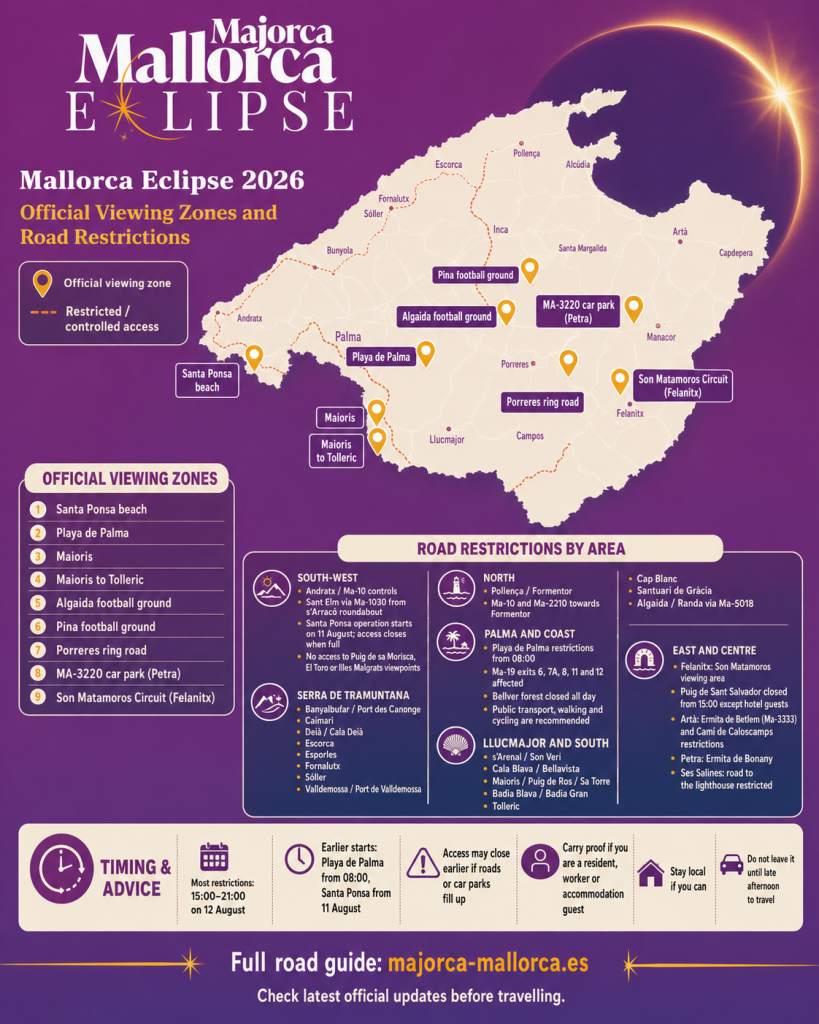
ANDRATX AND SOUTH-WEST
Andratx / Ma-10: km 111
Control around the Ma-10 at Andratx.
Sant Elm / s’Arracó
Sant Elm Ma-1030: from km 3.9 at the Ma-1050 roundabout The Ma-1030 from the s’Arracó roundabout towards Sant Elm will be restricted. Andratx Council is also telling people to plan ahead and avoid unnecessary journeys.
CALVIÀ
Santa Ponça is an official viewing zone.
The municipal security operation begins 24 hours earlier, on 11 August, and access will close when the viewing area reaches capacity.
Access to Puig de sa Morisca, El Toro and the Illes Malgrats viewpoints will not be permitted.
Calvià is specifically asking people to avoid unnecessary journeys and watch from their accommodation or somewhere nearby where possible.
SERRA DE TRAMUNTANA
Restrictions apply around:
Banyalbufar / Port des Canonge: Ma-10 and the access towards Port des Canonge.
Caimari: Ma-2130 km 7 to 15
Deià: Ma-10 and the road towards Cala Deià.
Escorca: Ma-2141 km 0 to 13
Esporles: Ma-10 around the Ma-1100 junction.
Fornalutx: Ma-10 around kilometre 47.5.
Sóller: Ma-10 and Ma-2124 km 0 to 4.9 will be restricted
Valldemossa: Ma-10 and Ma-1131 km 0 towards Port de Valldemossa.
If your plan involves driving into the mountains late in the afternoon, reconsider it.
POLLENÇA AND FORMENTOR
Controls will affect the Ma-10 and Ma-2210 km 2 to 19.2 towards Formentor.
The official Government plan regulates the Ma-2210 between approximately kilometres 2 and 19.2, and local authorities have been briefing residents about additional eclipse measures.
Formentor is already highly restricted during summer. Do not treat the lighthouse or Mirador des Colomer as an easy last-minute option.
PALMA AND PLAYA DE PALMA
This is the most extensive special traffic operation.
From 08:00, vehicle access and parking restrictions begin.
Ma-19 exits 6, 7A, 8, 11 and 12 towards Llucmajor are affected.
Between 08:00 and 12:00, vehicle entry is principally for residents, accredited workers and accommodation guests with parking and the appropriate accreditation.
From 12:00 onwards, the closure becomes much broader.
You do not need accreditation if you arrive by public transport, on foot or by bicycle.
NB: In Palma Bellver Forest will be closed for the entire day.
SPECIAL ECLIPSE BUS
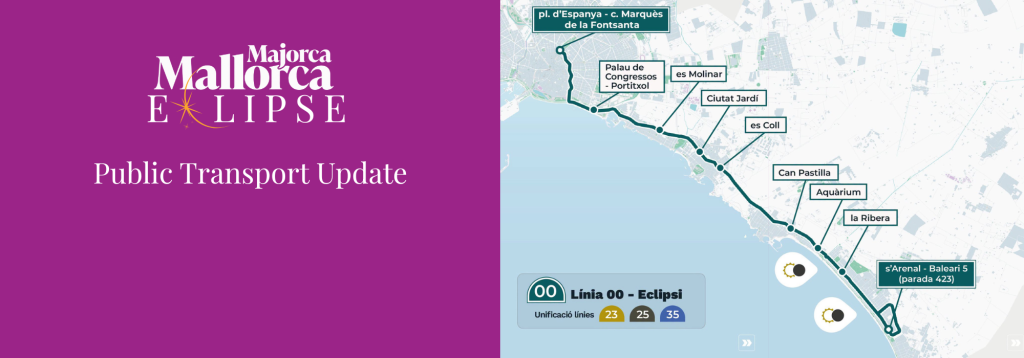
EMT Palma is running a special “00 Eclipsi” route between Plaça d’Espanya and s’Arenal, Balneari 5.
It runs from 12 noon on Wednesday until 02:00 on Thursday, with a bus approximately every five minutes.
The service replaces the normal routes of lines 23, 25 and 35 during the operation, with several other EMT services also diverted.
If you are going to Playa de Palma, leave the car at home.
LLUCMAJOR AND THE SOUTH
Llucmajor Council has announced its own extensive controls.
Affected areas include:
s’Arenal and Son Verí; Restricted vehicle access, with controls for residents, workers, accommodation guests and emergency access.
Cala Blava and Bellavista: Controlled access via Camí d’Enderrocat.
Maioris, Puig de Ros and Sa Torre: Controlled access points.
Badia Blava and Badia Gran: Very restricted access. Some parking and viewpoint areas may close during the morning once full.
Tolleric: Restricted to residents, workers, public transport, accommodation guests and other authorised journeys.
Cap Blanc: Restrictions towards the lighthouse.
Santuari de Gràcia: Access closed via Camí Vell de Gràcia and Ma-5018.
ALGAIDA AND RANDA
The Ma-5018 towards Randa will be regulated.
Official viewing areas are available at Algaida football ground and Pina football ground.
FELANITX
Felanitx Ma-4011: km 0.1 to 5 will be restricted
The official viewing area is Son Matamoros Circuit.
Vehicle capacity is limited to 800 cars. Once full, vehicle access closes.
The site will have:
• An ambulance
• Portable toilets
• Water for sale
• Additional security
The road speed will be reduced to 20 km/h temporarily to protect people walking from Felanitx.
Puig de Sant Salvador will be closed to vehicles from 15:00, except hotel guests with reservations, and the authorities explicitly say it is not a suitable eclipse viewing location.
ARTÀ
There is an important new municipal update here.
Vehicle access on the Ma-3333 towards Ermita de Betlem will be restricted between kilometres 5 and 8.
Artà Council has also announced no car or motorcycle access to Camí de Caloscamps, including access from Camí de Can Blanc and Camí de Cas Pillo.
Bicycles may be allowed unless numbers become unsafe.
PETRA
The road from Petra towards Ermita de Bonany will be regulated.
Petra also has an official viewing area at the Ma-3220 parking area.
SES SALINES
The Ma-6110 km 0 to 9 towards the Far de ses Salines will be restricted.
Need more information about the Mallorca Eclipse? “Mallorca Solar Eclipse 2026: where to watch and how to prepare”.
Or you can listen to our podcast about it here
What to remember
The exact restrictions may change according to crowding, traffic, weather, fire risk and emergency requirements.
If you are planning to travel to any of these areas on 12 August:
- Do not leave your journey until late afternoon
- Expect access to be stopped earlier than advertised if an area becomes full
- Carry proof of residence, accommodation or work if you are entitled to authorised access
- Do not assume that a restaurant booking or viewpoint reservation automatically guarantees road access
- Have an alternative viewing location closer to where you are staying
- Check the latest official information before setting off
For the latest traffic information and any last-minute changes, check eclipsisegur.caib.es before travelling.
Gaia Natural: How Trudi Murray is turning Mallorca’s stories into scent

What does Mallorca smell like?
For some, it might be warm pine trees, sea salt and sun cream. For others, it is orange blossom drifting through a village street, damp earth after a summer storm or the distinctive mixture of stone, wood and herbs inside an old finca.
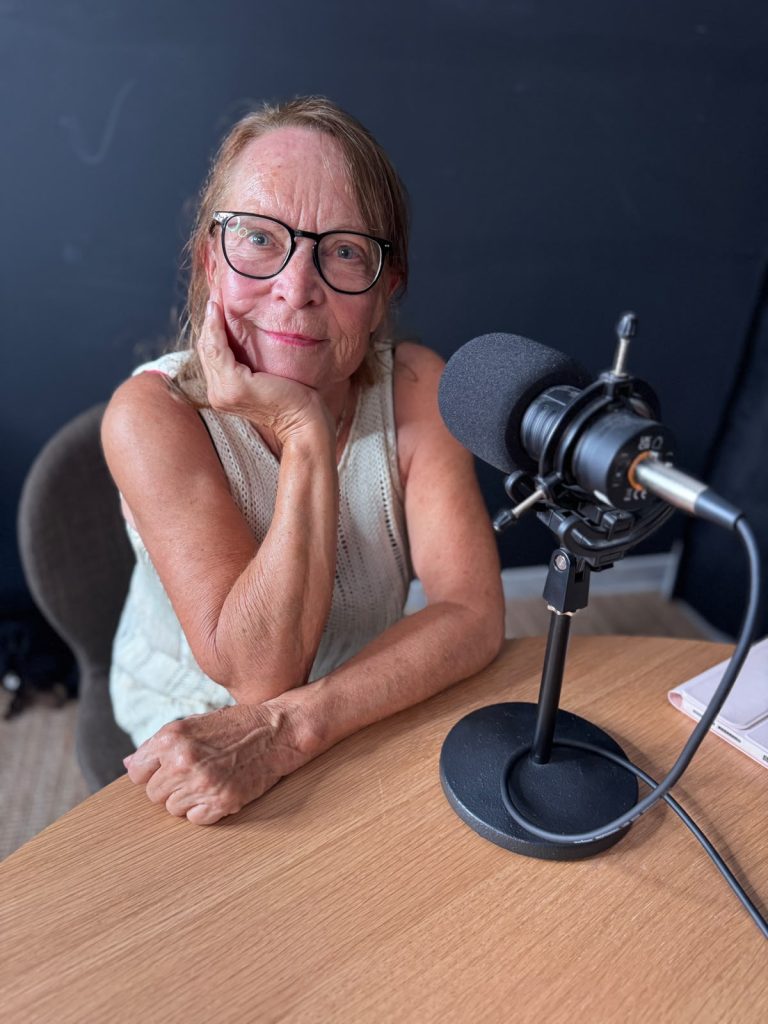
For Trudi Murray, founder of Gaia Natural, scent is more than something pleasant that we apply to our skin or release into a room. It can tell the story of a building, preserve a memory and transport us back to a moment we thought we had forgotten.
From her beautifully restored windmill in Costitx, Trudi creates bespoke fragrances and amenities for some of Mallorca’s leading luxury hotels. She also invites visitors into the world of perfumery through intimate experiences where they can construct their own completely personal scent.
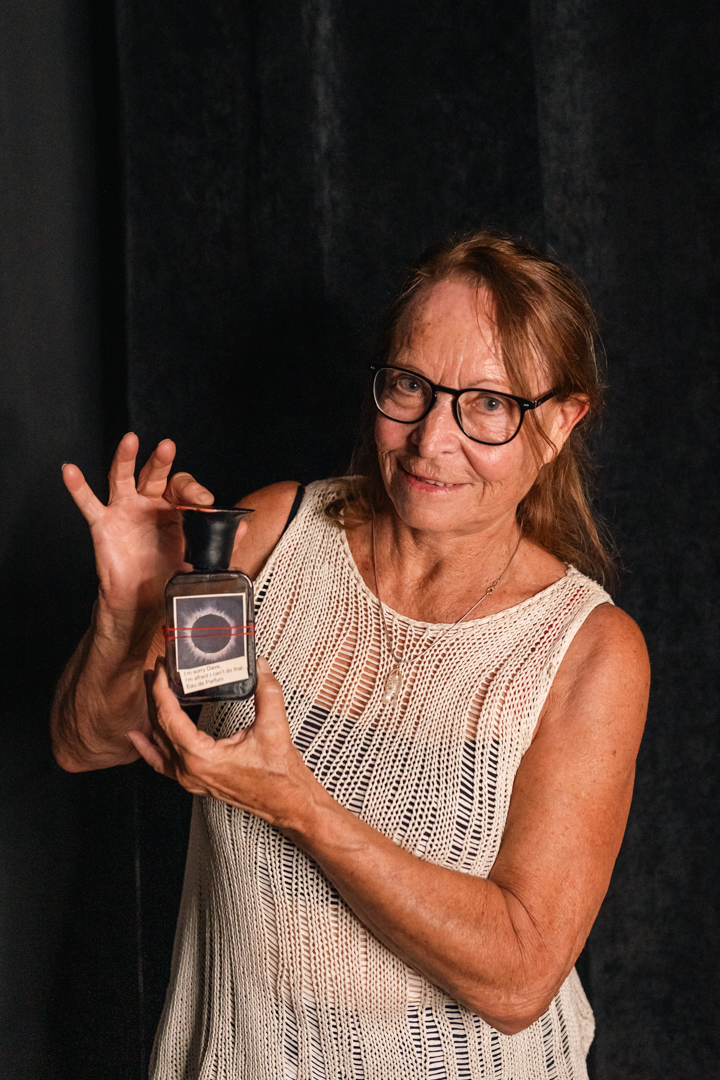
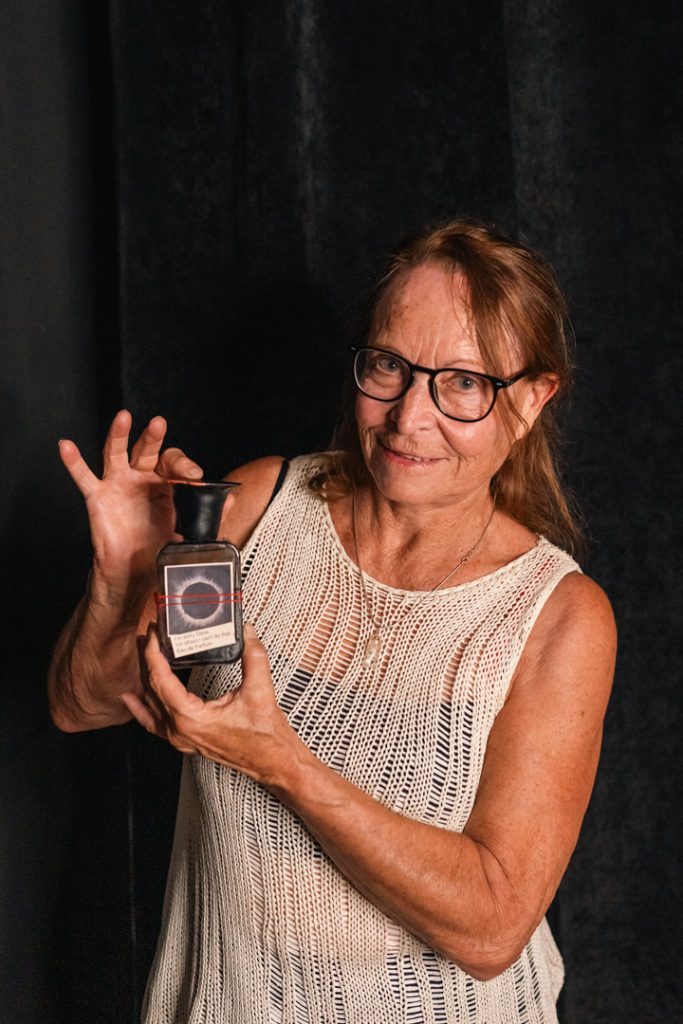
Her latest creation takes that storytelling much further. Inspired by Mallorca’s total solar eclipse on 12 August 2026, the limited-edition perfume draws together lunar dust, science fiction, fireworks and childhood nostalgia.
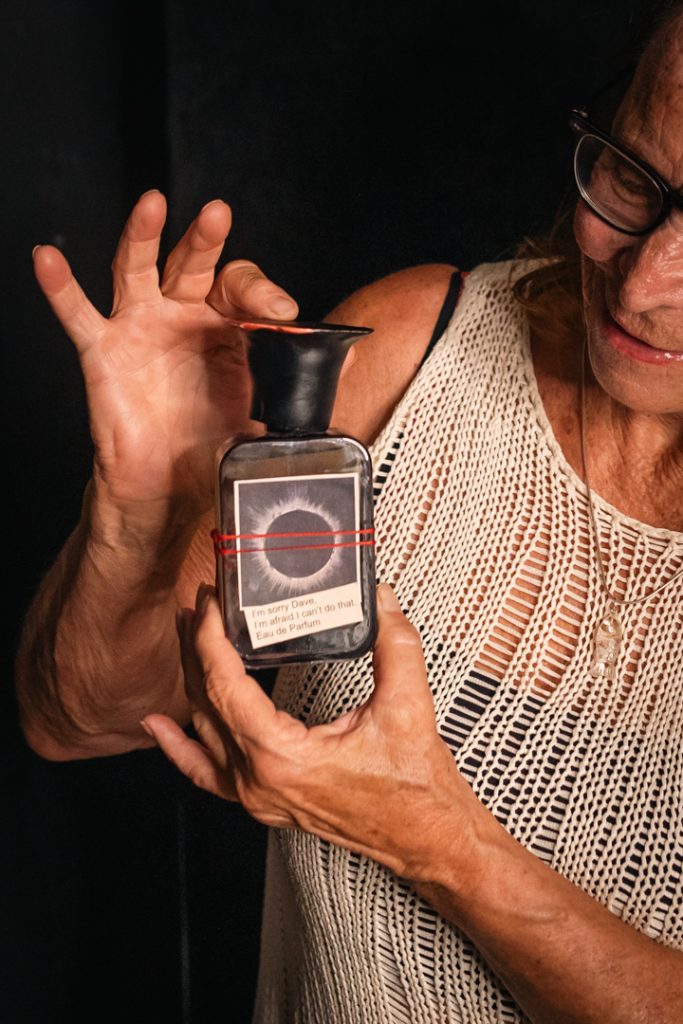
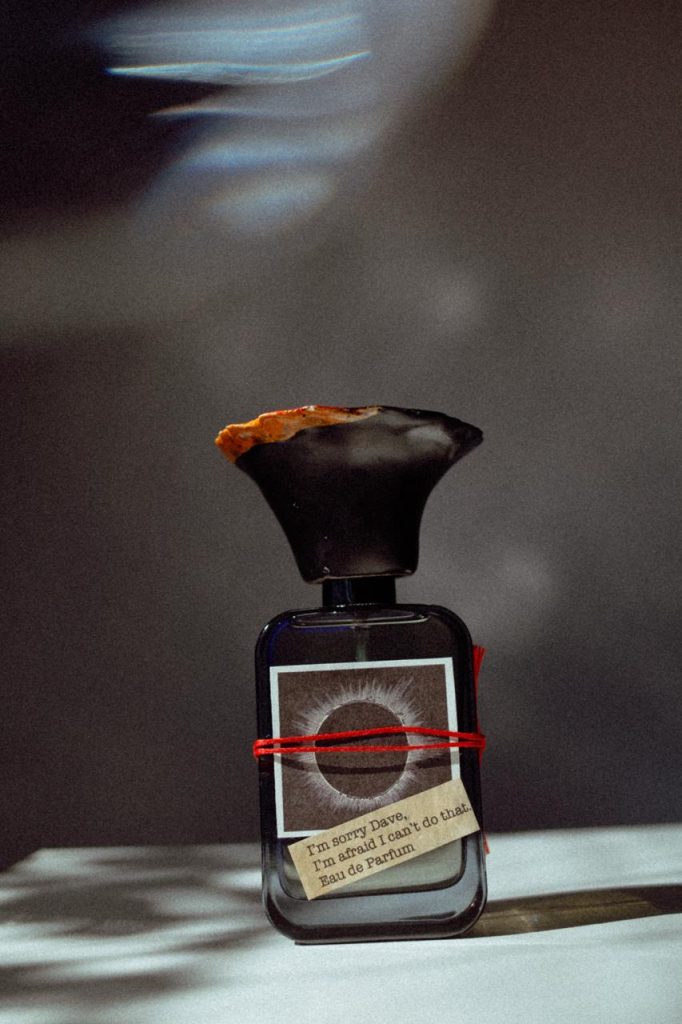
It is called I’m Sorry, Dave, I’m Afraid I Can’t Do That, and Trudi describes it rather brilliantly as “burnt fireworks and crushed dreams”.
The story behind Gaia Natural
Gaia Natural is best known for creating bespoke amenities and spa products for Mallorca’s luxury hotels. These include shampoos, conditioners, shower gels and body lotions, but Trudi’s work goes far beyond choosing an attractive fragrance and adding it to a bottle.
Every hotel receives its own signature scent, created to reflect the personality of the property.
“We create the scent for them, so each hotel has its own perfume in its amenities,” Trudi explains. “That’s our main business.”
Before beginning, she looks closely at the hotel and its surroundings. What grows in the gardens? Is the building modern and minimalist or an old finca filled with stone, timber and history? Who stays there, and what sort of atmosphere is the hotel trying to create?
“I always ask a hotel what grows in the immediate surroundings and what they have in the garden, because that gels nicely,” she says. “Then I look at what they have inside the hotel, perhaps old beams or stone, and who their main client is. I like to create a story with the scent.”
A hotel created from a former stable, for example, might suggest wood, straw, dust and earth. A contemporary coastal property would lead the fragrance in a very different direction.
The result should feel as if it belongs to that particular place. It is not simply perfume used as decoration. The fragrance becomes part of the guest’s experience of the hotel.
The scent guests take home
Anyone who has ever opened a bottle of hotel body lotion after returning from a holiday will understand the power of this idea.
Scent is closely connected to memory. A fragrance encountered in a hotel room can become inseparable from the holiday itself, recalling the view from the balcony, the heat of the day or the feeling of being somewhere entirely different from home.
Those memories can return instantly when the guest uses the product again.
For a hotel, this creates a subtle but powerful emotional connection. Long after the guest has checked out, its signature scent can take them back to Mallorca.
The fragrances Trudi creates for Gaia Natural’s clients are exclusive. Each formula belongs to the hotel for which it was developed and cannot simply be recreated for another property.
“I know what makes that scent distinctive,” she explains. “It’s usually one or two specific essential oils, so I can’t really use them for anybody else.”
Some hotels require confidentiality agreements to protect their fragrance. If another client asks for something similar to a scent Trudi has already created, she must find a completely different route.
It is demanding work, but that exclusivity is precisely what makes a signature fragrance meaningful.
Creating products that belong in the Mediterranean
Gaia Natural uses locally grown ingredients whenever it is practical to do so. Trudi grows aloe vera, lavender and calendula, while other materials are sourced from elsewhere in Spain.
Her guiding principle is that the finished treatment or product should make sense in Mallorca and within the wider Mediterranean environment.
“It has to make sense in the Mediterranean,” she says. “People don’t come to the Mediterranean to have a Hawaiian massage. They want something that feels linked to where they are.”
That connection to place sits at the centre of Gaia Natural. Mallorca is not simply where the products happen to be made. The island’s landscape, plants, buildings and atmosphere all help to shape them.
It is an approach that feels particularly appropriate at a time when travellers are increasingly looking for experiences rooted in their destination. Guests can find generic luxury almost anywhere. What they remember is the experience that could only have happened here.
Perfume-making experiences in Costitx
After years of explaining her work and answering questions about fragrance, Trudi decided to deepen her knowledge of traditional perfumery. She completed an intensive course in Grasse, the French town considered by many to be the world capital of perfume.
She now shares that knowledge through perfume-making experiences at her windmill in Costitx.
Guests are introduced to the structure of perfume and taught how different ingredients work together. Rather than being handed a fixed recipe, they are encouraged to smell carefully, follow their instincts and notice the emotions or memories that individual oils awaken.
“I tell people to look out for the oils that speak to them,” says Trudi. “Perfume isn’t just about what you like. It is also about olfactory memories. You smell an oil and it can trigger a childhood memory or make you feel a certain way.”
That distinction is important. We might assume that making perfume is simply a process of choosing several smells we enjoy. In reality, the most meaningful ingredient may be one that produces an unexpected emotional response.
During one experience, a guest encountered an oil that immediately reminded her of the small pots of paper glue used in primary school. It was not an obvious choice for a perfume, but the association was so strong that she chose to include it in her final creation.
“She said it made her feel like a wondrous child again,” Trudi recalls. “It’s a lovely medium to work with.”
Creating your own perfume in Mallorca
During the experience, guests learn how a fragrance is built from top, heart and base notes.
The top notes usually provide the first impression, but they evaporate relatively quickly. The heart notes emerge next and form the main character of the perfume, while the base notes give it depth and allow it to remain on the skin.
It is a balance between knowledge and instinct. Some combinations work immediately, while others need to be adjusted, softened or given greater depth.
The perfume that each guest creates is entirely individual. Two people can be presented with the same collection of oils and produce completely different fragrances because they bring different preferences, histories and memories to the process.
The experiences are held twice a week and include a small Mallorcan tasting menu. This is not a hurried tourist workshop designed to fill an hour. It is an opportunity to slow down, pay attention to the senses and leave with something that carries a personal story.
A Mallorcan windmill brought back to life
The location is an important part of the experience.
Trudi’s windmill was little more than a ruin when she first found it. Her immediate response was not particularly romantic. Faced with the reality of the restoration it would require, she was ready to walk away.
Then she climbed the outside staircase.
“I got to the terrace and I could see the whole of the Tramuntana, the sunrise and the sunset,” she says. “It is a little bit like being in a hot-air balloon. You feel above it all.”
That view changed everything.
The restored building combines ancient stone walls with clean, modern interiors. From its elevated position, guests can look across the Mallorcan landscape towards the Serra de Tramuntana and the bays of Pollença and Alcúdia.
Trudi initially imagined using the windmill as Gaia Natural’s production facility. Once the work was complete, however, the building felt far too special to become a factory.
Instead, it became a place where people could gather, learn and create. The perfume experiences are joined by events and wellness days, while an unexpected remnant of the windmill’s history has proved particularly useful.
During the 1960s and 1970s, the building was used as an after-hours bar. Remarkably, its bar licence has survived.
Turning Mallorca’s eclipse into a perfume
Trudi’s most ambitious fragrance so far began with Mallorca’s total solar eclipse.
On the evening of 12 August 2026, the Moon will pass between the Earth and the Sun, briefly plunging parts of the island into darkness. The event has already inspired viewing plans, road restrictions, scientific events and considerable excitement across Mallorca.
Trudi responded in her own way. She began wondering what the eclipse might smell like.
“I had the name before I created the perfume,” she says. “I started thinking about the eclipse, then science fiction, Stanley Kubrick and the Apollo landings.”
The name, I’m Sorry, Dave, I’m Afraid I Can’t Do That, comes from HAL 9000 in Stanley Kubrick’s 2001: A Space Odyssey.
From there, Trudi followed what she describes as a creative rabbit hole. Her research into the Apollo missions uncovered accounts from astronauts who said lunar dust brought into the spacecraft smelled like burnt gunpowder or spent fireworks.
That provided the first spark for the fragrance, but its emotional story came from somewhere much closer to Earth.
Burnt fireworks and crushed dreams
Trudi began thinking about childhood firework displays. Not only the sharp, smoky smell of fireworks exploding overhead, but the entire experience surrounding them.
“I thought of fireworks going up, that sparkling, bright and very vivid scent, and then dying down,” she explains. “When you are a child, fireworks are so exciting. You have been allowed to stay up late, you are overtired and emotional, and the ground is trampled. At night, the humidity makes the grass and soil smell different.”
It is a very particular childhood memory. There is the excitement of being outside after dark, the brightness and noise of the display and the knowledge that normal bedtime rules have temporarily been suspended.
Then the final firework disappears.
The ground is damp and churned up beneath everyone’s feet. Smoke lingers in the air. The excitement is over, and it is time to go home.
That emotional mixture of wonder, tiredness, nostalgia and disappointment became “burnt fireworks and crushed dreams”.
The perfume opens with a bright metallic citrus shimmer, softened by coconut flower. Smoke, wood, warmth and sweeter gourmand elements follow, while a green note develops as the fragrance settles on the skin.
Like the eclipse itself, it moves from brightness towards shadow and then into something altogether more complex.
Writing a fragrance before blending it
Trudi spent two or three months developing the perfume.
“I write the perfume first, then make each note individually and work out how to blend them together,” she explains. “There were little scent strips everywhere, and I asked lots of people what they thought.”
Creating a perfume is not simply a matter of placing several attractive ingredients in a bottle. Each accord must work independently before it can be combined with the others. The balance may need repeated adjustment as the fragrance develops and reveals different elements over time.
The reactions of other people are also useful. A perfumer knows the intention behind a scent, but someone experiencing it for the first time may discover something unexpected within it.
Eventually, all the different ideas came together: the cold metallic quality of space, the brightness of the Sun, lunar dust, fireworks, damp earth and the emotional afterglow of childhood excitement.
Only 50 bottles, each one different
The finished fragrance is limited to just 50 bottles, but the perfume itself is only one part of the creation.
Each bottle is presented in a handmade box inspired by old scrapbooks and filled with photographs and fragments connected to the Apollo missions. Because they are made individually, no two boxes are exactly alike.
The bottle features an engraving based on an eclipse from 1875, with a red line running through the design. Its ceramic top, created by Palma studio Wimbi, represents the shadow of the Moon edged by the red glow of sunset.
Inside the box, the owner will also find tiny figures and glue, allowing them to construct a miniature scene of their own.
“It is where creative art meets olfactory art,” says Trudi. “It is more than just a scent. It is an interactive art piece that smells good.”
The playfulness of the packaging reflects the spirit of the fragrance. This is not an attempt to create a conventional luxury perfume that simply looks elegant on a dressing table. It invites the owner to explore it, handle it and contribute something to the finished piece.
Following the next creative idea
The eclipse perfume may be Trudi’s most elaborate creation so far, but she is unlikely to remain with one idea for very long.
A new fragrance inspired by Berlin is already beginning to take shape. As with the eclipse perfume, it is likely to draw from atmosphere, memory and an unexpected mixture of cultural references.
“I get an urge to be creative and then I have an idea that I simply can’t put down until I have done it,” she says.
That need to keep creating links every part of Trudi’s work. It can be seen in the exclusive scents made for Mallorca’s hotels, in the personal fragrances produced during her workshops and in a limited-edition perfume inspired by the moment the Moon’s shadow crosses the island.
For Trudi, making something new is not merely a commercial exercise. It is a way of continuing to change and remain curious.
“Life is so short and so amazing,” she says. “When I have a creative project, it feels as though I am reinventing myself.”
Are Tourists Still Welcome In Mallorca?
Thousands of people took to the streets of Palma this week to protest against the effects of mass tourism, housing shortages and increasing pressure on life in Mallorca.
The dramatic images and reports of clashes between police and demonstrators have travelled around the world. Inevitably, they have left some visitors asking a worrying question: are tourists still welcome in Mallorca?
In this week’s Majorca Mallorca Podcast, Vicki McLeod and Oliver Neilson look beyond the headlines and discuss what the protest was really about.
What happened at the Palma tourism protest?
The demonstration was organised by Menys Turisme, Més Vida, meaning Less Tourism, More Life. Protesters marched through Palma before heading towards Ses Voltes, beneath the cathedral, where the final manifesto was due to be read.
Attendance estimates varied considerably. Police put the number at approximately 25,000, while organisers claimed that as many as 70,000 people participated.
Problems developed when access to Ses Voltes was restricted because the area had reached capacity. Some demonstrators believed they were being prevented from completing the protest. There were clashes, police used batons and rubber bullets, and several people were reportedly injured.
Prime Minister Pedro Sánchez subsequently confirmed that an investigation had been opened to establish exactly what happened and whether the police response was proportionate.
Is Mallorca protesting against tourists?
“Tourists go home” is the slogan most likely to make international headlines, but it does not properly explain the debate taking place in Mallorca.
Many protesters are not demanding an end to tourism. They are asking how much tourism the island can accommodate without damaging residents’ quality of life, the natural environment and the visitor experience itself.
Their concerns include:
- The shortage of affordable long-term housing
- Rising rents and property prices
- Congested roads and overcrowded beaches
- Pressure on water and other natural resources
- Low salaries within the tourism industry
- The conversion of homes into holiday accommodation
- The effect of second homes and remote working on local communities
Mallorca needs tourism. It supports hotels, restaurants, shops, taxis, activity providers and thousands of local families. The real question is how the economic benefits can be shared more fairly while protecting the island and ensuring that residents can still afford to live here.
Are visitors safe and welcome in Mallorca?
For the overwhelming majority of visitors, the answer is yes.
The protests are directed primarily at government policies and Mallorca’s economic model, not at individual families arriving for a holiday.
Visitors are extremely unlikely to encounter any confrontation. Hotels, restaurants, shops and tourism businesses continue to welcome their customers, and everyday life across the island is carrying on normally.
The images of the clashes were serious, but they represented a small part of a much larger demonstration. They should not be interpreted as evidence that Mallorca has become unsafe for tourists.
Palma Airport and the new EES queues
The episode also discusses reports of long queues for British passengers arriving at Palma Airport.
Which? travel editor Rory Boland identified Palma as one of the airports where travellers have reported significant delays during the introduction of the Entry/Exit System, or EES.
One problem is “bunching”, when several delayed flights arrive within a short period and overwhelm passport control. Oliver describes waiting around 45 minutes at passport control after a series of flights arrived late at night.
However, experiences vary considerably. Many passengers continue to report passing through Palma Airport quickly and without any serious problems.
Travellers arriving from outside the Schengen Area should be prepared for possible delays, particularly during busy summer weekends. Keep water, essential medication and something to occupy younger children in your hand luggage.
Passengers who require airport assistance should confirm their arrangements with the airline in advance.
Could Mallorca become a European firefighting centre?
Pedro Sánchez has proposed locating a new European firefighting hub at the Son Sant Joan Air Base in Mallorca.
The centre would coordinate resources for tackling major fires across the western Mediterranean, complementing the existing European facility in Cyprus.
The proposal comes as Spain and France continue to face devastating wildfires. Hotter summers, dry vegetation and the rapid growth created by wet winters can combine to produce extremely dangerous conditions.
Mallorca understands that danger. The 2013 Andratx wildfire, which began near Sa Coma Calenta, burned more than 2,000 hectares and remains vivid in the memories of people living in the area.
A rapidly developing crisis in Ceuta
The final part of the episode turns to Ceuta, one of Spain’s two territories on the North African coast.
At the time of recording, approximately 60,000 people were reported to have crossed from Morocco into Ceuta within 24 hours. The unprecedented influx overwhelmed local services and created a rapidly developing humanitarian and political crisis.
The situation was still changing as the episode was recorded, with conflicting and evolving reports concerning deaths, returns to Morocco and the Spanish government’s response.
Ceuta and Melilla form the European Union’s only land borders with Africa. The scale of the arrivals has reopened difficult questions about border security, migration policy, asylum processing and freedom of movement within Europe.
Plus, celebrities, superyachts and the eclipse
This episode of the podcast was not all politics and breaking news.
Jennifer Aniston and Courteney Cox were spotted enjoying Mallorca aboard the superyacht Rising Sun, while Cristiano Ronaldo’s visit prompted speculation about his engagement to Georgina Rodríguez.
Vicki and Oliver also return to the approaching total solar eclipse, following the extraordinary response to their previous conversation with eclipse expert Nick Brown.
With official information, road restrictions and viewing arrangements continuing to change, Majorca Mallorca is updating its eclipse guide regularly.
Listen to the complete episode of the Majorca Mallorca Podcast for the full conversation.
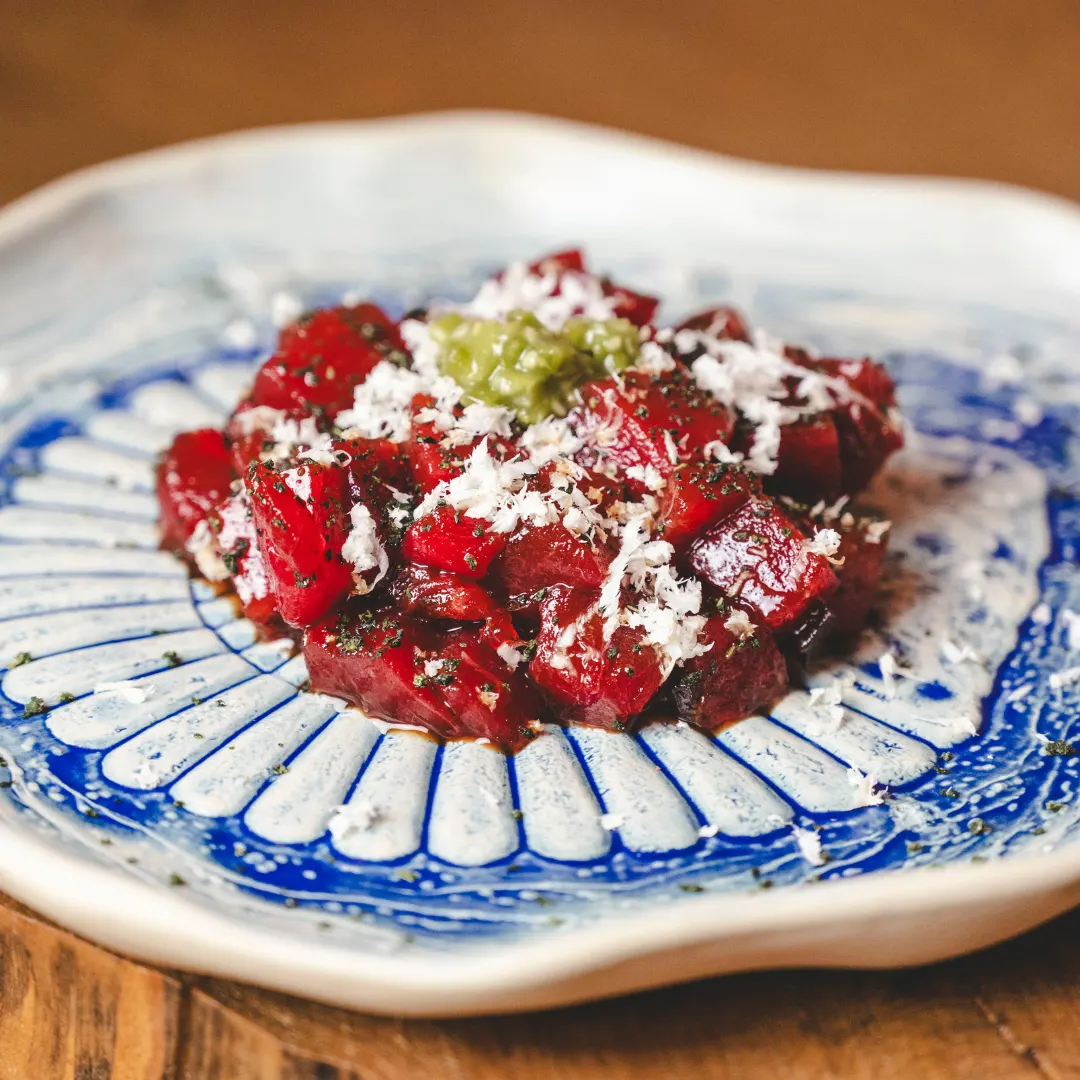
Where to Eat in Mallorca: From Menús del Día to Michelin-Starred Dining
 Listen to the the podcast episode here
Mallorca’s food scene is incredibly varied. A memorable meal might be an affordable menú del día in an inland village, a freshly prepared paella near the beach or an elaborate Michelin-starred tasting menu that lasts for more than three hours.
Food journalist Mia Naprta spends much of her time visiting restaurants, bars, hotels and new openings across the island. Her work takes her beyond the familiar tourist favourites and into towns and neighbourhoods that many international residents and visitors rarely explore.
These are some of her recent discoveries, along with her opinions on everything from the value of a traditional Spanish lunch to whether paella has become both expensive and overrated.
The Continuing Appeal of the Menú del Día
A Good Lunch Does Not Need to Be Expensive
One of Mia’s favourite assignments is searching for a good menú del día.
The traditional Spanish set lunch generally includes a choice of starter, main course and dessert, often with bread and a drink. Prices vary considerably depending on the restaurant and location, but a menú del día can still offer excellent value compared with ordering from the main menu.
It is also an opportunity to experience a more local way of eating. Lunch becomes a proper break in the day rather than something rushed between activities.
For Mia, the appeal is not simply about finding the lowest price. A worthwhile menú del día should offer good cooking, fresh ingredients and enough choice to make the meal enjoyable.
Look Beyond Mallorca’s Tourist Areas
Some of Mallorca’s most interesting and affordable restaurants can be found beyond Palma and the areas most frequently visited by the international community.
Restaurants in inland towns and villages often rely upon local residents throughout the year. They cannot depend entirely on a short summer season, so consistent quality, sensible pricing and repeat customers are particularly important.
Exploring these areas can also introduce diners to traditional dishes and local ingredients that are not always prominent on menus designed principally for tourists.
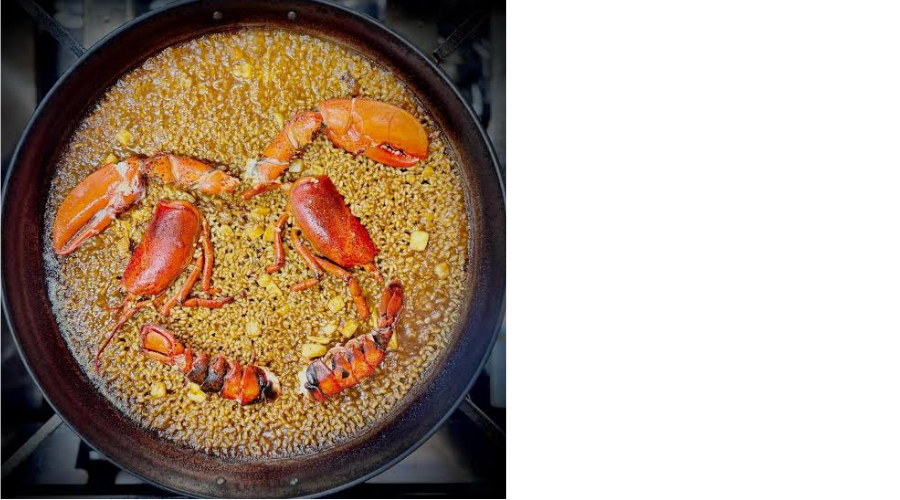
Casa Chiringo: Proper Paella in Palmanova
Has Paella Become Overrated?
Mia admits that she had started to find paella both expensive and overrated. Too many restaurants appear to rely on the reputation of the dish, and their seaside location, without delivering the quality diners should expect.
A recent visit to Casa Chiringo in Palmanova helped to restore some of her enthusiasm.
Casa Chiringo specialises in Mediterranean cooking and rice dishes, with paella at the heart of its menu. According to Mia, the restaurant has taken care to learn from Valencian chefs and prepare its paella in a way that respects the dish’s origins.
The paellas cost approximately €22 to €26, depending on the variety. Mia tried a mixed version containing chicken, seafood and green beans.
What Makes a Good Paella?
A good paella depends on the rice, the stock, the balance of ingredients and the cooking technique.
The rice should absorb the flavours without becoming wet or creamy. The prized caramelised layer at the bottom of the pan, known as the socarrat, adds texture and depth when it is prepared properly.
A good paella should also be cooked to order. Diners need to be prepared to wait because this is not intended to be instant food.
Mia believes that the training and attention to technique at Casa Chiringo separate its paella from the disappointing versions frequently sold in restaurants overlooking the sea.
Casa Chiringo is close to the Palmanova seafront but is distinct from the group’s beachfront venue, Il Chiringo Beach. Its focus on rice dishes makes it the more relevant choice when paella is the reason for the visit.
You can watch on YouTube as well now!
Brunch and Japanese Pancakes in Palma
Mallorca’s brunch scene has expanded considerably, particularly in Palma, where traditional cafés now sit alongside restaurants influenced by international food trends.
Japanese soufflé pancakes have become one of the more eye-catching additions. They are much thicker and lighter than ordinary pancakes, with their distinctive airy texture created using whipped egg whites and careful cooking.
One Palma venue attracting attention for them is Fluffy in Santa Catalina. Its towering Japanese-style pancakes are served with different toppings and syrups, making them a particularly indulgent brunch option.
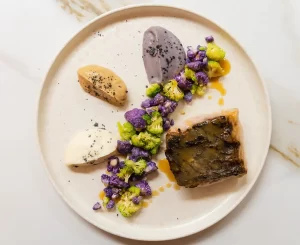
Selvatge: A Great Reason to Visit Selva
Discovering Mallorca’s Inland Food Scene
Selvatge is situated in Selva, a traditional town at the foot of the Tramuntana mountains.
The restaurant occupies a restored 19th-century manor house on the town’s main square. Its presence demonstrates how ambitious restaurants are increasingly appearing outside Palma and Mallorca’s principal coastal resorts.
Travelling inland for lunch or dinner can become part of the experience. Selva offers a very different atmosphere from the capital, and a restaurant reservation can be combined with time exploring the town and the surrounding Raiguer region. Mia believes that some of Mallorca’s most interesting restaurants can be discovered by leaving the familiar international dining circuit and it's well worth getting off the beaten track to explore.
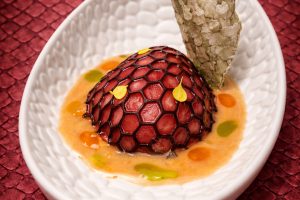
Zaranda: A Three-and-a-Half-Hour Dining Experience
Michelin-Starred Dining in Palma
At the far end of the dining spectrum is Zaranda, chef Fernando Pérez Arellano’s Michelin-starred restaurant inside the Es Príncep hotel in Palma.
This is not a restaurant for a quick dinner before continuing elsewhere as Mia’s tasting-menu experience lasted approximately three and a half hours!
Zaranda combines intricate cooking with storytelling, detailed presentation and elements of theatre. Each dish contributes to a wider concept, turning the meal into a carefully structured experience rather than a collection of unrelated courses.
Food, History and Storytelling
Zaranda draws inspiration from the history of its surroundings. Es Príncep stands near Palma’s former tanners’ quarter, and references to skin, leather and texture have been incorporated into the restaurant’s culinary concepts.
For Mia, the exceptional level of detail was one of the most memorable parts of the experience. The presentation, show cooking and explanations accompanying each course all contributed to the sense of occasion.
Zaranda is unlikely to be an everyday restaurant for most diners, but we think it would be a great location for a birthday, anniversary or another special celebration.
Mallorca’s Food Scene Rewards Curiosity
These Mallorca restaurants could hardly offer more different experiences.
A menú del día provides an affordable introduction to local cooking. Casa Chiringo serves Mediterranean rice dishes close to the coast. Fluffy brings Japanese-inspired pancakes to Palma’s brunch scene, while Selvatge gives diners a reason to explore inland Mallorca. Zaranda transforms dinner into an elaborate special occasion.
There is no single answer to the question of where to eat in Mallorca.
The best restaurant will depend upon the experience you want, your budget, how much time you have and whether you are willing to venture beyond the places you already know. What Mia’s discoveries demonstrate is that Mallorca’s food scene still has plenty of surprises for diners who are prepared to explore.
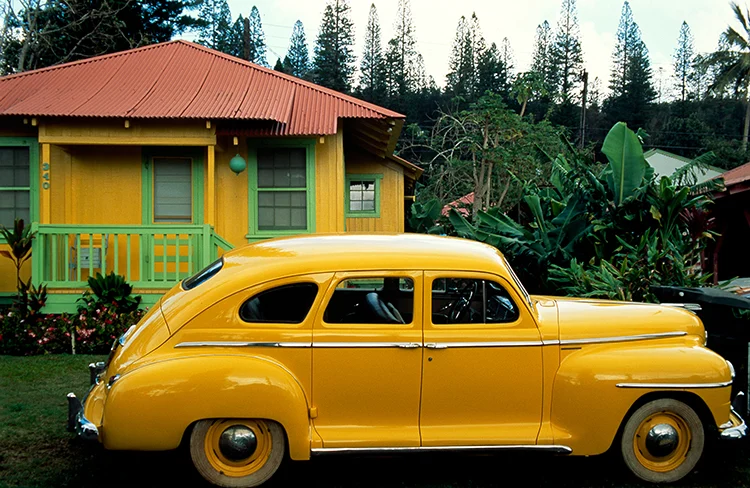
Events in August in Mallorca
August in Mallorca is arriving in full peacock mode! The month opens with the Copa del Rey MAPFRE in Palma, rolls into open-air cinema, keeps the culture crowd happy with Pollença Festival and Nits a Bellver, and then, just in case everyone was getting too comfortable, throws in a total solar eclipse on 12 August!
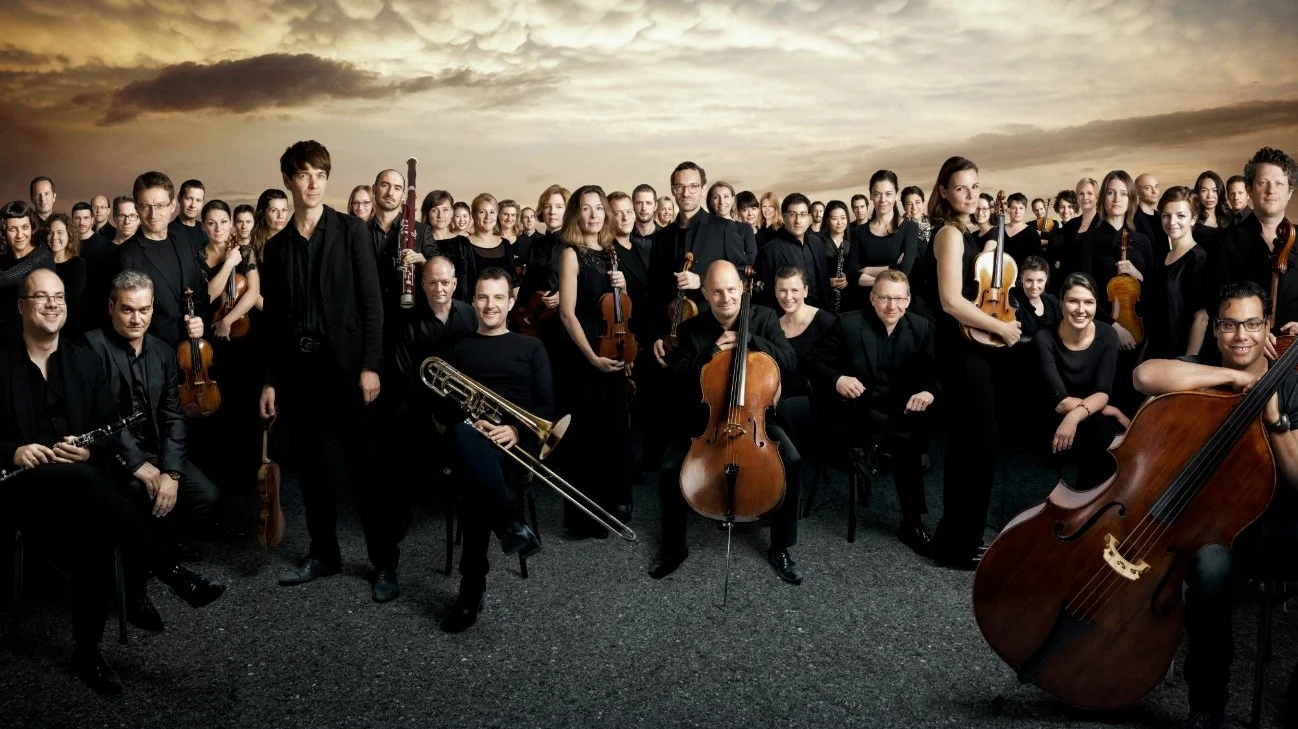 Pollença Music Festival 2026
- Date: Wed 5 Aug to Sun 30 Aug 2026
- Time: Concerts listed at 10:00 PM
- Area/location: Pollença
- Venue: Claustre de Sant Domingo
- What it is: An elegant August fixture and one of the island's strongest classical programmes.
- More info / booking: Official programme and official tickets page
- Price: €25 to €45 depending on concert and seating zone
- Confirmed concerts:
- 5 Aug: Daniil Trifonov with Mahler Chamber Orchestra
- 8 Aug: Alban Gerhardt with Orquestra Simfònica de les Illes Balears
- 13 Aug: Quatuor Ébène
- 15 Aug: Freiburger Barockorchester with Jeanine De Bique and Éva Borhi
- 19 Aug: Seong-Jin Cho
- 22 Aug: Les Muffatti with Frank Theuns, Sophie Gent and Violaine Cochard
- 30 Aug: Orquestra de la Comunitat Valenciana conducted by Sir Mark Elder
 Total Solar Eclipse in Palma and Mallorca
- Date: Wed 12 Aug 2026
- Time: Totality is reported at about 8:31 PM, lasting roughly 1 minute and 36 seconds
- Area/location: Palma and wider Mallorca
- Read our full article about it here.
44th Copa del Rey MAPFRE
- Date: Sat 1 Aug to Sat 8 Aug 2026
- Area/location: Palma
- Venue: Real Club Náutico de Palma and the Bay of Palma
- What it is: One of the island's biggest August set-pieces, with a serious international sailing fleet and Palma doing that thing where it looks unreasonably handsome from every angle. Strong option for readers who like sport, harbour atmosphere and watching other people steer very expensive things with conviction.
- More info: Visit Palma event page and official regatta page
Cinema a la Fresca Palma 2026
- Date: Mon 3 Aug to Wed 2 Sep 2026
- Time: 9:00 PM screenings
- Area/location: Palma
- Venue: Mainly Parc de les Estacions in August, plus Plaça Francesc García i Orell at the end of the run
- What it is: Free open-air cinema on warm Palma evenings, which is exactly the sort of plan August should be offering. The August line-up mixes recent hits, animation, classics and subtitled screenings, so it is useful for families, visitors and locals who fancy culture without a formal dress code.
- More info: Official Visit Palma page
- Price: Free
- August highlights:
- 3 Aug: Padre no hay más que uno 5
- 4 Aug: Casa en flames
- 5 Aug: Sirat
- 10 Aug: Batman Ninja vs Yakuza League
- 11 Aug: Wicked
- 12 Aug: Anora (original version with subtitles)
- 17 Aug: Com entrenar el teu drac
- 18 Aug: El 47
- 19 Aug: Weapons
- 24 Aug: El Gabinete del Dr. Caligari
- 25 Aug: Flow: un mundo que salvar
- 26 Aug: Las chicas de la estación
- 31 Aug: Es Gegant des Vedra
Nits a Bellver 2026, August highlights
- Date: Festival runs until Sat 29 Aug 2026
- Time: The August jazz dates surfaced at 9:00 PM in the listings I checked
- Area/location: Palma
- Venue: Castell de Bellver
- What it is: Summer concerts inside Bellver Castle, which is already doing half the work before anyone plays a note. August leans into the Palma Jazz Festival strand, plus dance and a Mahler-closing flourish, so this is a strong pick for readers who like culture with a dramatic setting.
- More info: Visit Palma event page and The Calendar Mallorca listing
- August highlights:
- 6 Aug: Harlem Gospel Travellers
- 11 Aug: 3rd Gala de Dansa de Ballarins Mallorquins
- 13 Aug: Pep Garau Sextet
- 20 Aug: El Combo Batanga
- 27 Aug: Maria Antònia Gili Quartet
- 29 Aug: Mahler closing concert
1 Piano & 200 Candles
- Date: Sun 16 Aug 2026
- Time: 10:00 PM
- Area/location: Sineu
- Venue: Finca Ca's Pianista
- What it is: David Gómez performing under a centuries-old tree with suspended candles and a fairly unfair amount of atmosphere. This is one of August's lovelier one-night options if the brief is romance, stillness and a break from the standard loud-summer template.
- More info / booking: Arts Mallorca listing
- Price: From €30
PHOF Mallorca PhotoFest 2026
- Date: Sat 25 Apr to Sun 30 Aug 2026
- Time: Varies by exhibition, venue and activity
- Area/location: Palma and other Mallorca municipalities
- Venue: Various galleries, art centres, institutions and partner venues
- What it is: A broad island-wide photography and contemporary image festival organised by Art Palma Contemporani. Very useful for readers who like the idea of dipping into culture across the month rather than committing to one single headline night.
- More info: Official Art Palma Contemporani page
- Price: Varies by venue and activity.
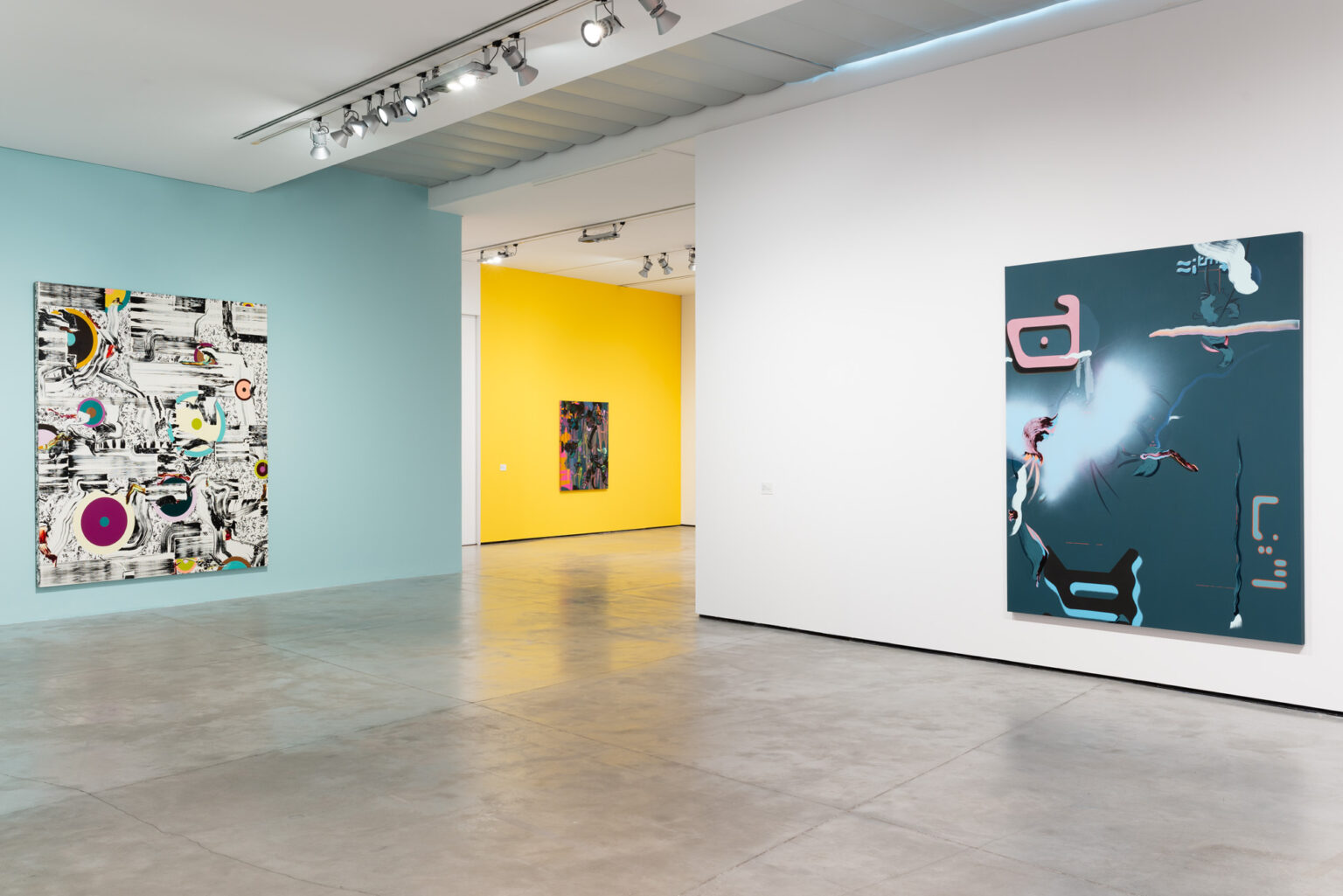 Fiona Rae: Vista
- Date: Until Sun 23 Aug 2026
- Time: Tue to Sat 10:00 AM to 8:00 PM, Sun 10:00 AM to 3:00 PM
- Area/location: Palma
- Venue: Es Baluard Museu d'Art Contemporani de Palma
- What it is: Fiona Rae's first solo exhibition in Spain, and a very solid Palma option for anyone who likes contemporary art with colour, scale and proper gallery confidence.
- More info: Official Es Baluard page
Colours of the World. National Geographic
- Date: Wed 25 Mar to Mon 12 Oct 2026
- Time: Daily, 10:00 AM to 8:00 PM
- Area/location: Palma
- Venue: CaixaForum Palma
- What it is: A National Geographic photography exhibition built around colour in nature, cities and human life. Broad, accessible and very handy when your readers want something visual, central and mercifully air-conditioned.
- More info: Official CaixaForum page
- Price: €6, with free entry for CaixaBank clients and under-16s
Valldemossa Festes de Sant Bartomeu 2026
Festes de Sa Marina, Port de Valldemossa
Felanitx Sant Agustí festivities
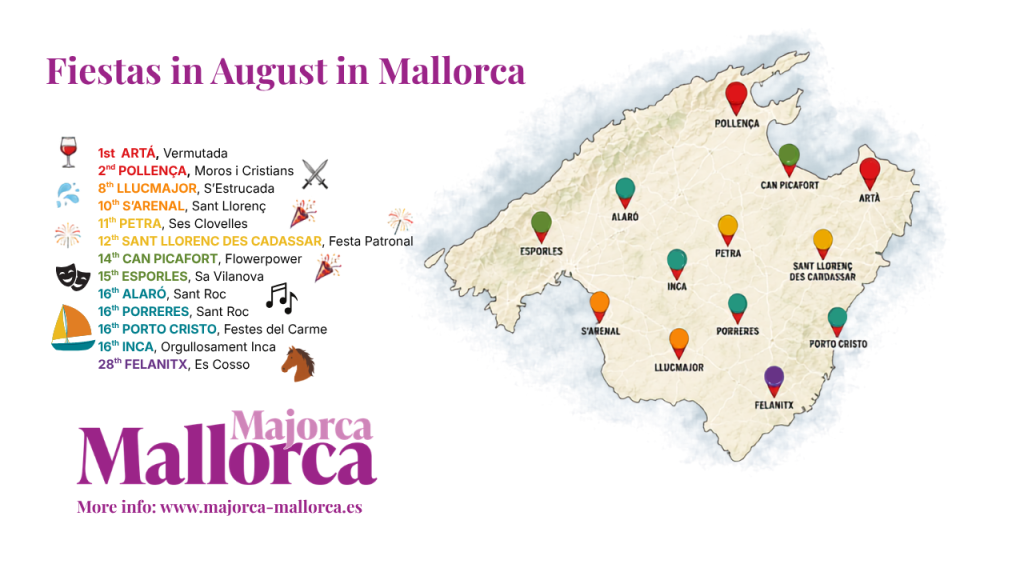
1 August, Vermutada, Artà
A relaxed celebration centred around vermouth, live music and socialising in one of Mallorca's most beautiful towns.
2 August, Moros i Cristians, Pollença
One of Mallorca's most spectacular festivals, recreating the historic battle between the Moors and the Christians. Thousands line the streets to watch this dramatic event, making it one of the island's must-see fiestas.
8 August, S'Estrucada, Llucmajor
A unique local celebration known for its energetic street atmosphere and traditional festivities.
10 August, Sant Llorenç, S'Arenal
Traditional patron saint celebrations featuring music, entertainment and local events.
11 August, Ses Clovelles, Petra
A community fiesta celebrating local traditions and village life.
12 August, Festa Patronal, Sant Llorenç des Cardassar
The town celebrates its patron saint with concerts, cultural events and family activities.
14 August, Flowerpower, Can Picafort
One of Mallorca's biggest themed parties, with everyone encouraged to dress in colourful 1960s and 1970s clothing.
15 August, Sa Vilanova, Esporles
A traditional village festival with music, dancing and local gastronomy.
16 August, Sant Roc, Alaró
A popular patron saint celebration featuring concerts, street entertainment and local traditions.
16 August, Sant Roc, Porreres
A lively community festival with music, food and cultural events.
16 August, Festes del Carme, Porto Cristo
The port celebrates its maritime heritage with processions and festivities by the sea.
16 August, Orgullosament Inca, Inca
A celebration highlighting local pride, culture and community.
28 August, Es Cosso, Felanitx
Perhaps Mallorca's most famous fiesta after Moros i Cristians. Expect decorated horses, costumes, music and one of the island's most energetic street celebrations.
September
6 September, Canamunt i Canavall, Palma
Palma's historic neighbourhood rivalry comes to life with themed events, performances and entertainment across the city.
9 September, S'Embalat, Sencelles
A traditional village celebration with food, music and activities.
12 September, Correguda en Roba Interior, Bunyola
One of Mallorca's quirkiest events, where hundreds of participants race through the streets wearing only their underwear. It's light-hearted, hilarious and attracts spectators from across the island.
The Festivals You Shouldn't Miss
If you can only choose a handful of events this summer, make these your priority:
- Moros i Cristians, Pollença, 2 August
- Es Cosso, Felanitx, 28 August
- Correguda en Roba Interior, Bunyola, 12 September
- Flowerpower, Can Picafort, 14 August
- Mare de Déu del Carme, Andratx, 16 July
Experience the Real Mallorca
While Mallorca is famous for its beaches, the island's village fiestas offer something even more memorable. They are a chance to experience authentic local culture, traditional music, historic celebrations and the warm community spirit that makes each town unique.
Whether you're dancing at Flowerpower, watching the dramatic battle in Pollença or cheering on the underwear race in Bunyola, summer is the perfect time to discover a different side of Mallorca.
Sources
- Visit Palma agenda and event pages
- Festival de Pollença official programme
- Art Palma Contemporani
- Es Baluard exhibition pages
- CaixaForum Palma
- The Calendar Mallorca
- Arts Mallorca
- Majorca Mallorca website
Mallorca Solar Eclipse 2026: Viewing Map, Times and Road Closures
Mallorca eclipse viewing zones and road restrictions
This map summarises the official viewing zones and road/access restrictions for the 12 August 2026 total solar eclipse. Majorca Mallorca compiled this information from the latest official announcements. Last checked: 12 August 2026.
Official viewing zones: Santa Ponsa beach; Playa de Palma; Maioris; Maioris to Tolleric; Algaida football ground; Pina football ground; Porreres ring road; MA-3220 car park (Petra); Son Matamoros Circuit (Felanitx).
See the full road-by-road details below…
Sources: Govern de les Illes Balears / Consells Insulars / Ajuntaments — compiled by Majorca Mallorca. Updated 11 August 2026.
Next update due: if official information changes…
See all our Mallorca Eclipse 2026 information
Originally published: 27 July 2026
Last substantially updated: 11 August 2026
Latest information checked: 12 August 2026, 07:24 CEST
If you are planning to get public transport then download this app https://nova.emtpalma.cat/es/emt?pageId=nueva_app which shows you in real time the regular bus routes in Palma. If you are planning to travel outside of Palma then this company https://www.tib.org/es/inicio will help you with getting around.
Mallorca’s emergency and road services are now activating a major operational plan ahead of tomorrow’s total solar eclipse.
The Consell de Mallorca, Mallorca Fire Brigade and road teams will reinforce key areas across the island because of the large crowds expected at viewpoints, natural spaces and major access routes.
Extra fire and rescue teams in the Serra de Tramuntana
A fire crew with a light fire engine will be stationed in the Formentor area, while a specialist Mountain Rescue Group will be positioned around Lluc to respond quickly to incidents in the Serra de Tramuntana.
Mallorca’s eight fire stations will continue their normal emergency cover across the rest of the island.
70 road staff and around 30 specialist vehicles
From early in the morning, the Department of Territory, Mobility and Infrastructure will deploy around 70 staff and 30 specialist vehicles across ten areas of Mallorca.
Teams will be ready to deal with:
- Accidents
- Road obstructions
- Cleaning
- Traffic incidents
- Emergency closures
- Changes to access arrangements
Four additional vehicles carrying road-closure and traffic-control equipment will also move around the island wherever they are needed.
Monitoring at the Sóller tunnel will also be increased.
Road closures can change during the day
This is the key point for anyone travelling.
The traffic operation is designed to be flexible, which means roads can be closed, reopened or restricted at short notice depending on congestion, crowd numbers and safety conditions.
Do not assume that because a road is open in the morning it will still be open later in the afternoon.
Check the latest official information before setting off, avoid unnecessary journeys and keep your plans flexible.
SEE ROAD CLOSURES IN DETAIL
Update: workers will need proof to enter restricted eclipse zones
Workers who need to access areas affected by Mallorca’s eclipse traffic restrictions on Wednesday 12 August should make sure they are carrying documents proving why they need to enter.
The Balearic Government says acceptable proof can include a work contract, company certificate or payslip.
This applies to people working inside areas where road controls are in place, including hotels, restaurants and other businesses. Simply telling officers that you work there may not be enough.
Restrictions affecting around twenty roads are generally expected to begin from 3pm, although they may start earlier if traffic or safety conditions require it.
Playa de Palma has separate access rules
For Playa de Palma, workers entering the controlled zone by private vehicle will need the relevant QR accreditation.
People travelling by public transport, on foot or by non-motorised transport do not need the vehicle permit.
If you are working inside one of the restricted areas on Wednesday, sort your documentation now rather than discovering at a checkpoint that you cannot get through.
The traffic operation includes the closure of Ma-19 exits 6, 7A, 8, 11 and 12 in the Llucmajor direction.
From 08:00 until 12:00, access to Playa de Palma will be limited to residents, accredited workers and guests staying in accommodation with parking, provided they have the necessary accreditation.
From 12:00 onwards, restrictions will extend more widely to vehicles, subject to the official exceptions.
People arriving by public transport, on foot or by bicycle do not need accreditation.
More practical details have now been confirmed for several of Mallorca’s official eclipse viewing areas, particularly Santa Ponça, Playa de Palma and Son Matamoros in Felanitx.
The message from the authorities remains the same: these locations have been chosen because they can be managed safely, not necessarily because they offer the island’s very best view of the eclipse.
Santa Ponça
Santa Ponça beach is one of Mallorca’s official observation zones, and the special operation there begins 24 hours before the eclipse, on 11 August. Capacity will be monitored throughout the event and, once the maximum is reached, access will be closed. Access will also be restricted to Puig de sa Morisca and viewpoints including El Toro and the Illes Malgrats.
Residents and people who can prove a justified reason for entering a controlled area may still be allowed access.
Son Matamoros, Felanitx
At the official viewing area at Son Matamoros, vehicle capacity is limited to 800 cars.
Once that figure is reached, vehicle access will close. To make the route safer for people walking from Felanitx, the speed limit on the access road will be reduced to 20 km/h for two or three hours.
The site will also have:
- An ambulance
- Portable toilets
- Water available to buy
- Additional private security staff
Scroll down for the map showing the official viewing areas
Mallorca’s official viewing locations are:
- Son Matamoros Circuit
- Playa de Palma
- Porreres ring road
- Santa Ponça beach
- Algaida football ground
- Pina football ground
- Maioris to Tolleric
- Ma-3220 parking area
- Maioris
Remember, these are not necessarily the places with the clearest or most spectacular views. They have been selected because authorities can better manage access, capacity, parking and emergency services.
If you are planning to use one of them on Wednesday, arrive early, check access arrangements before leaving and have an alternative plan in case your chosen location reaches capacity.
Update: Santa Ponça beach visibility will be restricted.
Subscribe below to get our final Mallorca eclipse update.
Join the Majorca Mallorca newsletter for confirmed road closures, transport information, weather forecasts
and last-minute official announcements before 12 August.
CLICK TO LISTEN TO THE PODCAST HERE
Why could the Mallorca eclipse be difficult to see?
The eclipse reaches totality only a short time before sunset.
At its maximum, the Sun will be extremely low in the west-north-western sky.
That means something which would normally seem insignificant can completely obscure the event.
It could be:
- A mountain
- A hill
- A headland
- A hotel
- An apartment block
- A tree
- Even a slight rise in the landscape
For much of Mallorca, looking west-north-west also means looking towards the Serra de Tramuntana.
From places relatively close to the mountains, the Sun could disappear behind the peaks before totality begins.
This is why the perfect eclipse location is not necessarily the island’s most famous sunset spot.

Can you see the eclipse from Palma?
Possibly, but location will matter enormously.
Much of Palma city has the Serra de Tramuntana between it and the low western Sun, with buildings creating another layer of potential obstruction.
Parts of Playa de Palma, Can Pastilla and s’Arenal may offer significantly better possibilities, which is one reason Playa de Palma has been chosen as one of the official observation areas.
A rooftop, hotel terrace or other elevated position may also provide a better line of sight than street level.
If you are already staying somewhere with a clear view, check it carefully before deciding to travel elsewhere.
How to check whether you can see the eclipse from home
The free Horizonte Eclipse 2026 tool allows people to select a location and check whether the maximum phase should be visible above the natural horizon. It uses topographical information to assess the height of the surrounding landscape and includes a compass and simulation features. This makes it a valuable starting point, but it should not be treated as an absolute guarantee. The website may account for mountains and hills, but a nearby hotel, pine tree or apartment block could still ruin the view.
The safest approach is:
- Check the proposed location using Horizonte Eclipse 2026.
- Visit the location before eclipse day, preferably on 11 August, to minimise the difference between what you are seeing then and what will happen on the day of the eclipse.
- Look briefly towards the sunset at approximately the same time, do not stare at the sun for too long.
- Check for buildings, trees and other nearby obstructions.
- Choose a safe place with enough room for the number of people expected.
- Prepare an alternative nearby location.
The Balearic Government recommends watching from home, a nearby location or your accommodation whenever possible, rather than making a long journey across the island.
Choose the exact location you are considering and check the natural horizon.
Then, if possible, check the physical location itself beforehand.
The simple pre-eclipse test
There is also a very practical way of checking your proposed viewing spot.
Using proper ISO 12312-2 certified solar eclipse glasses, check whether you can see the Sun from the exact location at:
- 9 August at 20:36
- 10 August at 20:35
- 11 August at 20:34
If the Sun is visible from that position at the relevant time, you have a good indication that the horizon should be open enough for the eclipse.
Do not look directly at the Sun without proper solar viewing glasses.
Where are the official eclipse viewing areas in Mallorca?
The Balearic Government has designated nine official observation zones, known as Zonas Oficiales de Observación or ZOO.
Importantly, these have not necessarily been selected because they offer the most dramatic view.
They were chosen by considering factors such as:
- Visibility
- Accessibility
- Capacity
- Parking
- Crowd management
- Emergency-service access
This is an important distinction.
The official viewing area may be the safest place to manage thousands of people, but it is not automatically the location with Mallorca’s finest eclipse view.
The nine official Mallorca eclipse viewing areas
The designated locations are:
- Algaida football pitch
- Maioris Decima
- Maioris to Tolleric
- Playa de Palma
- Petra, parking area on the Ma-3220
- Pina football pitch
- Porreres
- Santa Ponça beach
- Son Matamoros Circuit, Felanitx
Use our interactive Mallorca eclipse map to explore the nine official viewing areas, possible visibility locations and places where traffic or access restrictions are expected. Always check the latest official advice before travelling, as arrangements may change before 12 August.
NB: Residents do not get priority at official viewing areas
This is worth emphasising.
Being a Mallorca resident does not give you priority entry into an official observation area.
The areas are open to both residents and visitors.
Entry is based on available capacity and, when the authorities consider an area full, access can be closed.
That means living nearby does not guarantee that you can turn up at the last minute and get in.
This is separate from road restrictions, where residents, workers and people with other justified reasons may qualify for vehicle access.
Playa de Palma eclipse viewing area
https://www.google.com/maps/d/u/1/edit?mid=1xlY_q6bBHla1RKc8voBnKB6YHu8wa3w&usp=sharing
Playa de Palma is expected to absorb the largest number of spectators.
Palma City Council has referred to an optimum capacity of around 75,000 people, although it has not published an exact number at which the area will be considered full.
Once capacity is reached, further access may be stopped.
Playa de Palma vehicle restrictions
Vehicle restrictions will operate from 8am until midnight.
The controlled zone includes the area between Balneario 4 and Torrent des Jueus, close to the Llucmajor municipal boundary.
Most people travelling there specifically to watch the eclipse should not expect to drive into the area.
Workers and customers of participating businesses with registered private parking may receive QR access passes.
People heading to the eclipse viewing area are instead being encouraged to:
- Use public transport
- Walk
- Cycle
- Stay within walking distance if already in the area
Selected Ma-19 exits will also be regulated as part of the traffic operation. The official Government road list specifically identifies exits 6, 7A and 8.
Going to Playa de Palma for the eclipse? EMT Palma has created a special bus service just for the day.
For the total solar eclipse on Wednesday 12 August, EMT Palma will run a new “00 Eclipsi” service designed specifically to move people between central Palma and the coast.
The special route will combine the usual services of lines 23, 25 and 35 into one continuous route from Plaça d’Espanya to s’Arenal, Balneari 5.
The service will run from 12 noon on 12 August until 2am on 13 August, with buses approximately every five minutes.
The route will serve key points including:
• Plaça d’Espanya
• Palau de Congressos / Portitxol
• Es Molinar
• Ciutat Jardí
• Can Pastilla
• Aquarium
• La Ribera
• s’Arenal, Balneari 5
There will also be changes to the normal network during the day.
Lines 23, 25 and 35 will stop running their usual routes from 12 noon, with the special 00 Eclipsi service taking over. Line 25 will begin operating on a diversion from the evening of 11 August, while other services including 18, 28, 31 and 32 will also be partially diverted from midday on the 12th.
EMT is advising passengers to check the latest information on its website, app and at affected stops before travelling.
If you are planning to watch the eclipse from Playa de Palma, this is another very good reason to leave the car at home and use public transport.
What is prohibited in Playa de Palma?
Restrictions include:
- Fireworks
- Open fires
- Barbecues
- Glass containers
- Tents
- Structures that could obstruct emergency access
With tens of thousands of spectators potentially in one area, clear routes for police, ambulances and other emergency services are essential.
Santa Ponça eclipse viewing area
https://www.google.com/maps/d/u/1/edit?mid=1xlY_q6bBHla1RKc8voBnKB6YHu8wa3w&usp=sharing
Santa Ponça beach is Calvià’s official viewing zone.
The operation begins 24 hours before the eclipse, on 11 August.
Capacity will be monitored and, once the maximum is reached, access will be closed.
Restrictions will also affect sensitive surrounding locations, and people should not assume they can simply divert to a nearby viewpoint once Santa Ponça is full.
Son Matamoros in Felanitx
https://www.google.com/maps/d/u/1/edit?mid=1xlY_q6bBHla1RKc8voBnKB6YHu8wa3w&usp=sharing
The Circuito de Son Matamoros is the official observation area for Felanitx.
Vehicle capacity is limited to 800 vehicles. Once that capacity is reached, further vehicle access will be closed.
People who can walk from Felanitx are being encouraged to do so.
Facilities will include:
- Portable toilets
- An ambulance
- Water for sale
- Additional security staff
Smoking is completely prohibited because of the high temperatures and fire risk.
Leaving rubbish, particularly glass and plastic, is also prohibited.
Do not head to Puig de Sant Salvador instead
Vehicle access to Puig de Sant Salvador will close from 15:00, except for hotel guests with reservations.
The authorities specifically warn that the sanctuary is not a suitable eclipse observation point because visibility is insufficient.
Algaida and Pina
https://www.google.com/maps/d/u/1/edit?mid=1xlY_q6bBHla1RKc8voBnKB6YHu8wa3w&usp=sharing
Unlike many municipalities, Algaida has published some approximate capacity figures.
The Pina football pitch is expected to accommodate around 150 to 200 people.
The area beside the Algaida football ground will accommodate around 500 people.
These are relatively small numbers compared with Playa de Palma, another reason not to leave arrival until the last minute.
Porreres
The original Porreres viewing location raised concerns about visibility, and arrangements have subsequently been altered.
A location near the industrial estate has been prepared, with parking for around 200 vehicles.
There will also be additional policing because the eclipse coincides with the town’s patron saint celebrations.
Petra
https://www.google.com/maps/d/u/1/edit?mid=1xlY_q6bBHla1RKc8voBnKB6YHu8wa3w&usp=sharing
Petra also has an official observation area, located in the designated parking area.
At the time of writing, specific spectator capacity arrangements have not been published.
Access towards Bonany is, however, included in the Government’s regulated-road list.
Two additional viewing areas in Manacor
Manacor Council has also created two municipal viewing areas outside the official Govern ZOO network:
- Parc de na Molla (https://maps.app.goo.gl/BHyNMrnsPuTgcc8aA)
- s’Illot football ground (https://maps.app.goo.gl/gKW7uuzQYCkqWTt59)
These are being managed directly by Manacor Council.
Mallorca eclipse road closures and traffic restrictions
Traffic management is likely to be one of the biggest challenges of the day.
The Government has identified regulated routes across Mallorca, including roads in:
Andratx and south-west Mallorca
- Andratx, Ma-10
- Ma-1030 towards Sant Elm
Serra de Tramuntana
- Banyalbufar and Port des Canonge
- Caimari
- Deià and Cala Deià
- Escorca
- Esporles
- Fornalutx
- Sóller
- Valldemossa and Port de Valldemossa
Palma and Playa de Palma
- Selected Ma-19 exits
- Controlled Playa de Palma access
Llucmajor and southern Mallorca
- Roads serving Badia Blava
- Badia Gran
- Cap Blanc lighthouse
- Ses Salines
Central Mallorca
- Algaida and Randa
- Petra and Bonany
East and north-east Mallorca
- Artà and Ermita de Betlem
- Felanitx and Puig de Sant Salvador
Northern Mallorca
- Pollença
- Ma-10 sections
- Ma-2210 towards Formentor
The Government’s official road-control list gives the individual roads and affected kilometre points.

When will the road restrictions start?
Many restrictions are expected to operate from around 15:00 until 21:00, although the authorities can introduce them earlier or keep them in place longer if traffic, crowding, parking, fire risk or other safety considerations require it.
Playa de Palma has earlier controls beginning at 08:00, while Santa Ponça’s operation begins the previous day.
Do not make plans based on arriving five minutes before a published closure time.
If a road becomes overwhelmed earlier, controls can change.
Who can access restricted roads?
Depending on the particular restriction, access may still be possible for:
- Residents
- People with homes within a controlled area
- Accredited workers
- Hotel guests
- Public transport
- Emergency services
- People with an urgent justified need
- In some areas, customers with bookings and confirmed private parking
Documentation may be required.
An emergency or unavoidable journey can also be assessed by officers at the control point, but access remains subject to their decision.
Can you walk or cycle into an eclipse area?
In some locations, yes.
Restrictions aimed specifically at motor traffic do not automatically mean pedestrian or bicycle access is prohibited.
However, individual locations can still be closed because of:
- Capacity
- Fire risk
- Emergency conditions
- Environmental protection
- Specific local restrictions
Do not assume that a bicycle guarantees access everywhere.
Could Mallorca experience serious traffic problems?
Very easily.
The eclipse occurs in the middle of August when Mallorca is already operating close to peak seasonal capacity.
Beaches, roads, towns, car parks and public transport are busy before anybody adds a once-in-a-generation astronomical event.
If tens of thousands of people decide at 18:00 that they should really be somewhere else, the island simply does not have infinite road capacity.
The smartest journey on eclipse day may be the one you do not make.
Will there be toilets at the official eclipse viewing areas?
Not necessarily.
Not every official observation area will have toilets or identical facilities.
Practical arrangements have largely been left to the individual municipalities.
If this is important to you, check the relevant town hall information before setting off, particularly if you will be waiting for several hours with children or older relatives.
Where else might you see the eclipse in Mallorca?
There is no single “best place” for everybody.
In many cases, the best viewing position may be a safe open area within walking distance of where you are staying.
South and south-east Mallorca
Parts of southern Mallorca may offer more favourable views because of the increased distance from the Serra de Tramuntana.
Areas around Llucmajor, Colònia de Sant Jordi, sa Ràpita and sections of the south coast may provide suitable horizons, depending on local obstructions.
Remember, however, that access to some beaches and sensitive areas will be regulated.
Mallorca’s east coast
Parts of the east coast may also have a view over the island towards the eclipse.
Visitors staying around Cala d’Or, Portocolom, Porto Cristo or Cala Millor should check their exact location rather than assuming that an entire resort will have the same view.
A few streets or a little extra elevation may make a considerable difference.
Northern Mallorca
Northern Mallorca is more complicated.
From some locations, Puig Major and other sections of the Serra de Tramuntana may sit directly in front of the setting Sun.
Parts of Alcúdia, Can Picafort, Pollença and the north-east may have very localised viewing opportunities, but the horizon needs to be checked carefully.
Port de Sóller
Port de Sóller looks, at first glance, like an obvious eclipse destination.
However, its horseshoe-shaped bay and surrounding hills mean that some areas could have the Sun hidden before totality.
Do not assume that an “eclipse dinner” or waterfront booking automatically comes with a clear view.
Should you head into the Serra de Tramuntana?
Probably not unless you have already made a very careful and realistic plan.
The western side of Mallorca may offer spectacular possibilities, but it also creates the greatest problems.
There are:
- Limited roads
- Limited parking
- Very dry terrain
- High fire risk
- Narrow mountain paths
- Restricted vehicle access
- Few places capable of safely accommodating very large crowds
The official tourism advice is to watch close to your accommodation wherever possible rather than travelling to famous mountain peaks, cliffs and protected natural areas.
Andratx, s’Arracó and Sant Elm eclipse restrictions
The western end of Mallorca is one of the areas where careful planning is particularly important.
The Government’s official regulated-road list includes both the Ma-10 at Andratx and the Ma-1030 towards Sant Elm, beginning from the roundabout connection near s’Arracó.
In practical terms, anyone hoping to drive towards Sant Elm or into the mountains late in the afternoon should think again.
People in s’Arracó and the surrounding area may find that walking to a suitable local position is considerably more realistic than trying to drive elsewhere.
And yes, plenty of us have a “secret” viewing spot.
Unfortunately, approximately 3,000 other people may have discovered the same secret.
Flying from Palma Airport on 12 August?
Even people who have absolutely no interest in the eclipse could be affected by it.
If you are flying into or out of Palma on Wednesday 12 August:
- Check your airline
- Check traffic conditions
- Arrange transport in advance
- Allow considerably more time than usual
- Avoid travelling via eclipse viewing areas
- Do not assume normal August journey times will apply
Traffic measures around Playa de Palma and the Ma-19 are intended in part to protect important access routes, but congestion elsewhere can still have knock-on effects.
If you have a flight, this is not the day to cut your airport arrival time fine.
Watching the Mallorca eclipse from a boat
The sea could provide an exceptional view because it removes many of Mallorca’s landscape obstructions.
It will not necessarily be a peaceful one.
A high concentration of vessels is expected.
Official guidance advises boat users to:
- Check the weather
- Carry appropriate life jackets, lights and safety equipment
- Maintain a safe speed
- Keep a safe distance from other vessels
- Watch for swimmers
- Monitor VHF Channel 16
- Avoid alcohol when operating the vessel
- Never use flares except in an emergency
- Take all rubbish back to land
And, importantly, never anchor on Posidonia seagrass.
An eclipse is not an exemption from normal maritime or environmental rules.
Guardia Civil eclipse operation
The Guardia Civil is preparing a significant operation for eclipse day involving personnel and specialist units on land, at sea and in the air.
The priorities include managing traffic, protecting natural areas, preserving emergency access and dealing with incidents quickly.
People travelling to eclipse locations are being encouraged to plan ahead and take enough water, food and fuel to cope with delays.
Do not:
- Block hard shoulders
- Block forest tracks
- Park across emergency access
- Enter private land
- Drive onto agricultural land
- Park on dry vegetation
Parking a hot vehicle on very dry vegetation can itself present a fire hazard.
Wildfire risk during the Mallorca eclipse
This may be the most important non-astronomical issue of the evening.
August is hot, dry and already a high-risk period for wildfires.
Now add large numbers of people walking into countryside that they may not know particularly well.
Do not:
- Smoke
- Light candles
- Use a camping stove
- Light a barbecue
- Use fireworks
- Leave glass
- Discard cigarettes
- Leave rubbish
- Park vehicles on dry vegetation
Please take everything home with you.
If you see smoke or signs of a fire, call 112.
The official tourism guidance also stresses the need to protect the environment and combine eclipse viewing with responsible behaviour.
Remember, you may be walking back in the dark
If you walk into the countryside at 18:00 or 19:00, you will probably be returning after sunset.
A path which seems straightforward in daylight can feel very different in darkness.
Take:
- Suitable shoes
- A torch or headtorch
- Plenty of water
- A fully charged phone
- A power bank if necessary
Do not rely solely on your phone torch if you are taking a serious mountain route.
How to watch the eclipse safely
This part is non-negotiable: looking directly at the Sun during the partial phases can cause permanent retinal damage.
Ordinary sunglasses are not enough, neither are several pairs of sunglasses worn together.
Use proper eclipse glasses
Use solar eclipse glasses meeting ISO 12312-2 standards. These are being sold all over the island in Farmacias and Supermarkets.
The official Balearic guidance specifically recommends glasses compliant with this standard.
Check glasses before use for scratches, holes or damage.
Do not use homemade filters
Do not rely on:
- Smoked glass
- CDs or DVDs
- Photographic negatives
- X-ray film
- Ordinary sunglasses
- Homemade filters
Cameras, phones, telescopes and binoculars
Do not point cameras, phones, binoculars or telescopes directly at the Sun unless they have suitable solar protection designed for that equipment.
Eclipse glasses are for your eyes. They are not a substitute for a proper filter fitted to photographic or optical equipment.
What happens during totality?
During complete totality, when the bright surface of the Sun is fully covered, the corona becomes visible.
Eye protection must go back on as soon as the bright surface of the Sun starts to reappear.
If you are unsure, keep the glasses on.
A safe indirect projection method, such as a properly constructed pinhole projector, is another option for observing the partial phase.
What should you take with you to watch the Mallorca eclipse?
A few minutes of astronomy may involve several hours of waiting.
Take:
- ISO 12312-2 eclipse glasses
- Plenty of water
- Food or snacks
- Sun cream
- Hat
- Appropriate clothing
- Suitable footwear
- Torch or headtorch
- Fully charged phone
- Power bank
- Any medication you need
- A rubbish bag
- Patience
And prepare for the possibility that the location you originally wanted may already be full.
Your Mallorca eclipse checklist
Before 12 August
- Check whether you can see the eclipse from your accommodation
- Use Horizonte Eclipse 2026
- Check the physical horizon before eclipse day
- Buy proper certified eclipse glasses
- Check the latest official traffic information
- Identify a local viewing option
- Prepare a Plan B
- Plan your return after dark
- Tell visiting friends and family about the disruption
On eclipse day
- Check the weather
- Check traffic and official alerts
- Arrive early
- Do not park illegally
- Keep emergency routes clear
- Protect your eyes
- Carry plenty of water
- Do not light fires
- Take your rubbish home
- Respect private property
- Follow police and emergency-service instructions
- Consider waiting for crowds to disperse before leaving
Stay local, plan early and enjoy it!
Mallorca’s total solar eclipse should be extraordinary.
For around 90 seconds, the evening will change completely as the Moon covers the Sun and the corona becomes visible around it.
But those 90 seconds have the potential to create hours of traffic, crowded viewpoints and considerable pressure on an island already in the middle of its busiest month.
So our advice is simple.
Do not chase the perfect Instagram location across Mallorca if you already have a perfectly good view close to where you are staying.
Check the horizon. Make a plan. Have an alternative. Take water. Bring the right glasses. Carry a torch. Leave no rubbish behind.
And please, please do not set fire to Mallorca while trying to watch the Sun disappear.
Listen to the Majorca Mallorca Eclipse Special with Oliver and Nick Brown for more detailed local advice about viewing locations, Mallorca’s geography and what to expect on 12 August.
For the very latest information on traffic, safety and access restrictions, check the official Balearic Government eclipse channels before travelling.
Want something to do AFTER the eclipse? Hang around for a few hours and you will see a meteor shower!
Perseid meteor shower 2026: how and when to see it in Mallorca
Mallorca Solar Eclipse 2026 FAQs
The total solar eclipse takes place on Wednesday 12 August 2026.
The partial phase begins at approximately 19:38.
Totality is expected at approximately 20:31 to 20:33, depending on the observer’s precise location.
Approximately a minute and a half in favourable locations.
The eclipse ends at around 20:49, effectively coinciding with sunset in Mallorca.
The Sun will be extremely low towards the west-north-west.
This low angle is why mountains, buildings and other obstructions are such an important issue.
Possibly, but much of central Palma may have an obstructed western horizon.
Parts of Playa de Palma and elevated locations may offer better opportunities.
Check your exact location rather than assuming the whole city has the same view.
Possibly, and if you can, staying at the hotel may be one of the smartest options.
Check with your accommodation and use Horizonte Eclipse 2026 to assess the horizon.
There are nine:
Algaida, Maioris Decima, Maioris to Tolleric, Playa de Palma, Petra, Pina, Porreres, Santa Ponça and Son Matamoros in Felanitx.
No.
Official viewing areas are open to residents and visitors alike and can close when capacity is reached.
Access can be closed and you will need an alternative.
Do not rely on being able to move quickly to another popular location once this happens.
Yes. Manacor Council has created municipal viewing areas at Parc de na Molla and s’Illot football ground, separate from the Govern’s nine official observation zones.
Not all of them.
Facilities vary according to municipality, so check before travelling.
Not necessarily.
Major traffic controls and restrictions will operate across Mallorca and some locations have very limited vehicle capacity.
Many restrictions are planned from around 15:00, although some begin earlier and any closure can be brought forward if conditions require it.
Playa de Palma has restrictions from 08:00.
Do not depend on it.
The Ma-1030 towards Sant Elm is part of the official regulated-road plan.
General access will be heavily restricted on a number of routes and sensitive areas.
Residents and people with justified access may be permitted through controls, but recreational eclipse traffic should not assume access will be possible.
In some places, yes, but access can still be stopped because of capacity, fire risk or a specific local closure.
Potentially.
Traffic congestion and Playa de Palma restrictions may affect journeys, so passengers should allow significantly more time.
Yes, but expect busy waters and follow normal navigation and maritime-safety requirements.
Monitor VHF Channel 16 and never anchor on Posidonia.
Use eclipse glasses compliant with ISO 12312-2.
Ordinary sunglasses are not sufficient.
Do not point a phone or camera directly towards the Sun without suitable solar filtration designed for the equipment.
Not without appropriate professional solar filters fitted correctly to the equipment.
Never look at the Sun through unfiltered binoculars or a telescope.
Use Horizonte Eclipse 2026 and check your western horizon beforehand.
You can also use certified eclipse glasses to check whether the Sun is visible from the same position at the equivalent times on 9, 10 or 11 August.
Move away from danger, follow emergency-service instructions and call 112.
Do not obstruct emergency routes.
About this guide
This guide has been written and updated by Vicki McLeod, co-founder and editor of Majorca Mallorca and a Mallorca resident since 2004.
Our analysis of eclipse visibility and Mallorca’s geography also draws on research by Majorca Mallorca contributor Nick Brown, who studied the island’s topography, viewing angles and potential obstructions ahead of the eclipse.
Nick joined Majorca Mallorca co-founder and podcast presenter Oliver for an in-depth discussion about eclipse viewing locations, road restrictions and the practical challenges facing the island on 12 August.
The guide is continually checked against information published by the Balearic Government, Mallorca’s local councils, emergency authorities and the Instituto Geográfico Nacional.
Official sources used for this guide
- Balearic Government, official eclipse information:
https://www.caib.es/webgoib/es/vols-saber-ho-tot-sobre-l-eclipsi-del-12-d-agost-de-2026- - Balearic Government, traffic restrictions and closures:
https://www.caib.es/webgoib/es/-/mesures-de-control-restricci%C3%B3-i-tancament-3 - Instituto Geográfico Nacional, 12 August 2026 eclipse calculations:
https://astronomia.ign.es/en/eclipses-de-sol-y-luna/eclipse-total-sol-de-12-de-agosto-2026 - IGN official eclipse map/visualiser:
https://visualizadores.ign.es/eclipses/2026 - Palma City Council:
https://www.palma.cat/
Palma is publishing its Playa de Palma traffic and transport updates there.
Please note: arrangements may still change according to traffic, capacity, weather, fire risk or emergency requirements. Always check the latest official information before travelling on 12 August.

Discover Mallorca One Restaurant at a Time with Food Tours Mallorca
Mallorca is not short of places to eat. In fact, that is often part of the problem.,,,
You can spend half the afternoon searching through restaurant recommendations, comparing menus, checking locations and attempting to find somewhere everyone agrees on. Once you have finally chosen, there is still the familiar question of whether to stay for another drink or start searching all over again for the next place.
Food Tours Mallorca has created a much more enjoyable answer.
Its self-guided Wine and Dine experiences take guests to four carefully selected restaurants within one area of Mallorca. At every stop, there is a signature dish and drink to enjoy before the route continues through the surrounding streets, plazas and neighbourhoods.
The food, drinks, reservations and route have already been organised. All you need to do is book, turn up and follow the experience through the web app.
Majorca Mallorca readers and Facebook group members can also receive 10% off their booking by using the discount code MM10.
You can reserve now online: https://foodtoursmallorca.com
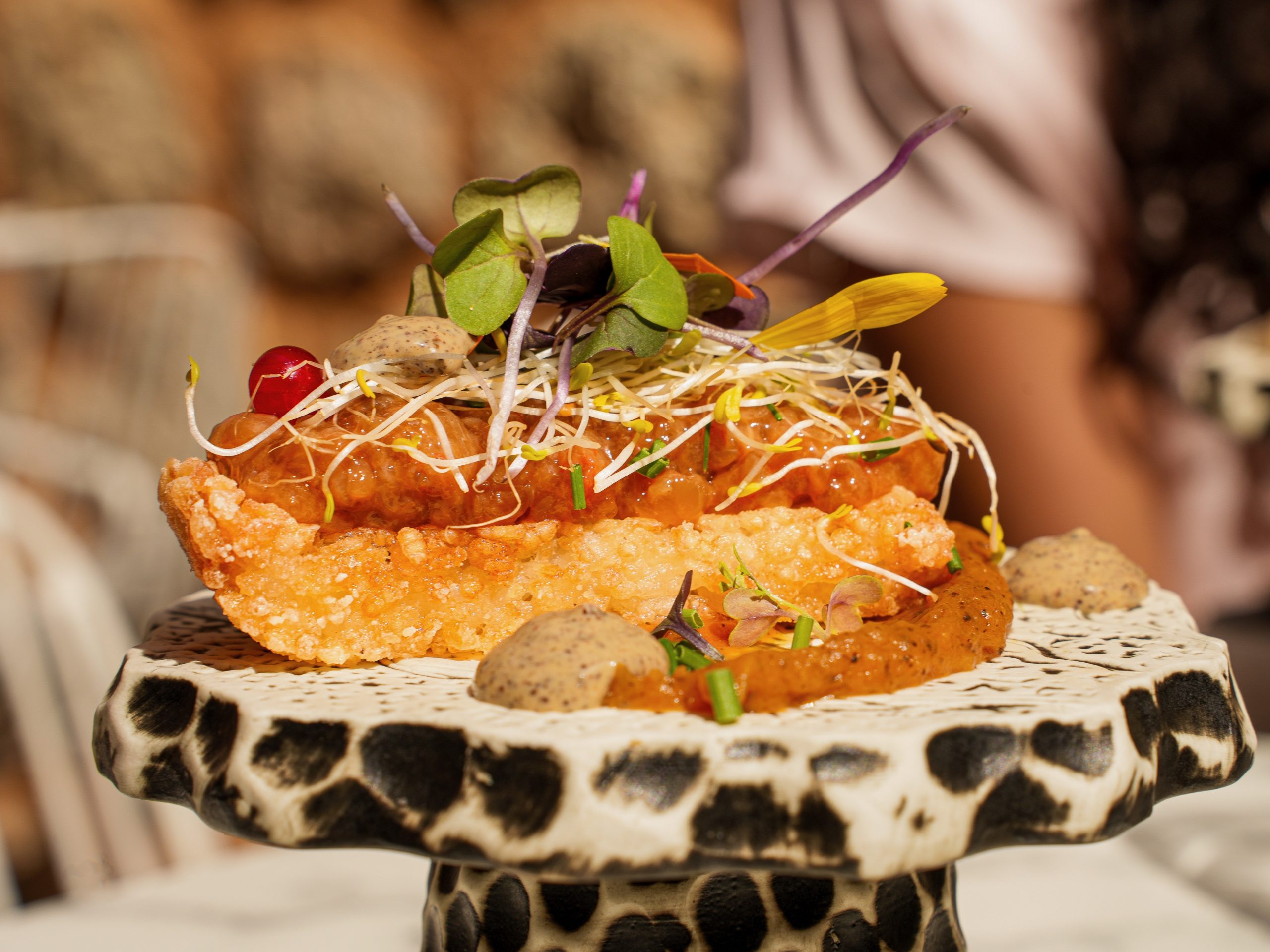 More Than a Meal Out
A Food Tours Mallorca experience sits somewhere between a progressive dinner, a walking tour and a very well-planned afternoon or evening out.
Instead of spending several hours sitting in one restaurant, you move between four different venues. This gives you an opportunity to sample several styles of food, discover restaurants you may not have found independently and explore the character of the area between courses.
Each tour is self-guided, using a web app that reveals your personalised itinerary 24 hours before the experience. There is no guide to follow, no flag being waved above a crowd and no need to join a large group of strangers.
You enjoy the route privately with your partner, friends or family, moving from one restaurant to the next at the planned times.
It makes the experience particularly appealing to people who like the idea of discovering somewhere new but do not usually enjoy traditional organised tours.
The Palma Old Town, Santa Catalina and Sóller experiences each include four local restaurants, with a signature dish and accompanying drink at every stop. The food and drink are prepaid as part of the booking, removing the need to organise several reservations or deal with separate bills along the way.
A Date Night That Has Already Been Planned
There is something very appealing about a date night that neither person has had to organise.
Rather than booking the same familiar restaurant, the Wine and Dine experience gives you an entire afternoon or evening together. You have four places to visit, food and drinks waiting at each stop, and a route that encourages you to slow down and enjoy the streets between courses.
You still get the privacy and flexibility of going out as a couple, but without the pressure of choosing the restaurants, studying menus or deciding where to go afterwards.
It would also work beautifully for an anniversary, birthday or simply an overdue evening together.
For couples visiting Mallorca, it offers a chance to experience several restaurants in one outing. For residents, it provides a different way to enjoy places we may walk through regularly without taking the time to explore properly.
Rediscover Palma Old Town
Many of us have our favourite places in Palma. We know where we like to meet for a drink, where we take visiting friends and which restaurant we call when we want a dependable dinner.
That familiarity is lovely, but it can also mean that we return to the same small collection of places while walking past dozens of others.
The Palma Old Town Wine and Dine Tour provides an opportunity to hand the decisions over to somebody else.
The route includes four restaurants selected by local experts, with the exact itinerary revealed through the app before the tour. Along the way, guests explore Palma’s historic streets, hidden alleys and plazas, with the route potentially passing through areas such as La Rambla and La Lonja.
There are both afternoon and evening options, running from 13.00 to 17.00 or from 17.00 to 21.00. The tour is available in English, Spanish, German, Dutch and French and can generally be booked up to 24 hours in advance.
It is a good choice for first-time visitors, but perhaps even better for those who believe they already know Palma.
You may recognise the streets. The restaurants may still surprise you.
Palma Old Town or Santa Catalina?
Although the Palma Old Town and Santa Catalina tours follow the same four-stop concept, the two areas provide distinctly different experiences.
Palma Old Town brings historic architecture, cobbled streets, hidden plazas and the atmosphere of the city centre. It is well suited to couples, visitors experiencing Palma for the first time and residents who want to rediscover familiar neighbourhoods.
Santa Catalina offers a livelier, more contemporary evening. Once the fishing district of Palma, it is now known for its colourful streets, busy terraces, international restaurants, independent businesses and active social scene.
The Santa Catalina experience begins at 17.00 and runs until approximately 21.00. Guests visit four restaurants, each providing a signature dish with a paired drink, while the web app guides them through the neighbourhood at their own pace.
It is a particularly good choice for a night out with friends because the evening does not necessarily have to end with the final course. Once the organised part of the experience is complete, Santa Catalina offers plenty of places to continue with another drink.
The difficult part may be deciding which Palma route to book first.
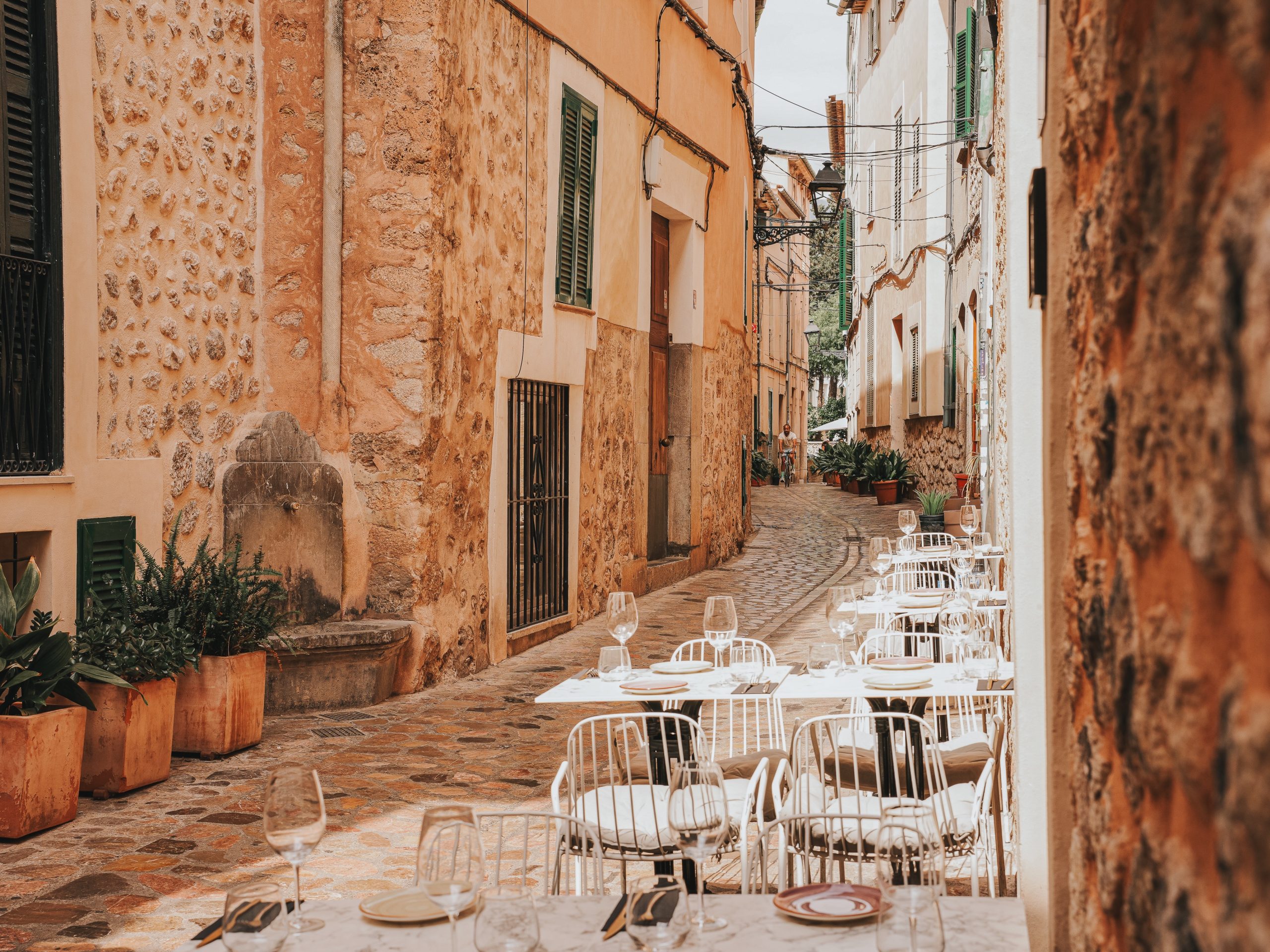 Make a Day of Sóller
The Sóller Wine and Dine Tour turns lunch into a complete afternoon out.
Sóller already has everything required for a memorable day trip: mountain scenery, beautiful architecture, a lively central square, historic streets and the famous railway journey from Palma.
The food tour adds a ready-made culinary route through the town.
Guests visit four restaurants and enjoy a signature dish and drink at each stop, with time to explore Sóller as they move between venues. The experience runs during the afternoon, making it possible to build an entire day around it.
You could travel to Sóller by train, enjoy the four-stop food experience and then continue to Port de Sóller for an evening walk or sunset by the sea.
For Mallorca residents, this is an excellent idea for a birthday, a day with friends or an occasion when you want to get out of your usual routine without having to organise every detail.
It is also a useful option when guests come to stay. Instead of taking responsibility for planning an entire day, you can book the experience and enjoy it with them.
The Answer to “What Shall We Do When They Visit?”
Living in Mallorca means that many of us regularly welcome friends and family to the island.
We love having them here, but entertaining visitors can involve a surprising amount of work. Where should we take them? Which restaurants will they like? How do we show them somewhere new when they have already visited several times?
A self-guided food tour solves several of those questions at once.
It introduces guests to an area through its food while giving everyone a reason to walk, look around and experience more of the neighbourhood. There is structure, but you do not feel as though you are being marched through a rigid itinerary.
Most importantly, the host gets to enjoy the experience as well.
You are not checking booking confirmations, searching for directions or trying to decide where everyone should eat next. That work has already been done.
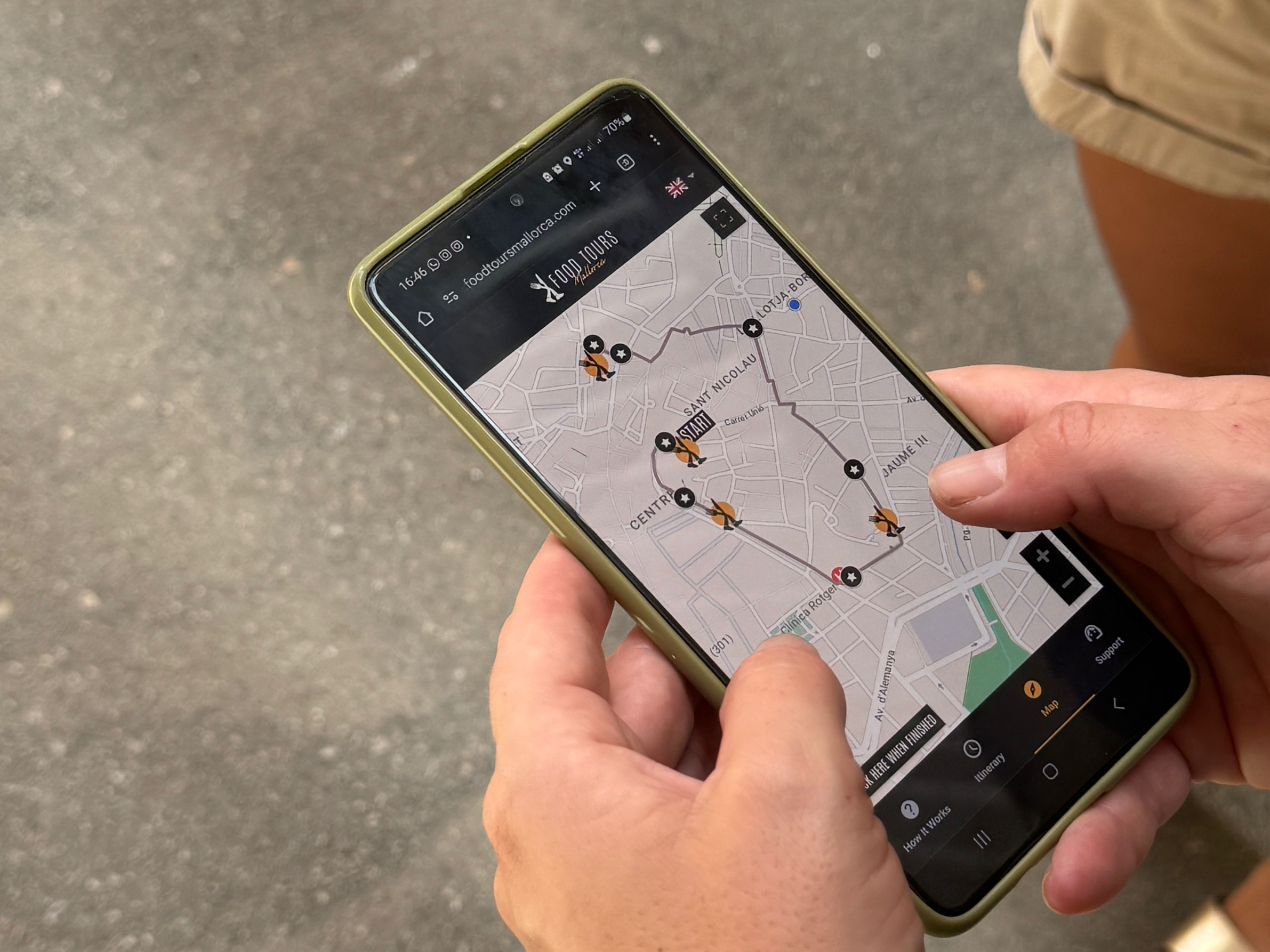 Four Restaurants Without Four Separate Bookings
The idea of restaurant hopping is very attractive.
The reality of organising it can be less so.
You need to choose venues that are within a sensible walking distance, check whether each restaurant is available, work out the timing, decide what everyone will order and make sure you are not left waiting for a bill when you should already be heading to the next stop.
Food Tours Mallorca has turned that logistical exercise into an experience that guests can simply book.
At every stop, the restaurant knows you are coming. The selected dish and drink form part of the tour, and the route connects the venues into a coherent afternoon or evening.
There is still a sense of discovery, especially because the final restaurant combination is kept as a surprise until shortly before the tour, but the risks and organisational headaches have been removed.
Supporting Mallorca’s Independent Restaurants
There is another important reason why we are pleased to support Food Tours Mallorca.
Experiences such as these encourage visitors and residents to spend money in local hospitality businesses. Instead of concentrating an entire meal in one venue, the route introduces guests to several restaurants, bars and neighbourhoods.
A successful local food scene depends on far more than the most famous restaurants or the places occupying the most visible positions. It depends on independent operators, chefs, waiting staff, suppliers and small business owners who continue to invest time, skill and energy into creating memorable places to eat.
A curated food route can help people move beyond the obvious choices and discover businesses they may later return to independently.
Mallorca should never become a place where visitors simply move between identical international chains or remain inside their hotel complex for an entire holiday. The island’s towns and neighbourhoods need active streets, independent businesses and customers who are interested in what local people are creating.
Food is one of the most enjoyable ways to make that connection.
A Local Business We Are Happy to Recommend
At Majorca Mallorca, we know the women behind Food Tours Mallorca personally.
They are hardworking local business owners who have put a considerable amount of thought into making these experiences enjoyable, straightforward and genuinely useful.
That personal connection is important to us.
We receive plenty of requests to promote products and services, but we particularly enjoy sharing businesses run by people we know, like and trust. Supporting them also means supporting the network of restaurants and hospitality businesses involved in each route.
This is not simply a link to another tourism activity. It is a recommendation for an experience created by people we are pleased to support.
Which Food Tours Mallorca Experiences Are Available?
There are currently three live Wine and Dine experiences:
Palma Old Town
Choose between an afternoon or evening route through Palma’s historic centre, visiting four selected restaurants and exploring the city between courses.
Santa Catalina
An evening experience through one of Palma’s liveliest neighbourhoods, combining four restaurant stops with the atmosphere of Santa Catalina’s streets, terraces and nightlife.
Sóller
An afternoon food experience that can be incorporated into a complete day trip, with four restaurant stops and time to explore one of Mallorca’s most distinctive towns.
A Pollença route is expected to join the collection from mid-August, creating another opportunity to explore one of the island’s historic towns through its food scene.
How the Food Tour Works
The process is straightforward:
- Choose your preferred destination, date and available time.
- Book the experience online.
- Receive access to the dedicated web app and your itinerary before the tour.
- Follow the curated route between four selected restaurants.
- Enjoy a signature dish and drink at each stop.
The live tours can generally be booked every day, subject to availability, up to 24 hours in advance. The experiences are self-guided and are available in several languages.
Dietary requirements should always be checked with Food Tours Mallorca before booking to make sure the selected tour can accommodate the needs of everyone in your party.
Receive 10% Off with Majorca Mallorca
Majorca Mallorca readers and Facebook group members can receive a 10% discount on Food Tours Mallorca bookings.
Use the code MM10 when booking to receive 10% off.
You can reserve now online:
Whether you choose an afternoon exploring Sóller, a lively evening in Santa Catalina or a route through the historic streets of Palma Old Town, the main decisions have already been made for you.
Four restaurants, four carefully selected food and drink experiences, and no need to ask, “Where shall we go now?”
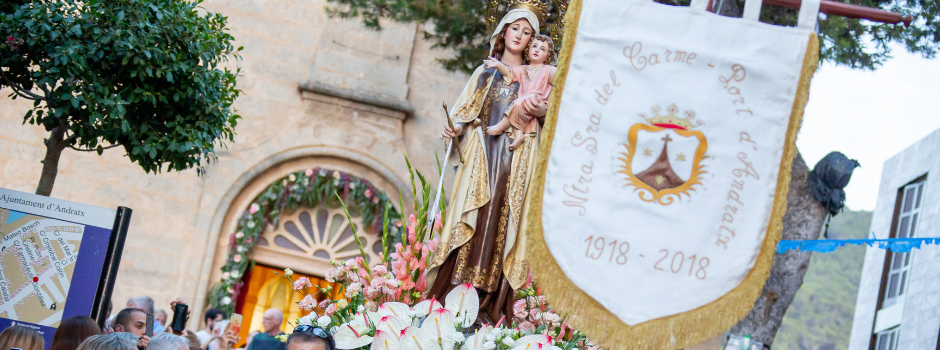
Omega Loops, Eclipses and Fiestas: Your Mallorca Update
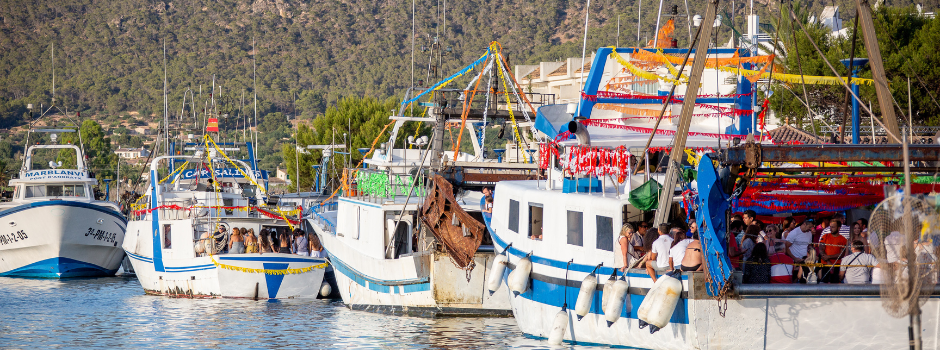
There is no polite way to say this: it is absolutely roasting. If you are on the island right now, you already know. If you are about to arrive, brace yourself. An atmospheric phenomenon called an Omega Loop has pushed Saharan air northward through Spain, France and beyond, delivering record-breaking temperatures across Europe. Mallorca is on maximum forest fire alert, and the devastating wildfire in Andalucia this week is a grim reminder of how quickly things can escalate from a single spark.
Which brings us to the story of our own street. Last Sunday at seven in the morning, an electrical cable short-circuited where it joins our neighbour's house, catching fire with a crack loud enough to launch Vicki out of bed like a cannonball. Our neighbour Carlos appeared with a fire extinguisher and dealt with it like it was nothing. The electricity company had it fixed by half nine. On a Sunday. Impressive, but unnerving.
The Eclipse: August 12
The big event on Mallorca's calendar is the total solar eclipse on August 12. Totality hits at around 8:30pm, just ten minutes before sunset, which means you need an unobstructed view of the sun meeting the western horizon. The Tramuntana mountain range blocks that view from most of the island.
Your best options:
- The Tramuntana coast from Andratx to Cap Formentor (stunning, but expect road closures and gridlock)
- El Toro and the Malgrat Islands area in Calvia
- The south-east coast from Arenal through Llucmajor to Campos
A boat sounds romantic, but charter prices have surged (we have seen 1,200 euros per person) and most Mallorcan charter vessels are not licensed to operate after dark. If you are on the water, be aware that conditions after totality will be chaotic: unlicensed boats, inexperienced skippers, champagne, and darkness.
One crucial warning: do not rely on ChatGPT for eclipse viewing recommendations. It has been confidently suggesting locations such as the Paseo Maritimo in Palma, where you absolutely will not see the eclipse. Check local sources.
Fiestas: The Real Mallorca
Port Andratx is mid-fiesta this week. Demonis (the devils) kicked things off, followed by Nit de Cavalls (horses rearing on sand-covered streets), and the highlight: the procession of the Virgin Mary. The statue is carried from the church to a fishing boat, the priest and dignitaries board, and a flotilla of flower-and-flag-draped boats follows out to the mouth of the bay for a blessing. It is genuinely moving, even for non-believers, and if you ever get an invitation onto that main boat, say yes.
Every village in Mallorca has its fiestas through the summer. They are cheap, welcoming, multigenerational and completely authentic. If you are on holiday and sitting in a resort, get a bus inland and find one. You will not regret it.
Deya: Beautiful, Busy, Buzzing
Deya continues to punch above its weight on social media. A new bar called Barraco has racked up over 118,000 views on a single reel. Nama remains one of the island's best restaurants (not the most expensive, but the food is astonishing). Korean tourists are arriving in numbers after K-pop content was filmed in the Soller Valley. And couples in wedding attire continue to roam beauty spots for photos, which is a thing now.
If you are visiting Mallorca, slow down. Stop trying to tick off a list. Give yourself the luxury of time. Pick a few things, enjoy them properly, and come back next year for the rest.
Listen to the latest podcast episode here.
FAQ section
Where can I watch the eclipse in Mallorca?
You need an unobstructed western sea view. Best spots: the Tramuntana coast (Andratx to Cap Formentor), El Toro/Malgrat area in Calvia, or the south-east coast from Arenal to Campos. Look out for our next podcast episode when we will cover ALL the possible places.
What time is the eclipse in Mallorca?
The eclipse begins around 7:30pm, with totality at approximately 8:30pm, about ten minutes before sunset.
Will roads be closed for the eclipse?
Yes The coast road between Andratx and Soller is expected to face restrictions. Plan well ahead or consider alternative viewing spots.
Can I rent a boat for the eclipse?
Possibly, but prices have hit 1,200 euros per person and most charter boats lack after-dark licences. If you go, ensure your skipper is experienced and licensed for night navigation.
Is it safe to hike during the heatwave?
Mallorca is in maximum forest fire alert. If you do go out, carry water, avoid any ignition sources (no smoking, no glass bottles in the sun), and do not light anything. Be prepared to walk back in darkness if viewing the eclipse from high ground.
Mallorca Weather in July: How Hot Is It and What Should You Expect?
 The weather in Mallorca in July is hot, sunny and very dry, making it one of the island’s most popular months for beach holidays, swimming, boat trips and long evenings outside.
Average daytime temperatures are usually around 29°C to 31°C, although it is common for the thermometer to climb above 30°C. During heatwaves, inland areas can become considerably hotter. Night-time temperatures generally remain around 19°C to 22°C, so evenings are warm and jackets are rarely necessary.
The Mallorca sea temperature in July is usually around 24°C to 25°C, making the water comfortably warm for swimming. Rain is uncommon, daylight lasts well into the evening and the island enjoys approximately 11 hours of sunshine each day.
July is, however, peak summer in Mallorca. Beaches, roads, restaurants and resorts are busy, and the midday heat can be intense. Planning your day around the temperature will make your visit far more enjoyable.
Mallorca weather in July at a glance
| July weather in Mallorca | Typical conditions |
|---|---|
| Average daytime temperature | 29°C to 31°C |
| Average night-time temperature | 19°C to 22°C |
| Average sea temperature | 24°C to 25°C |
| Daily sunshine | Around 11 hours |
| Rainfall | Very low |
| UV levels | Very high |
| Swimming conditions | Warm and comfortable |
These figures are based on established long-term climate averages for Mallorca, including data published by Spain’s official meteorological agency, AEMET. Actual temperatures, rainfall and sea conditions can vary across the island and during periods of extreme summer heat.
These figures are monthly averages rather than a forecast for every day. Temperatures vary across the island and can rise substantially during periods of extreme heat.
How hot is Mallorca in July?
Mallorca is hot in July. Average maximum temperatures sit close to 30°C, but many days exceed this, especially during the second half of the month.
The temperature also depends on where you are staying. Coastal resorts often benefit from a sea breeze, although humidity can make the heat feel more intense. Inland towns such as Inca, Sineu, Llucmajor and Sa Pobla can be several degrees hotter because they do not receive the same cooling coastal air.
The Tramuntana mountains may feel slightly cooler, particularly early in the morning, but exposed mountain roads and walking routes can still become extremely hot during the day.
The strongest heat is generally experienced between early afternoon and late afternoon. Outdoor sightseeing, exercise and long walks are best planned for the morning or early evening.
What is the average temperature in Mallorca in July?
The average maximum temperature in Mallorca in July is approximately 29°C to 31°C. Average minimum temperatures are usually around 19°C to 22°C.
These are climate averages, and individual days may be significantly hotter. Temperatures above 35°C are possible during summer heatwaves, particularly in central and southern Mallorca.
Palma can also feel especially warm at night because buildings and pavements retain heat. Accommodation with air conditioning is worth considering if you find it difficult to sleep in warm conditions.
Does it rain in Mallorca in July?
Rainfall in Mallorca during July is very low. Some climate guides record only around 6mm to 8mm of rain across the entire month, often falling on a single day.
Long periods of uninterrupted sunshine are normal, although an isolated summer storm is still possible. Weather conditions can also differ between different parts of the island, with cloud or rain in the mountains while coastal areas remain sunny.
Visitors should not expect rain to interrupt much of their holiday, but it is always sensible to check the daily forecast before taking a boat trip or travelling into the Tramuntana.
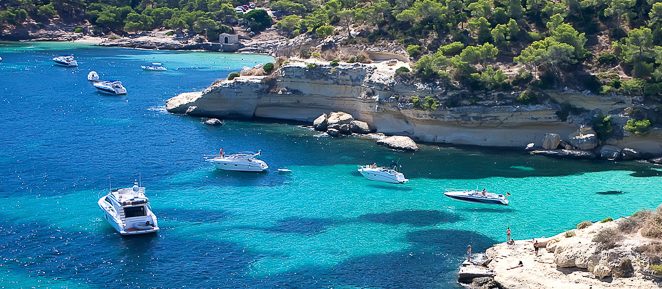
What is the sea temperature in Mallorca in July?
The average sea temperature around Mallorca in July is approximately 24°C to 25°C. In sheltered bays and shallow coves, the water may feel even warmer during the afternoon.
July is one of the best months for swimming, snorkelling, paddleboarding, kayaking and other water activities. The water is normally comfortable from early morning until late in the evening.
Conditions at sea can still change quickly. Wind, currents and jellyfish can affect individual beaches, so visitors should pay attention to warning flags and information provided by lifeguards.
A green flag indicates that swimming conditions are considered safe, yellow means caution and red means you should not enter the water.
Can you swim in Mallorca in July?
Yes. July is one of the best months for swimming in Mallorca.
The sea is warm, the weather is reliably sunny and most beaches have lifeguard services during the main part of the day. Families with younger children may prefer shallow, sandy beaches such as Playa de Muro, Port de Pollença, Palmanova, Cala Millor or parts of Alcúdia Bay.
Rocky coves can be excellent for snorkelling, but water shoes may be useful and access is not always suitable for young children or people with limited mobility.
Many small coves do not have lifeguards, toilets, drinking water or places to buy food. Check the facilities before travelling and take everything you need with you.
How much sunshine does Mallorca get in July?
Mallorca receives approximately 11 hours of bright sunshine each day in July, with around 15 hours of daylight.
The sun rises early and sets after 9pm during much of the month, allowing plenty of time for the beach, sightseeing and evening activities.
The UV level is very high. Sunburn can happen quickly, even when there is a breeze or light cloud cover. High-factor sun cream, a hat, sunglasses and regular breaks in the shade are essential.
Babies and young children should be kept out of direct sunlight during the hottest part of the day.
What does the heat in Mallorca feel like?
The July heat in Mallorca can feel more intense than the temperature shown on a weather app.
Humidity is often higher near the coast, while inland areas experience a drier, more direct heat. Stone streets, pavements and buildings absorb heat throughout the day and release it slowly after sunset.
A sea breeze can make a beach feel comfortable, but it can also disguise how strong the sun is. Visitors often burn because they do not notice the heat while sitting near the water or travelling on a boat.
Hydration is important. Carry water, drink regularly and avoid relying entirely on cafés or beach bars, particularly when visiting remote coves.
Is Mallorca crowded in July?
July is one of Mallorca’s busiest months.
The school holidays bring families from across Europe, and popular resorts, beaches and attractions can become crowded. Palma, Sóller, Valldemossa, Deià, Alcúdia, Pollença and many coastal areas experience particularly high visitor numbers.
Advance booking is strongly recommended for popular restaurants, boat trips, waterparks, car hire and organised excursions.
Parking can be difficult at beaches and mountain villages. Arriving early is often the difference between finding a proper parking space and having to change your plans.
Never park on protected land, block an access route or leave a vehicle where it could prevent emergency services from passing.
When is the best time to visit the beach?
The best time to visit a Mallorca beach in July is usually before 10am or later in the afternoon.
Arriving early offers several advantages. Parking is easier, temperatures are more comfortable and the beach is usually quieter. The sea is also often calmer during the morning before afternoon breezes develop.
Some visitors prefer to arrive after 5pm, when families and day visitors begin leaving. There is still plenty of daylight, the sand is cooler and the sea has been warmed by the sun.
The hours between midday and approximately 4pm are generally the hottest and busiest.
Is July a good month for walking and cycling?
July is not the easiest month for serious hiking or road cycling in Mallorca.
Walking and cycling are still possible, but activities should begin very early. Long routes, exposed climbs and strenuous exercise during the middle of the day can be dangerous.
Carry more water than you think you will need, wear proper sun protection and choose routes with shade and places to refill water. Mobile phone coverage is unreliable in parts of the Tramuntana, so tell someone where you are going.
Cyclists should also expect heavier summer traffic. Popular roads around Sóller, Deià, Valldemossa, Cap de Formentor and Sa Calobra can become congested.
A gentle coastal walk, early swim or shaded woodland route may be a better choice than attempting a demanding mountain hike in July.
What should you wear in Mallorca in July?
Light, loose clothing made from breathable fabrics is the most comfortable choice for Mallorca in July.
Pack:
- Shorts, summer dresses and lightweight tops
- Swimwear
- A sun hat and sunglasses
- High-factor sun cream
- Comfortable sandals
- Proper shoes for walking or visiting rocky beaches
- A reusable water bottle
- A light cover-up for strong sun
- Water shoes for rocky coves
A jacket is unlikely to be needed, although a lightweight layer may be useful on a late boat trip or in heavily air-conditioned restaurants and shops.
Some churches and religious buildings expect visitors to cover their shoulders and avoid very short beachwear. Carrying a light shirt or wrap makes it easier to visit respectfully.
Driving in Mallorca in July
Mallorca’s roads are much busier in July, particularly near beaches, resorts and well-known mountain villages.
Allow extra time for journeys and do not assume that the travel time shown on a map will account for traffic or parking. Roads to popular coves can become congested, and access may be controlled once parking areas are full.
Never leave children, pets, cameras or electronic equipment inside a parked vehicle. Car interiors can become dangerously hot within minutes.
It is also worth carrying drinking water in the car, especially when crossing the island or travelling to less developed areas.
Eating out in Mallorca in July
Warm evenings are one of the great pleasures of July in Mallorca. Terraces stay busy late into the night, and dinner often begins later than many British visitors are accustomed to.
Popular restaurants should be reserved in advance, particularly in Palma, Port d’Andratx, Puerto Portals, Deià, Sóller, Pollença and coastal resorts.
Do not assume that every restaurant serves food throughout the afternoon. Some kitchens close between lunch and dinner, while others may have different summer opening hours.
Long lunches can be an excellent way to escape the strongest heat. Choose somewhere shaded, slow the day down and return to sightseeing or the beach later in the afternoon.
Things to do in Mallorca in July
July is ideal for activities that make the most of the sea and the long summer evenings.
Popular choices include:
- Early morning beach visits
- Boat trips and sailing
- Snorkelling and paddle boarding
- Evening markets
- Outdoor concerts and cultural events
- Sunset dinners
- Waterparks
- Palma sightseeing early in the morning
- Village fiestas
- Late-afternoon visits to coastal towns
Traditional summer celebrations take place across the island during July. One of the most important is the feast of Mare de Déu del Carme, the patron saint of fishermen, which is marked in several ports with processions, boat blessings and local festivities.
Events and timings change each year, so check local listings before travelling.
IT'S VERY HOT IN MALLORCA! READ OUR GUIDE TO THE HEATWAVE HERE.
How to manage the Mallorca heat in July
The best way to enjoy Mallorca in July is to stop trying to fit a northern European timetable into a Mediterranean summer day.
Start early while temperatures are manageable. Visit the beach, explore a market or walk around Palma in the morning, then pause during the hottest hours.
Have lunch, rest, swim or spend time somewhere shaded or air-conditioned. Head out again in the late afternoon and enjoy the long evening.
Drink water regularly, use more sun cream than you think you need and avoid strenuous activity in direct sunlight.
Anyone experiencing dizziness, confusion, nausea, a severe headache or unusual weakness should move to a cooler place and seek medical help if symptoms do not improve.
Is July a good time to visit Mallorca?
July is a good time to visit Mallorca for travellers who want guaranteed summer atmosphere, warm sea, long sunny days and a wide choice of activities and events.
It is less suitable for people seeking quiet beaches, cool walking weather or low prices. The island is busy, accommodation is expensive and daytime temperatures can be intense.
For beach holidays, family trips, sailing and warm evenings, July is difficult to beat. The key is to book ahead, start the day early and accept that the middle of the afternoon is a time to slow down.
Mallorca in July is at its most energetic. Beaches are full, ports are busy, village squares come alive after dark and the sea is warm enough to stay in until the sun begins to set.
COMING TO MALLORCA FOR A HOLIDAY? CLICK HERE AND FOLLOW OUR GUIDE FOR HOLIDAY RENTALS.
Frequently asked questions about Mallorca weather in July
Is Majorca hot in July?
Yes. Majorca is normally very hot in July, with average daytime highs around 29°C to 31°C. Temperatures may exceed 35°C during heatwaves.
Does it rain in Mallorca in July?
Rain is uncommon in July. The month normally has very low rainfall, although an isolated shower or storm remains possible.
Is the sea warm in Mallorca in July?
Yes. The Mallorca sea temperature in July is usually around 24°C to 25°C, which is comfortable for most swimmers.
Do I need air conditioning in Mallorca in July?
Air conditioning is strongly recommended, especially in inland areas, Palma or accommodation without good natural ventilation. Night-time temperatures can remain above 20°C.
What time does it get dark in Mallorca in July?
Sunset is generally after 9pm during much of July, becoming gradually earlier towards the end of the month.
Should I visit Mallorca in June or July?
July is hotter, busier and normally has warmer sea temperatures. June may be more comfortable for sightseeing, walking and cycling, while July is better suited to a traditional beach holiday.
Is Mallorca too hot for children in July?
Families visit Mallorca throughout July, but young children need regular shade, water and protection from the sun. Outdoor activities should be avoided during the hottest hours of the day.
Which part of Mallorca is coolest in July?
Coastal areas with a reliable sea breeze may feel cooler than inland towns. Mountain locations can be cooler in the morning and evening, although exposed areas still become very hot during the day.
Arrels at La Lonja de Palma: What to Know Before You Visit
 One of Palma’s most iconic historic buildings has been transformed into one of Mallorca’s standout cultural experiences of 2026.
Arrels, a major installation by internationally acclaimed German artist Katharina Grosse, is now open at La Lonja de Palma and will remain on view until 31 January 2027.
Presented by the Govern de les Illes Balears in collaboration with Es Baluard Museu d’Art Contemporani de Palma, the exhibition brings contemporary art into direct conversation with one of the city’s most atmospheric Gothic landmarks.
What is Arrels?
Inside La Lonja, Katharina Grosse has created an immersive installation that changes the way visitors experience the building.
The work combines painting, architecture and natural materials, including mounds of earth and a large uprooted tree, partly buried and transformed through colour. The result is a striking, sensory landscape that feels both unexpected and completely rooted in the space around it.
Grosse is known for taking painting far beyond the canvas, often using intense colour across buildings, landscapes and objects. In Arrels, her intervention responds directly to the scale, history and architectural drama of La Lonja, inviting visitors to move through the work and see the space from new angles.
Exhibition dates
Opening date: 28 May 2026
Closing date: 31 January 2027
Location: La Lonja de Palma, Palma de Mallorca
The exhibition will run for several months, making it a strong option for both residents and visitors looking for a cultural plan in Palma.
Opening hours
The usual opening hours for La Lonja de Palma are:
Monday to Friday: 10.30am to 1.30pm and 5.30pm to 8.30pm
Saturday: 10.30am to 1.30pm
Sunday and public holidays: Closed
As this is a temporary exhibition, it is worth checking the official opening times before visiting, especially around public holidays, institutional events or special programming.
Who is Katharina Grosse?
Katharina Grosse was born in Freiburg, Germany, and is recognised as one of the most influential contemporary artists working today.
Her work has been shown at major international institutions and events, including Centre Pompidou-Metz, Hamburger Bahnhof in Berlin, Museum of Fine Arts Boston, MoMA PS1 in New York and the Venice Biennale.
With Arrels, she brings one of her ambitious site-specific installations to Mallorca, using La Lonja’s historic architecture as both setting and subject.
Why visit?
La Lonja is already one of Palma’s most impressive buildings, but Arrels offers a completely different way to experience it.
The exhibition is not simply something to look at. It is something to walk through, respond to and feel. It shows how contemporary art can reframe a historic space, making visitors notice the building’s proportions, textures and atmosphere in a new way.
For anyone looking for cultural things to do in Palma, contemporary art in Mallorca or a memorable visit in the city centre, Arrels at La Lonja de Palma is one of the essential exhibitions of the season.
Visitor information
Exhibition: Arrels
Artist: Katharina Grosse
Venue: La Lonja de Palma
Dates: 28 May 2026 to 31 January 2027
Best for: Contemporary art lovers, architecture fans, cultural visitors and anyone looking for something different to do in Palma
Thousands of illegal holiday-rental listings have been removed in Mallorca, so how can travellers book safely?
Mallorca has always had a complicated relationship with holiday rentals, but the issue has become much more visible this year. Airbnb has reportedly removed more than 8,000 illegal listings in Mallorca, representing around 40,000 beds, following action linked to the Council of Mallorca’s campaign against unlicensed tourist accommodation. The exact figure has been politically disputed, with PSIB-PSOE claiming the number of removed listings is closer to 3,600, but either way the message is clear: enforcement is no longer happening quietly in the background.
For travellers, this matters. Booking the wrong place is not just a policy issue or a local housing debate. It can affect your holiday directly. A listing may disappear before you travel, the property may not be legally authorised for tourist stays, or you may find yourself with fewer protections if something goes wrong.
So how can you make sure the villa, finca or apartment you book in Mallorca is actually legitimate?
First, understand the basic rule
In Mallorca, short-term tourist rentals are regulated. A property being advertised on Airbnb, Booking.com, social media or a private website does not automatically mean it is legal.
Legal holiday rentals should have the correct tourist rental licence. In the Balearic Islands this is commonly referred to as an ETV licence, which stands for Estancia Turística en Viviendas. Properties advertised commercially for tourist stays are expected to display licence details, and unlicensed listings can face penalties.
There are also important local differences. Palma has taken a particularly strict approach, with moves to block new tourist rental accommodation across the municipality and restrict further growth in holiday lets.
The key point for visitors is simple: do not assume that because a property looks professional online, it is legal.
Look for a licence number before you fall in love with the photos
Before you get carried away by the pool, the sea view or the “five minutes from Palma” promise, check the listing carefully.
A legitimate holiday rental should normally show a tourist licence number. It may appear as ETV, ETVPL, VT or another format depending on the property type and registration history.
Be cautious if:
- The listing has no licence number.
- The host avoids answering when you ask for it.
- The licence number is hidden in a graphic rather than typed clearly.
- The same property appears under several different names or hosts.
- The listing says things like “private agreement”, “family home”, “special rate” or “message me before booking” in a way that seems designed to move you off the platform.
A missing licence number is not automatically proof of a scam, but it is a reason to pause and ask more questions.
Be especially careful with city apartments
One of the most common misunderstandings among visitors is the idea that any nice apartment in Palma can be used as a holiday rental. That is not the case.
Palma has been tightening restrictions on tourist rentals for years, and new holiday rental accommodation in the city is now heavily restricted.
If you see a short-stay apartment in the centre of Palma, Santa Catalina, La Lonja, the Old Town or another residential neighbourhood, check it very carefully. Some may be legal, but many apartment-style listings are exactly the type of accommodation that has attracted enforcement attention.
For a city break, hotels, aparthotels and licensed accommodation are often the safer choice.
Ask the host direct questions
A serious owner or agency should not be offended by practical questions. Before booking, ask:
- “Can you send me the tourist rental licence number?”
- “Is the property legally registered for short-term holiday rental?”
- “Is the address on the booking confirmation the exact property address?”
- “Will I receive a rental agreement or booking confirmation?”
- “Are tourist taxes included or paid separately?”
- “Who do I contact locally if there is a problem during the stay?”
The answers should be clear, calm and specific. If the host becomes evasive, pushes you to pay quickly, or asks you to avoid platform messaging, take that as a warning sign.
Check whether the price makes sense
Mallorca is not a cheap destination in high season. If a property looks significantly cheaper than similar homes nearby, ask why.
A surprisingly low price can sometimes mean a genuine late deal, but it can also be a sign that the listing is unlicensed, misrepresented, duplicated or not available in the way it appears online.
Compare the price with other properties in the same area, with similar size, pool access, location and dates. If everything else is €300 a night and one “luxury villa” is €95, something may not add up.
Use reputable booking routes
Booking direct with a legitimate owner can be fine, but travellers should be careful about how money changes hands.
Safer options include established holiday rental agencies, recognised travel companies, hotels, aparthotels, licensed rural hotels and platforms that offer proper payment protection.
Be cautious about bank transfers to individuals you do not know, especially if the booking began on a platform but the host then asks you to complete payment somewhere else.
If you do book direct, look for a real business name, address, tax details, reviews outside a single platform, and clear written terms.
Do not rely on reviews alone
Reviews are useful, but they are not enough. A property can have positive reviews and still have a licensing problem.
Also, reviews may relate to previous stays before enforcement action increased, or before a platform removed similar illegal listings. The recent removal of thousands of listings shows that availability online is not the same as legal certainty.
Use reviews as one part of the picture, not the whole picture.
Watch out for vague locations
Some listings use broad location descriptions such as “near Palma”, “close to the beach”, “Mallorca countryside” or “minutes from everything”.
That is not always suspicious, but before paying you should know the approximate area and, after booking, the exact address. This matters not only for legality, but also for transport, safety, access, noise rules and whether the property is in a residential zone where holiday rentals may be restricted.
If the host refuses to give a clear location until the last minute, be careful.
Remember that legal accommodation helps protect your holiday
This is not just about following rules for the sake of it. Legal accommodation usually means better accountability.
If a property is properly registered, there should be clearer standards around guest information, tourist tax, complaints, insurance, occupancy and local contact details. It also reduces the risk of your booking being cancelled because the listing has been removed or challenged.
Mallorca’s rental rules are part of a wider argument about housing, tourism pressure and neighbourhood life, but travellers do not need to become legal experts. They just need to book with their eyes open.
A simple checklist before you book
Before confirming your Mallorca holiday rental, check:
- Is there a visible tourist rental licence number?
- Does the host or agency answer questions clearly?
- Is the property type believable for the area, especially in Palma?
- Are payments handled through a protected route?
- Is the price realistic for the season and location?
- Are the address, terms and cancellation policy clear?
- Are tourist taxes and local contact details explained?
- Does the listing appear consistent across photos, reviews and descriptions?
If several of those answers are unclear, keep looking.
The bottom line
Mallorca still has many legal, beautiful and well-run places to stay. The point is not to panic, but to be more careful.
With enforcement becoming more visible and thousands of listings reportedly removed, travellers should treat legality as part of the booking process, just like checking the pool, the location or the cancellation policy.
A legal rental may not be the cheapest option on the page, but it is much less likely to become a holiday headache.